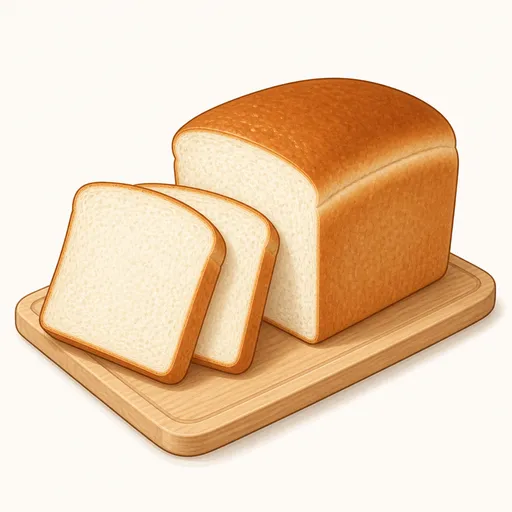
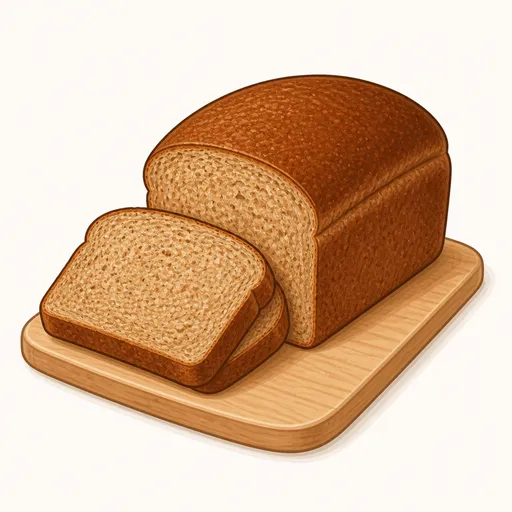
Whole wheat bread
This whole wheat loaf has a warm brown color, a toasty wheat aroma and a crumb that is soft yet sturdy, perfect for slicing into sandwiches or toasting for breakfast. A little honey softens the slight bitterness of the bran, while the bread flour helps the loaf rise much higher than it would with whole wheat flour alone.
- Difficulty
- Easy
- Prep
- 30 min
- Cook
- 40 min
- Rising or chilling
- 2 hr 30 min
- Total time
- 3 hr 40 min
- Method
- Oven-baked
Ingredients
Instructions
Step 1
Put 350 g whole wheat flour, 150 g bread flour, 370 g warm water and 30 g honey in a mixing bowl, stir with chopsticks until no dry flour remains, then cover and leave it for about 30 minutes. This soaking time lets the bran absorb enough water and soften, so the dough is easier to knead and less likely to be dry. The dough is ready when the surface looks slightly shiny and it feels noticeably more pliable when you press it with a finger.
Step 2
Sprinkle 7 g instant yeast and 9 g salt over the dough, knead with a mixer on low speed for about five minutes, then add 25 g softened unsalted butter and knead on medium speed for about five minutes more. Whole wheat dough needs a long enough knead for the gluten network to become strong enough to hold gas. The dough is ready when it pulls away from the sides of the bowl and a small piece stretches into a thin, slightly cloudy membrane without tearing right away.
Step 3
Shape the dough into a taut ball, place it in a bowl brushed with a thin layer of oil, cover tightly with plastic wrap and leave it in a warm place for about 75 minutes. Whole wheat dough rises more slowly than white dough, so be patient and give it the full time. It is ready when it has nearly doubled and a floured fingertip poke fills back in only very slowly.
Step 4
Turn the dough out onto the counter, press it gently to deflate, then roll it into a rectangle with the short side matching the length of a 23 cm loaf pan, roll it up tightly from the short side and pinch the seam closed. Rolling tightly gives the loaf an even crumb without large holes inside. The roll is ready when the top is taut and smooth and the seam sits neatly underneath as you place it in the buttered pan.
Step 5
Cover the pan loosely with plastic wrap and let the dough rise a second time for about 45 minutes; meanwhile, heat the oven to 200°C. This rise determines the height and lightness of the loaf, so do not cut it short. The dough is ready when it domes about two centimeters above the rim of the pan and springs back slowly when pressed lightly.
Step 6
Bake the loaf at 200°C for about 35 to 40 minutes, laying a sheet of foil over it after the first twenty minutes if the top darkens too quickly. The high initial heat lets the loaf spring up as much as possible before the crust sets. It is done when the crust is deep brown, the bottom sounds hollow when tapped and a thermometer in the center of the crumb reads about 95°C.
Step 7
Take the loaf out of the pan right away and set it on a wire rack to cool completely for at least an hour before slicing. The crumb is still finishing cooking from the residual heat, and slicing too early makes it gummy. The bread is ready when the bottom no longer feels warm and the knife glides cleanly through the crumb without damp crumbs clinging to it.
Equipment
- Oven
- Loaf pan
- Stand mixer
- Kitchen scale
- Mixing bowl
- Bench scraper
- Plastic wrap
- Wire cooling rack
Tips
- For a deeper flavor, you can dry-toast the whole wheat flour in a skillet over low heat for a few minutes and let it cool before mixing.
- Each brand of whole wheat flour absorbs water differently, so you can hold back a little water at first and add it only if the dough feels dry and stiff.
- Sprinkling a handful of rolled oats or sunflower seeds on top before baking gives the loaf a crunchy, nutty and attractive crust.
Storage
Wrap the loaf in a clean towel or paper bag and keep it at room temperature for two to three days. To keep it longer, slice it, seal it in a bag and freeze for up to a month; when you want some, just pop the slices into the toaster without thawing.
Common problems and how to fix them
- The loaf is short with a dense, heavy crumb.
- The dough is usually underkneaded or underproofed. Knead until the dough stretches into a membrane and wait until it rises above the rim of the pan before baking.
- The top tears open along one side.
- This is a sign that the second rise was too short or the seam was not sealed. Pinch the seam of the roll tightly and let the dough rise for another ten to fifteen minutes before baking.
This recipe is based on the common ratios for this bake and is written entirely in our own words.