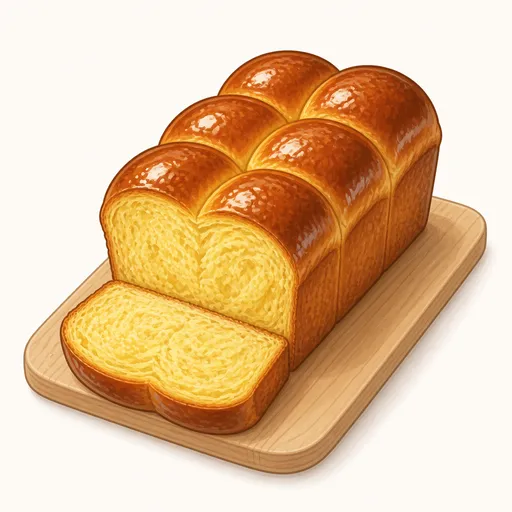
Hokkaido milk bread
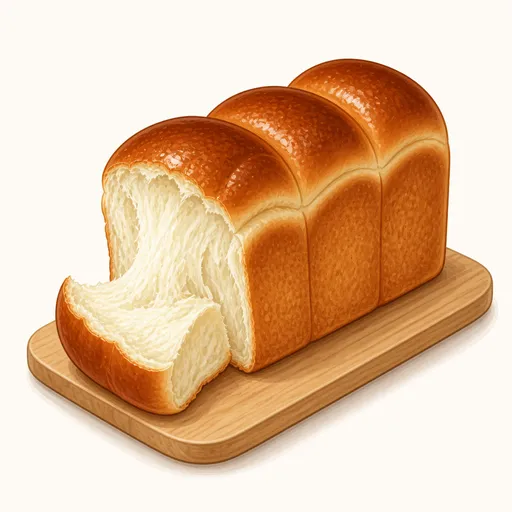
Hokkaido milk bread is famous for its smooth white crumb, so soft you can pull it apart into fluffy, cotton-like strands, with a gentle milky sweetness. The secret is tangzhong (a flour and milk mixture cooked into a paste), which helps the dough hold much more liquid so the bread stays soft and moist for days.
- Difficulty
- Medium
- Prep
- 45 min
- Cook
- 33 min
- Rising or chilling
- 2 hr 20 min
- Total time
- 3 hr 38 min
- Method
- Oven-baked
Ingredients
For the tangzhong
For the bread dough
For the egg wash
Instructions
Step 1
Put 25 g bread flour and 125 g whole milk in a small saucepan, whisk until smooth, then set it over low heat and stir constantly for about three minutes. The heat gelatinizes the starch, so the flour can soak up many times more milk than usual. The paste is ready when it is as thick as yogurt, the whisk leaves clear trails on the surface, and a thermometer reads about 65°C.
Step 2
Scrape the paste into a small bowl, press plastic wrap directly onto the surface, and let it cool for about 30 minutes. Hot paste can kill the yeast when you mix it into the dough. The tangzhong is ready when it is just slightly warm and as thick as heavy cream.
Step 3
In the bowl of a stand mixer, combine 325 g bread flour, 15 g milk powder, 50 g granulated sugar, 6 g instant yeast and 5 g salt, then add the tangzhong, 50 g eggs, 110 g whole milk and 40 g heavy cream. Knead on low speed for about five minutes so everything is evenly hydrated. The dough is ready when it forms a soft, slightly sticky mass with no liquid left in the bowl.
Step 4
Add 35 g softened unsalted butter in two additions and knead on medium speed for about 12 minutes. A milk-rich dough needs a long knead to build gluten strong enough to hold up a fluffy crumb. The dough is ready when it is glossy and smooth, gathers around the dough hook, and stretches into a thin, strong windowpane; if you poke through it, the hole has smooth, round edges.
Step 5
Shape the dough into a smooth ball, place it in a clean bowl, cover it well, and let it rise in a warm spot for about 60 minutes. Enriched dough rises more slowly than lean dough, so be patient. It's ready when it has doubled in size and a floured finger pressed into it leaves a hole that holds its shape.
Step 6
Punch down the dough and divide it into four equal pieces. Roll each piece into a long oval, fold both long edges into the center, roll it out long again, and roll it up like a rug. Rolling and folding twice gives the crumb those pull-apart strands. The four rolls are ready when they are all the same size and sit snugly side by side in the loaf pan, seam side down.
Step 7
Cover the pan with plastic wrap and let the dough rise in a warm spot for about 50 minutes; meanwhile, preheat the oven to 175°C with the rack in the lower position. A full proof lets the loaf reach its height before the crust sets. The dough is ready when the rolls have puffed up to touch each other and the tops are almost level with the rim of the pan.
Step 8
Beat 25 g eggs and use a soft brush to paint a very thin layer over the top of the loaf, taking care not to let egg drip down the sides of the pan. The egg wash gives the top a shiny golden finish and keeps the thin crust moist. The top is ready when it is evenly glossy with no egg pooling between the rolls.
Step 9
Bake at 175°C for about 30 to 35 minutes, laying a sheet of foil over the top if it browns too quickly after 15 minutes. Moderate heat cooks the crumb evenly while keeping the crust thin and soft. The bread is done when the top is a deep golden brown, the bottom sounds hollow when tapped, and the center reaches about 90°C.
Step 10
Drop the pan gently onto the counter once to release the steam, turn the bread out right away, and let it cool on a wire rack for about an hour. Letting the steam escape quickly keeps the sides from caving in. The bread is ready when it is completely cool and pulls apart into soft, silky strands.
Equipment
- Oven
- Loaf pan
- Stand mixer
- Small saucepan
- Whisk
- Rolling pin
- Bench scraper
- Pastry brush
- Kitchen scale
- Plastic wrap
Tips
- This dough is quite sticky for the first few minutes; don't rush to add more flour, just keep kneading patiently.
- If you don't have heavy cream, use the same amount of whole milk plus a little extra butter.
- For a taller, more even rise, proof the dough in a switched-off oven with a bowl of hot water inside.
Storage
Once cool, keep the bread in an airtight bag at room temperature; thanks to the tangzhong it stays soft for about four days. You can also slice and freeze it for up to a month, then steam the slices for a few minutes or toast them lightly before eating.
Common problems and how to fix them
- The loaf caves in at the sides after it comes out of the oven.
- The bread was underbaked or wasn't taken out of the pan right away. Bake it five minutes longer and drop the pan on the counter to release the steam before turning the loaf out.
- The crumb doesn't pull into strands and is dense like sponge cake.
- The dough wasn't kneaded enough to develop the gluten. Next time, knead a few minutes longer until it stretches into a thin, strong windowpane, and roll and fold twice when shaping.
This recipe is based on the common ratios for this bake and is written entirely in our own words.