Sandwich bread
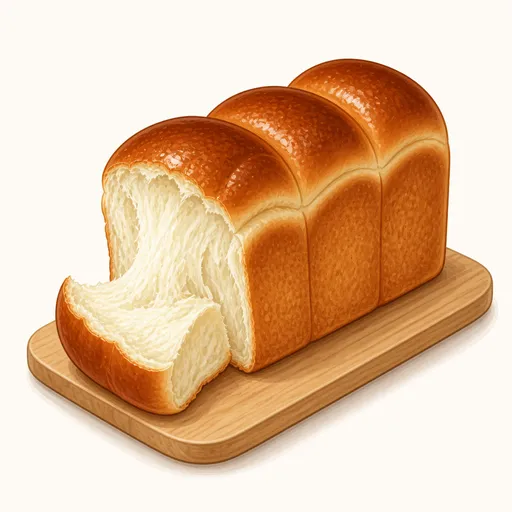
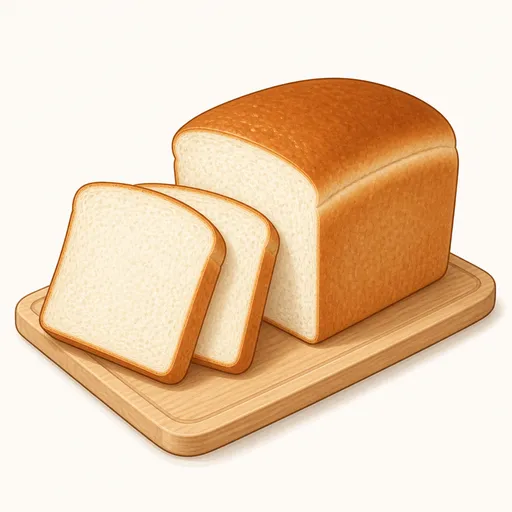
Baked in a loaf pan, this sandwich bread has a soft, fine white crumb and a thin golden brown crust, perfect for sandwiches, crisp breakfast toast or a spread of butter and jam. A little milk, sugar and butter keep it soft longer than bakery bread, and it's still easy to make at home.
- Difficulty
- Easy
- Prep
- 30 min
- Cook
- 33 min
- Rising or chilling
- 2 hr 45 min
- Total time
- 3 hr 48 min
- Method
- Oven-baked
Ingredients
Instructions
Step 1
Put 500 g bread flour, 30 g granulated sugar and 6 g instant yeast in the bowl of a stand mixer, mix briefly, then add 9 g salt on the opposite side from the yeast. Pour in 200 g whole milk and 130 g warm water and knead on low speed for about three minutes. Salt that touches the yeast directly can weaken it. The dough is ready when it has come together into a shaggy mass with no dry flour left at the bottom of the bowl.
Step 2
Add 40 g softened unsalted butter in small pieces, increase to medium speed and knead for about ten minutes. Adding the butter once the gluten has formed makes the dough both soft and stretchy. It's ready when it is smooth and silky, pulls away from the sides of the bowl and a small piece stretches into a thin, almost translucent membrane without tearing.
Step 3
Shape the dough into a ball, place it in a lightly oiled bowl, cover it with plastic wrap and let it rise somewhere warm for about 60 minutes. This gives the yeast time to produce gas and develop flavor. The dough has risen enough when it has nearly doubled and a floured fingertip leaves a dent that springs back slowly.
Step 4
Turn the dough out onto the counter, press it flat to release the gas and roll it into a rectangle with the short side as long as your pan, then roll it up tightly from the short side and pinch the seam closed. Rolling it tightly builds structure, so the loaf rises straight with no big air holes in the crumb. It's ready when the log is taut and the seam sits on the bottom of the pan.
Step 5
Set the log in a buttered loaf pan, cover it with plastic wrap and let it rise for about 45 minutes more; meanwhile, preheat the oven to 190°C. The final rise gives the bread its full volume before it goes into the oven. It's ready when it rises about 2 cm above the rim of the pan and looks soft and puffy.
Step 6
Bake on the middle rack at 190°C for about 30 to 35 minutes; if the top browns too quickly, lay a loose sheet of foil over it after 20 minutes. A steady temperature bakes the crumb evenly while the crust takes on a lovely color. The bread is done when the top is golden brown, the bottom sounds hollow when tapped and a thermometer in the center reads about 90°C.
Step 7
Turn the loaf out of the pan right away, lay it on its side on a wire rack and wait at least an hour before slicing; you can brush a thin layer of butter over the top for a soft crust. The crumb is still cooking from the steam inside, and cutting too soon makes it gummy. It's ready when the bottom no longer feels warm and a serrated knife cuts smooth slices that don't stick.
Equipment
- Oven
- Loaf pan
- Stand mixer
- Mixing bowl
- Bench scraper
- Rolling pin
- Kitchen scale
- Plastic wrap
- Wire cooling rack
Tips
- The water and milk should be about 35°C, meaning slightly warm when dripped on your wrist; anything too hot will kill the yeast.
- For a perfectly square loaf like a pullman loaf, use a lidded pan and let the dough rise until it is about 1 cm below the lid.
- Replacing a third of the bread flour with whole wheat flour gives the loaf a nuttier flavor; add a little more water if you do.
Storage
Once cool, wrap the bread tightly in a plastic bag and keep it at room temperature, where it stays soft for about three days; avoid the fridge, as it dries the bread out quickly. You can slice and freeze it for up to a month and toast the slices straight from the freezer.
Common problems and how to fix them
- The bread rose poorly and the crumb is dense.
- The yeast was weak, the dough was underkneaded or it rose somewhere too cold. Check the date on your yeast, knead until the dough stretches into a thin membrane and let it rise somewhere warm, around 28°C.
- The top of the loaf split open along one side.
- The final rise was too short or the seam wasn't sealed. Next time, wait until the dough has clearly risen above the pan and pinch the seam tightly before putting it in the pan.
This recipe is based on the common ratios for this bake and is written entirely in our own words.