Tarte Tatin
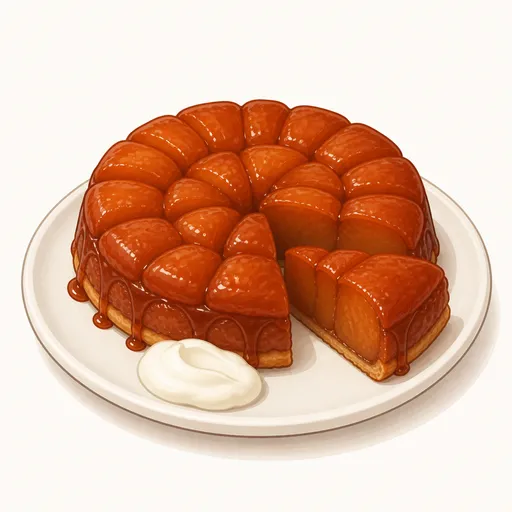
Tarte Tatin is France's famous upside-down apple tart: apples bake in butter caramel until tender, translucent and amber-tinted, then get covered with pastry and flipped over to serve. The gentle bittersweetness of the caramel blends with the mildly tart apples, and it's wonderful served warm with a spoonful of crème fraîche or vanilla ice cream.
- Difficulty
- Medium
- Prep
- 40 min
- Cook
- 1 hr 5 min
- Rising or chilling
- 55 min
- Total time
- 2 hr 40 min
- Method
- Oven-baked
Ingredients
For the pastry
For the butter caramel
For the apples
Instructions
Step 1
Mix 150 g all-purpose flour with 10 g superfine sugar and a pinch salt, rub 90 g cold unsalted butter into the flour, then drizzle in 40 g ice water and quickly gather it into a dough. The pastry needs only a little sugar because the apples are already very sweet. The dough is ready when it just holds together and you can still see small streaks of butter.
Step 2
Flatten the dough, wrap it tightly and refrigerate for about forty-five minutes. Chilled, rested dough is easier to roll, and the lid won't shrink as it bakes. The dough is ready when it's cold and firm and no longer sticky.
Step 3
Peel 1,100 g apples, cut them into quarters and core them, then toss them with 10 g lemon juice and 3 g vanilla extract if using. Lemon keeps the apples from browning and balances the sweetness of the caramel. The apples are ready when the pieces are evenly sized and lightly glossy with lemon juice.
Step 4
Heat the oven to 190°C and have a 24 cm round pan with a fixed bottom ready; don't use a springform pan. A fixed-bottom pan keeps the caramel from leaking out. The oven is ready when the heating light turns off.
Step 5
Sprinkle 150 g granulated sugar in an even layer in a saucepan and cook over medium heat without stirring, just swirling the pan gently until the sugar melts and turns amber, then add 60 g unsalted butter with a pinch salt and stir well. Butter makes the caramel soft and silky and takes the edge off its bitterness. The caramel is ready when it's a glossy copper-brown and bubbling finely.
Step 6
Pour the caramel into the pan right away, then stand the apple pieces on their sides, tightly packed in circles with the rounded side down, cramming them in because the apples will shrink as they bake. Packing them tightly gives a tart that turns out beautifully with no gaps. The pan is ready when the apples cover the bottom completely and sit slightly above the rim.
Step 7
Bake the pan of apples on its own at 190°C for 25 to 30 minutes so they soften and release juice that mingles with the caramel. Pre-baking lets the apples cook through before they're sealed under the pastry. The apples are ready when they've sunk down level with the rim and the caramel is bubbling thickly around the edges.
Step 8
While the apples bake, roll the dough into a round about two centimeters wider than the pan and about 3 mm thick, then keep it on parchment paper in the fridge. The slightly larger lid lets you tuck the edges down around the apples. The lid is ready when it's evenly round, untorn and still cold.
Step 9
Lay the pastry lid over the apples, use a spoon to tuck the edges down between the apples and the side of the pan, cut a few small slits, then bake at 190°C for another 25 to 30 minutes. The tucked edges form a rim that holds the apples in place when you flip the tart. The tart is done when the pastry is golden brown and crisp and the caramel is bubbling up at the edges.
Step 10
Take the tart out and let it rest on a rack for about ten minutes. The caramel needs to cool a little to thicken, but not so much that it sets hard. It's ready when tilting the pan shows the caramel no longer runs like water.
Step 11
Run a knife around the side of the pan, set a large plate on top, put on oven mitts, hold everything tightly and flip it over in one decisive move, then lift off the pan. Flipping while the tart is still warm lets the apples and caramel slide out in one piece. The tart is ready when the apples are glossy and amber; if any pieces stick to the pan, just lift them out and put them back in place.
Equipment
- Oven
- Round cake pan
- Small saucepan
- Rolling pin
- Mixing bowl
- Kitchen scale
- Plastic wrap
- Refrigerator
Tips
- Choose firm, slightly tart apples such as Granny Smith or Pink Lady so they don't turn mushy during the long bake.
- To save time, you can swap the homemade pastry for a sheet of store-bought puff pastry.
- Always wear oven mitts when flipping the tart, because hot caramel can cause serious burns.
Storage
The tart is best warm on the day it's made. Cover any leftovers and refrigerate them for about two days, then reheat at 170°C for ten minutes so the caramel softens and the pastry crisps up again.
Common problems and how to fix them
- The caramel tastes bitter and burnt.
- The sugar was cooked too dark. Take the pan off the heat as soon as the sugar turns amber, because the residual heat keeps darkening it.
- The flipped tart is watery and the pastry is soggy.
- The apples released a lot of juice that didn't have time to evaporate. Next time, pre-bake the apples longer until the caramel juices are thick and syrupy before adding the pastry.
This recipe is based on the common ratios for this bake and is written entirely in our own words.