Croissants
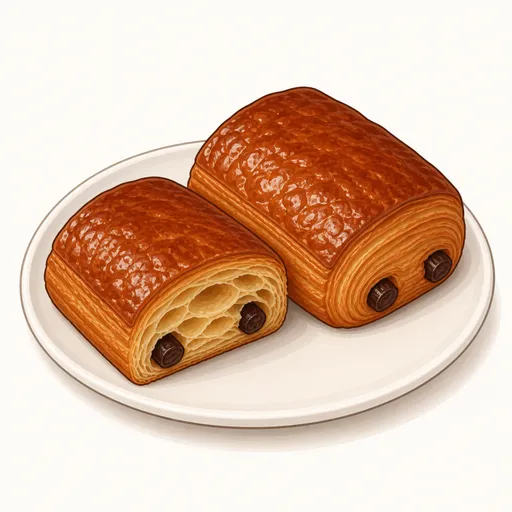
Croissants are the French crescent pastry of a thousand layers, with a shattering golden crust and an airy honeycomb crumb full of rich butter aroma. They're made by folding butter into dough several times, a process that takes patience and careful temperature control, but the result is worth every minute of waiting.
- Difficulty
- Very hard
- Prep
- 1 hr 30 min
- Cook
- 20 min
- Rising or chilling
- 6 hr 30 min
- Total time
- 8 hr 20 min
- Method
- Oven-baked

Ingredients
Base dough
Butter block
Egg wash
Instructions
Step 1
Put 500 g bread flour, 55 g granulated sugar, 10 g salt and 10 g instant yeast in the mixer bowl, add 140 g cold water, 140 g cold whole milk and 40 g softened unsalted butter, then knead on low speed for about five minutes. Croissant dough only needs moderate kneading, because the folds that follow keep developing the gluten. The dough is ready when it is smooth, soft and comes together in a ball that doesn't stick to your hands.
Step 2
Press the dough into a flat rectangle about 20 x 25 cm, wrap it tightly in plastic wrap and refrigerate for at least two hours or overnight. The dough must be as cold as the butter for the two layers to roll out evenly thin. The dough is ready when it is evenly cold, firm and the yeast is working very slowly.
Step 3
Place 280 g cold unsalted butter between two sheets of parchment paper, pound it flat with a rolling pin, then roll it into a square about 17 cm across and refrigerate for about thirty minutes. A flat, pliable butter block spreads evenly through the dough. The butter is ready when it is evenly thick and bends without breaking but still feels cold.
Step 4
Roll the dough into a square about 25 cm across, place the butter diagonally in the center, then fold the four corners of the dough inward like an envelope and pinch the seams closed. Sealing the butter completely keeps it from poking out as you roll and keeps the layers continuous. This step is done when the butter is fully enclosed with no gaps.
Step 5
Roll the dough in one direction into a long strip about 60 cm long, brush off the excess flour, then fold it in thirds like a letter and turn it a quarter turn. Each letter fold triples the number of butter layers, creating the honeycomb crumb later on. The fold is right when the edges line up and the butter hasn't broken into pieces under the dough.
Step 6
Wrap the dough again and refrigerate for about thirty minutes. Butter that warms up during rolling will blend into the dough and lose the layers, so it needs to chill again. The dough is ready when it is cold and firm and the surface no longer looks greasy.
Step 7
Roll the dough into a long strip once more, this time folding it in thirds for the final time, and wrap it tightly. Three folds in total create enough layers for a crisp crust and an airy crumb. The dough is ready when the edges are even, it rolls without tearing and you can see faint streaks of butter under the surface.
Step 8
Let the dough rest in the fridge for about an hour before cutting. The gluten needs to relax completely so the triangles don't shrink when cut. The dough is ready when it feels firm to a gentle press and doesn't spring back strongly.
Step 9
Roll the dough into a rectangle about 25 x 60 cm and about four millimeters thick, then use a sharp knife to cut twelve tall triangles, each with a base of about 10 cm. A sharp knife cutting straight down keeps the edges from sealing the layers together so they can still puff. The triangles are right when they are even and the cut edges clearly show the stacked layers.
Step 10
Make a small cut in the middle of the base of each triangle, gently stretch the point a little longer, then roll up from the base toward the point, keeping the point tucked underneath. Rolling evenly and not too tightly helps the croissants rise beautifully with a clear crescent shape. Each croissant is right when it has about six to seven turns and the point is held firmly underneath.
Step 11
Arrange the croissants on a parchment-lined tray about six centimeters apart, cover loosely with plastic wrap and let them rise in a warm spot at about 24 to 26 degrees Celsius for about two hours. If it's too warm, the butter will melt out of the pastry before baking. They are proofed enough when they have nearly doubled, jiggle slightly when you shake the tray and the layers are clearly separated on the sides.
Step 12
Turn the oven on to 200 degrees Celsius and set a rack in the middle when the croissants are almost done proofing. A very hot oven turns the water in the butter to steam quickly, pushing the layers of dough apart. The oven is ready when it has preheated for at least twenty minutes.
Step 13
Beat 50 g eggs with a little water and brush very gently over the croissants in the direction of the roll, avoiding the cut edges. Egg on the cut edges glues the layers together and stops them from puffing. You're done when the tops are evenly glossy and the rolled ridges are still clearly visible.
Step 14
Bake the croissants at 200 degrees Celsius for about 15 to 20 minutes, rotating the tray after the first ten minutes if needed so they brown evenly. The high heat typical of croissants gives them a flaky crust and an airy crumb. They are done when the crust is deep golden brown, the layers on the sides have also colored and they feel light when picked up.
Step 15
Move the croissants to a rack and let them cool for about fifteen minutes before enjoying. The crumb needs time to release its steam, and tearing one open right away leaves it a little sticky and damp. They're ready when the crust crackles when squeezed gently and the inside shows plenty of distinct air pockets.
Equipment
- Oven
- Stand mixer
- Rolling pin
- Bench scraper
- Kitchen scale
- Baking sheet
- Parchment paper
- Plastic wrap
- Pastry brush
- Refrigerator
Tips
- The ideal kitchen temperature for rolling croissants is about 20 degrees Celsius; if your kitchen is warm, chill the dough more often.
- Use a high-fat butter, around eighty-two percent, because it is more pliable and less likely to crack when rolled.
- You can freeze croissants that are rolled but not yet proofed; when needed, thaw them overnight in the fridge, then proof and bake as usual.
Storage
Croissants are best on the day they're baked. You can keep them in a paper bag at room temperature for a day, then wrap them tightly and freeze for up to a month; reheat them at 170 degrees Celsius for about five to seven minutes before eating.
Common problems and how to fix them
- Butter pooled around the croissants as they baked.
- The croissants were proofed somewhere too warm, or they were underproofed. Proof them below 27 degrees Celsius and wait until they jiggle slightly when you shake the tray.
- The crumb is dense with no honeycomb holes.
- The butter blended into the dough during rolling. Keep both the dough and butter very cold, chill between folds and work more quickly.
This recipe is based on the common ratios for this bake and is written entirely in our own words.