Cream puffs
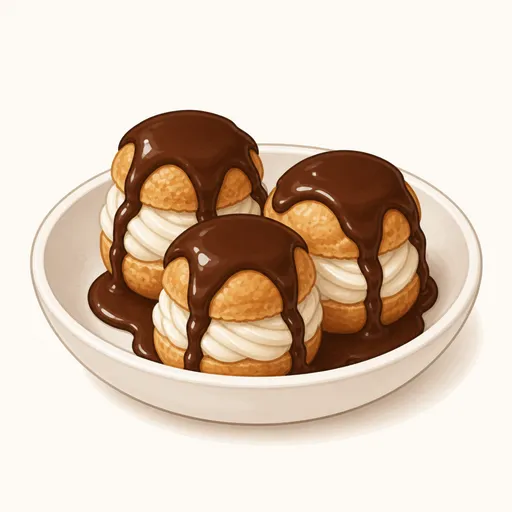
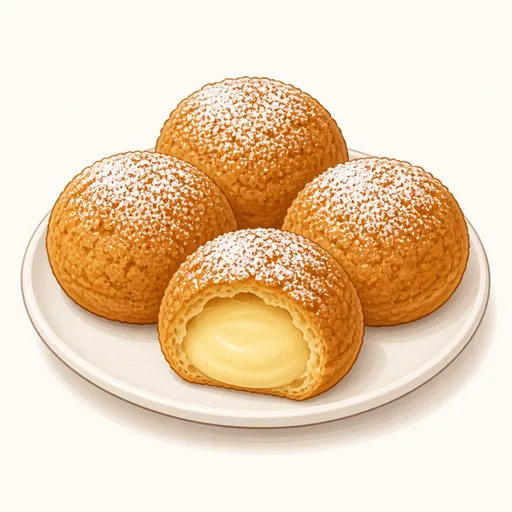
Cream puffs are hollow, feather-light, delicately crisp choux pastry shells filled to the brim with cool vanilla pastry cream. The shells puff up from the steam inside the dough rather than from baking powder, so the secret lies in cooking the dough and adding just the right amount of egg.
- Difficulty
- Hard
- Prep
- 50 min
- Cook
- 40 min
- Rising or chilling
- 2 hr
- Total time
- 3 hr 30 min
- Method
- Oven-baked
Ingredients
Pastry cream
Choux pastry
Finishing dust
Instructions
Step 1
Heat 500 g whole milk over medium heat until steaming and bubbling gently around the edge of the pan; meanwhile, whisk 90 g egg yolks with 100 g granulated sugar and 40 g cornstarch until very smooth. Slowly pour half the hot milk into the egg mixture, whisking constantly. Warming the yolks gradually keeps them from curdling, and you can stop when the mixture is smooth and evenly warm.
Step 2
Pour the egg mixture back into the pan of milk and whisk constantly over medium heat; once the cream bubbles thickly, cook for one more minute, then turn off the heat and stir in 30 g unsalted butter and 5 g vanilla extract until melted. Boiling for an extra minute fully cooks the cornstarch so the cream won't thin out again as it cools. The cream is ready when it is thick, glossy and smooth and the whisk leaves clear trails on the surface.
Step 3
Spread the cream on a shallow tray, press plastic wrap directly onto its surface and refrigerate for about two hours. Wrap pressed against the cream stops a skin from forming, while the shallow tray helps it cool quickly and safely. The cream is ready when it is evenly cold and set firm like pudding.
Step 4
Turn the oven on to 200 degrees Celsius, set a rack in the middle and line a baking tray with parchment paper. Choux needs strong heat right from the start so the steam can puff it up quickly. The oven is ready when it has preheated for at least fifteen minutes.
Step 5
Put 125 g water, 125 g whole milk, 110 g unsalted butter cut into small pieces, 5 g granulated sugar and a pinch salt in a pan and heat over medium heat until the butter has melted and the mixture comes to a rolling boil. The butter must melt completely before the liquid boils so not too much water evaporates. Move on as soon as the whole surface is boiling vigorously.
Step 6
Turn off the heat, dump in 150 g all-purpose flour all at once and stir hard with a spatula, then return to medium heat and keep stirring the dough for about two more minutes. Cooking the dough gelatinizes the starch and drives off moisture so it can absorb more egg. The dough is ready when it gathers into a smooth ball that pulls away from the sides and leaves a thin film on the bottom of the pan.
Step 7
Transfer the dough to a bowl, beat on low speed for a minute to cool it slightly, then gradually add 250 g beaten eggs a little at a time, mixing well before adding more. The amount of egg determines how much the shells puff, so you may not need all of it. The dough is ready when it is glossy and smooth, falls from the beater in a V shape and a line drawn with your finger slowly closes up.
Step 8
Put the dough in a piping bag fitted with a round tip about 1 cm wide and pipe rounds about 4 cm across onto the tray, three centimeters apart, then dab the pointed tips flat with a wet finger. Flattening the tips helps the shells puff evenly round without burning on top. The rounds are ready when they are round, evenly tall and smooth.
Step 9
Bake at 200 degrees Celsius for about 20 to 25 minutes and never open the oven door during this stage. The steam inside is pushing the shells up, and opening the door now will make them collapse right away. Move on when the shells have doubled in size and turned pale golden.
Step 10
Lower the oven to 180 degrees Celsius and bake for another 10 to 15 minutes to dry out the shells. Shells that are dry inside stay sturdy and keep their shape as they cool and when filled. The shells are ready when they are deep golden brown, even in the cracks, and feel feather-light when picked up.
Step 11
Turn off the oven, poke a small hole in the bottom of each shell with a toothpick and leave the shells in the oven with the door ajar for about ten minutes, then move them to a rack to cool completely. The small hole lets any remaining steam escape so the shells don't soften again. The shells are ready when they are completely cool and sound hollow when tapped.
Step 12
Whisk the chilled pastry cream until smooth and silky again, put it in a piping bag with a small tip and pipe it through the hole in the bottom of each shell. Filling from the bottom fills the hollow while keeping the tops pretty. The puffs are ready when they feel heavy in your hand and cream just starts to peek out of the hole.
Step 13
Arrange the puffs on a plate and sift a thin layer of to taste powdered sugar over the tops just before serving. Dusting right before serving keeps the sugar from melting into the moist shells. The cream puffs are finished when they're covered in a fine layer of white, like fresh snow.
Equipment
- Oven
- Small saucepan
- Hand mixer
- Whisk
- Spatula
- Sieve
- Piping bag
- Baking sheet
- Parchment paper
- Kitchen scale
- Plastic wrap
- Refrigerator
Tips
- For a lighter filling, fold a little whipped cream into the pastry cream before piping.
- You can freeze piped rounds of choux dough on the tray, then bake them straight from the freezer when needed, adding a few minutes.
- Baked shells that have gone soft can be re-baked at 170 degrees Celsius for about five minutes to crisp them up before filling.
Storage
Filled cream puffs need to be refrigerated and eaten within a day, as the shells gradually soften from the cream's moisture. Unfilled shells keep in an airtight container at room temperature for two days, and the pastry cream keeps in the fridge for two days.
Common problems and how to fix them
- The shells collapsed after coming out of the oven.
- The shells weren't dried out enough, or you opened the oven door too early. Bake them longer at the lower temperature until deep golden brown, and only open the oven once the shells are firm.
- The choux dough is too runny and spreads flat when piped.
- You added too much egg, or the dough wasn't cooked dry enough. Next time, cook the dough until a thin film forms on the bottom of the pan and add the eggs gradually, stopping as soon as the dough falls in a V shape.
This recipe is based on the common ratios for this bake and is written entirely in our own words.