Stollen
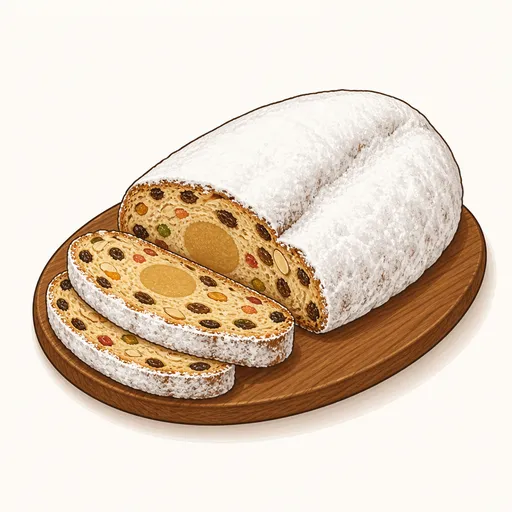
Stollen is Germany's traditional Christmas bread, with a dense, buttery crumb studded with rum-soaked raisins, candied fruit and almonds. A soft log of marzipan (almond paste kneaded with sugar) runs through the middle, and the outside is thickly coated in butter and powdered sugar like a blanket of snow. It tastes even better after a few days of resting, as the flavors meld together.
- Difficulty
- Hard
- Prep
- 1 hr
- Cook
- 50 min
- Rising or chilling
- 2 hr 30 min
- Total time
- 4 hr 20 min
- Method
- Oven-baked
Ingredients
Rum-soaked fruit
Bread dough
Marzipan filling
Butter and sugar coating
Instructions
Step 1
Mix 180 g raisins and 100 g candied fruit with 50 g dark rum in a small bowl, cover and let it sit for about an hour. Fruit that has soaked up the rum stays plump and won't steal moisture from the dough when they're kneaded together. The fruit is ready when it's plump and juicy and there's almost no rum left at the bottom of the bowl.
Step 2
Put 500 g all-purpose flour, 10 g instant yeast, 70 g granulated sugar, 6 g salt, 4 g lemon zest, 2 g ground cardamom and a pinch ground nutmeg in the bowl of a stand mixer, add 170 g warm whole milk and 50 g eggs and knead on low speed. Once the dough comes together, gradually add 175 g softened unsalted butter and knead for about ten minutes more. All that butter makes the dough heavy, so it needs to be kneaded long enough for the gluten to develop. The dough is ready when it's smooth, elastic, glossy with butter and pulls away from the sides of the bowl.
Step 3
Turn the dough out onto the counter, scatter the soaked fruit and 70 g sliced almonds over it, then fold the dough over by hand several times until the fruit is evenly distributed. Folding gently instead of kneading hard keeps the raisins from breaking and turning the dough gray. The dough is ready when you can see fruit and almonds wherever you cut into it.
Step 4
Shape the dough into a ball, place it in a lightly buttered bowl, cover with plastic wrap and let it rise in a warm spot for about an hour. Dough rich in butter and fruit rises more slowly than regular bread, so be patient. It's ready when it has grown by about half and a gentle fingertip dent springs back very slowly.
Step 5
While the dough rises, mix 100 g almond flour with 70 g powdered sugar, add 15 g egg whites and 1 g almond extract and knead by hand into a pliable paste. Divide the marzipan in two and roll each half into a log about 20 cm long. The marzipan is ready when it's smooth, doesn't stick to your hands and holds its shape when set on the counter.
Step 6
Divide the dough in two and roll each half into an oval about 2 cm thick. Lay a marzipan log off to one side, then fold the rest of the dough over it so the top edge sits a little short of the bottom edge. This offset fold creates stollen's signature humped shape. The loaves are ready when the marzipan is completely enclosed and the two edges of dough are pressed firmly together.
Step 7
Arrange the two loaves on a baking sheet lined with parchment paper, at least a hand's width apart, cover with a towel and let them rise for about forty minutes more while you preheat the oven to 175°C. This short rise keeps the crumb from being too dense. The loaves are ready when they've visibly puffed but still hold their fold.
Step 8
Pick off any raisins poking out of the crust, since they burn and turn bitter easily, then bake the loaves at 175°C for about 45 to 55 minutes; if the tops darken too quickly, lay a sheet of aluminum foil over them. The stollen is done when the crust is evenly golden brown, the bottom sounds hollow when tapped and a skewer inserted in the center comes out free of wet dough.
Step 9
Melt 60 g unsalted butter and brush it over the hot loaves right away, coat after coat, until they can't absorb any more, then sift a thick layer of 60 g powdered sugar over the tops and sides. This butter and sugar coating seals in moisture and helps the stollen keep for a long time. The loaves are ready when the sugar coats them evenly white with no brown crust showing.
Step 10
Let the loaves cool completely on a rack, then wrap them tightly in plastic wrap and aluminum foil and store in a cool place for at least three days before slicing. Resting lets the rum, spices and fruit meld and makes the crumb softer and moister. The stollen is ready when a slice reveals a dense, moist crumb fragrant with almond.
Equipment
- Oven
- Baking sheet
- Parchment paper
- Stand mixer
- Rolling pin
- Pastry brush
- Sieve
- Small saucepan
- Mixing bowl
- Kitchen scale
- Plastic wrap
- Wire cooling rack
Tips
- If you'd rather not use alcohol, soak the fruit in the same amount of orange juice; the stollen will still be fragrant but won't keep as long.
- You can use store-bought marzipan instead of making the filling; just use the same weight as the total ingredients in the marzipan filling group.
- Cut the stollen from the middle outward, then press the two halves back together before rewrapping so the cut sides don't dry out.
Storage
Wrapped tightly and kept in a cool, dry place, stollen keeps for about three weeks and gets even better over the first few days. You can also freeze whole loaves for up to three months; thaw overnight and sift over a fresh layer of powdered sugar before serving.
Common problems and how to fix them
- The dough rises very slowly or hardly at all.
- All the butter and sugar slow the yeast down, so let the dough rise in a warm spot at about 28°C and give it more time. Also make sure the milk is only lukewarm, not hot, since hot milk kills the yeast.
- The crumb is dry and crumbly when sliced.
- The stollen may have baked too long or not been brushed with enough butter while hot. Next time, take it out five minutes sooner and brush it with butter as soon as it comes out of the oven.
- The marzipan filling leaked out during baking.
- The dough edges weren't pressed firmly enough or the marzipan log was too close to the edge. Leave a border of dough about two fingers wide around the filling and press the seam well.
This recipe is based on the common ratios for this bake and is written entirely in our own words.