Sablé breton
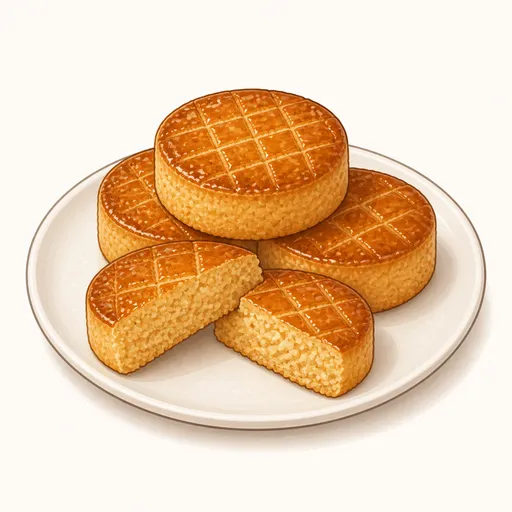
Sablé breton is a thick butter cookie from Brittany, a region famous for its superb salted butter. It has a glossy golden top with a crosshatch pattern and a sandy, crumbly inside full of sweet and salty butter flavor. Thanks to plenty of egg yolks, it is crisp and melt-in-your-mouth yet wonderfully rich.
- Difficulty
- Easy
- Prep
- 25 min
- Cook
- 20 min
- Rising or chilling
- 2 hr
- Total time
- 2 hr 45 min
- Method
- Oven-baked
Ingredients
Dough
Egg wash
Instructions
Step 1
Beat 60 g egg yolks with 120 g superfine sugar on high speed for about four minutes. The air you beat in now is what makes the cookies light and crumbly. The mixture is ready when it turns pale yellow, doubles in volume and falls in a thick ribbon when you lift the beaters.
Step 2
Add 150 g salted butter softened to room temperature and beat on low speed just until blended. The butter has to be very soft to blend into the yolks without lumps. The mixture is ready when it is smooth and creamy, evenly colored and free of chunks of butter.
Step 3
Sift 200 g all-purpose flour with 8 g baking powder and a pinch flaky sea salt into the bowl and fold with a spatula until the dry flour just disappears. A generous amount of baking powder creates the signature light, crumbly texture, and minimal mixing keeps the cookies from turning tough. The dough is ready when it is soft, slightly sticky and shows no white flour.
Step 4
Place the dough between two sheets of parchment paper, roll it about 1 cm thick, set it on a tray and chill it in the fridge for at least two hours. The dough is very soft and can only be cut once it is completely cold and firm. It's ready when it is firm and the paper peels away easily.
Step 5
Preheat the oven to 175°C with a rack in the middle and line a baking sheet with parchment paper. A steady temperature helps the cookies rise evenly and turn a lovely golden color. The oven is ready once it has been heating for about fifteen minutes.
Step 6
Use a 6 cm round cutter to cut the dough into rounds and place each one inside a greased metal pastry ring or in the cup of a cupcake pan. The ring makes the cookies rise upward instead of spreading out. They're ready when the rounds are even with clean edges and sit neatly in the molds.
Step 7
Whisk 18 g egg yolks with 5 g whole milk, brush two thin coats over the cookies, then drag a fork across the tops in diagonal lines to make a crosshatch pattern. The yolk gives a glossy golden top, and the crosshatch is the hallmark of this cookie. The tops are ready when evenly glossy with crisp fork lines.
Step 8
Bake at 175°C for 16 to 20 minutes. These cookies are thick, so they need enough time for the centers to bake dry and crumbly. They're done when the tops are a deep golden brown, the bottom edges are dark gold and your kitchen smells of butter.
Step 9
Leave the cookies in the molds for about five minutes, then unmold them and set them on a wire rack to cool completely. Hot cookies are still soft; they only turn crisp and hold their shape once cool. They're ready when cool to the touch and the inside looks sandy when you break one open.
Equipment
- Oven
- Hand mixer
- Spatula
- Sieve
- Rolling pin
- Cookie cutter
- Shaping molds
- Pastry brush
- Baking sheet
- Parchment paper
- Plastic wrap
- Kitchen scale
- Refrigerator
Tips
- If you only have unsalted butter, use the same amount of butter and triple the sea salt to keep the signature salty flavor.
- You can bake all the dough in a 22 cm tart pan as one large cookie, then top it with jam and fruit.
- Rolled-out dough keeps in the freezer for up to a month; just cut it and bake it a few minutes longer whenever you need it.
Storage
Once cool, store the cookies in a cookie tin or airtight container at room temperature, and they will stay crisp for a week. Keep them away from humidity so they don't soften.
Common problems and how to fix them
- The cookies spread out wide and thin in the oven.
- The dough wasn't cold enough or you didn't use rings. Chill the dough until completely firm and bake the cookies in rings or a cupcake pan.
- The cookies are hard and dense instead of light and crumbly.
- The yolks and sugar weren't beaten fluffy enough or the dough was overmixed. Beat the egg mixture until pale and mix in the flour only as much as needed.
This recipe is based on the common ratios for this bake and is written entirely in our own words.