Rye bread
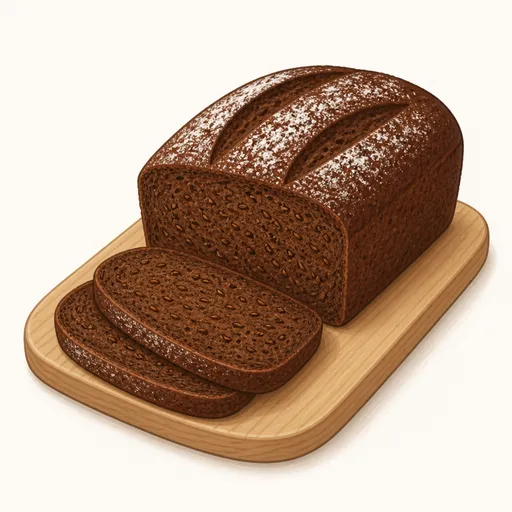
Rye bread has a dense, dark brown crumb and the gentle sourness typical of Northern Europe. This recipe blends rye flour with bread flour so the loaf still rises well, with a little molasses for a lovely color and caraway seeds for a bold aroma. It's perfect for sandwiches with smoked salmon, salted butter or cheese.
- Difficulty
- Medium
- Prep
- 25 min
- Cook
- 45 min
- Rising or chilling
- 3 hr
- Total time
- 4 hr 10 min
- Method
- Oven-baked
Ingredients
Dough
For greasing and dusting
Instructions
Step 1
Stir 25 g molasses into 360 g warm water, then pour it into the mixer bowl with 220 g rye flour, 280 g bread flour, 6 g instant yeast, 10 g salt and 6 g caraway seeds. Dissolving the molasses in the water first spreads it evenly and gives the crumb a uniform brown color. Mix on low speed until there are no patches of dry flour left at the bottom of the bowl.
Step 2
Knead on medium speed for about eight minutes, scraping down the dough that clings to the sides of the bowl from time to time. Rye flour is low in gluten, so the dough will feel stickier and heavier than ordinary wheat dough; resist adding extra flour. The dough is ready when it gathers into a soft mass with a slightly glossy surface and only sticks lightly to your fingertips.
Step 3
Move the dough to a bowl lightly greased with to taste vegetable oil, cover with plastic wrap and let it rise somewhere warm for about an hour and a half. Rye dough rises slowly, and the long rise deepens the flavor. It's done when it has grown to about one and a half times its size and a fingertip dent springs back very slowly.
Step 4
Dust the counter with to taste all-purpose flour, turn the dough out, pat it into a rectangle as long as your pan, then roll it up tightly from the short side and pinch the seam closed. Rolling it tightly keeps big gaps out of the loaf. Place it in a greased pan once the log has a taut surface and the seam sits underneath.
Step 5
Cover the pan with a towel and let it rise for about 50 more minutes, until the dough rises about one finger joint above the rim. Don't let it go too long, because rye dough collapses easily in the heat of the oven. It's ready when a light press leaves a dent that only springs back halfway.
Step 6
Turn the oven on to 220°C when the second rise has been going for about twenty minutes, and set a pan of hot water on the bottom rack. The steam keeps the crust soft longer so the loaf has time to rise in the first few minutes. The oven is ready once it has been heating for a full thirty minutes and a thin mist of steam coats the glass door.
Step 7
Sift another thin layer of flour over the top of the dough, then use a very sharp knife to make three diagonal slashes about half a centimeter deep. The slashes let the heat escape exactly where you want, so the crust doesn't burst open along the sides. You're done when the cuts open slightly and reveal the dark crumb beneath the white flour.
Step 8
Bake at 220°C for the first fifteen minutes, then remove the pan of water and keep baking for a total of 40 to 45 minutes. The dry final stage makes the crust firm and deep brown. The bread is done when the bottom sounds hollow when tapped and a thermometer in the center of the crumb reads about 96°C.
Step 9
Take the bread out of the pan right away and set it on a wire rack to cool for at least two hours before slicing. A rye crumb keeps setting as it cools, and cutting too early leaves it gummy and sticking to the knife. It's ready when the bottom is completely cool and the knife slices through cleanly.
Equipment
- Oven
- Loaf pan
- Stand mixer
- Kitchen scale
- Mixing bowl
- Bench scraper
- Plastic wrap
- Wire cooling rack
Tips
- For a more pronounced sour flavor, replace some of the water with plain unsweetened yogurt or add some active sourdough starter.
- Wet your hands when handling rye dough; it sticks far less that way than if you dust it with more flour.
- After a night's rest the bread slices thinly much more easily, and the caraway flavor mellows and blends in.
Storage
Wrap the bread in a cloth towel or paper bag and it will keep at room temperature for three to four days, since rye bread holds its moisture very well. To keep it longer, slice it, put it in a sealed bag and freeze it for up to a month, then just toast it for a few minutes before eating.
Common problems and how to fix them
- The crumb is gummy, damp and sticky as if underbaked.
- The bread wasn't baked long enough or was cut while still hot. Use a thermometer to make sure the center reaches about 96°C, and wait until the loaf is completely cool before slicing.
- The loaf rose and then collapsed, leaving a sunken top.
- The second rise went on too long and weakened the structure. Next time, check the dough sooner and put it in the oven as soon as it crowns above the rim of the pan.
This recipe is based on the common ratios for this bake and is written entirely in our own words.