Religieuse
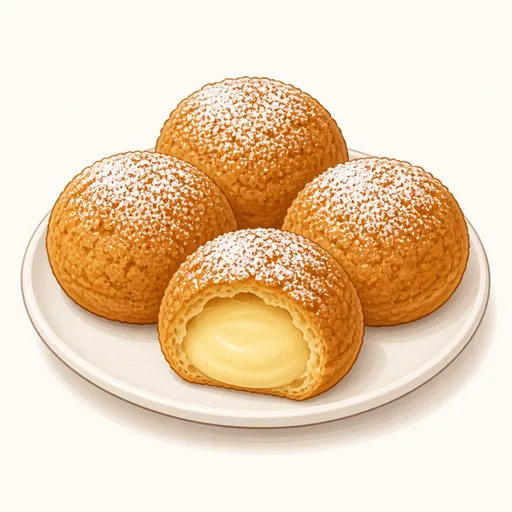
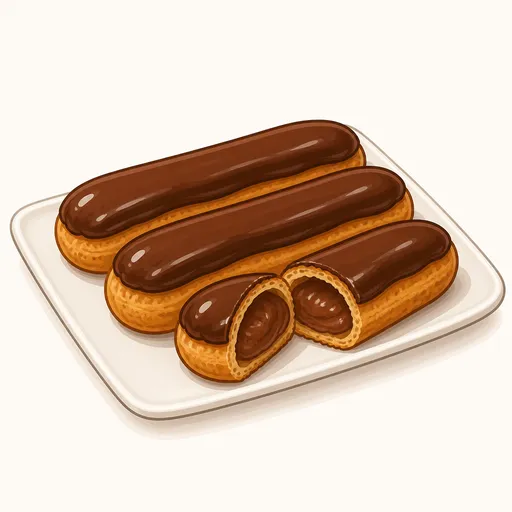
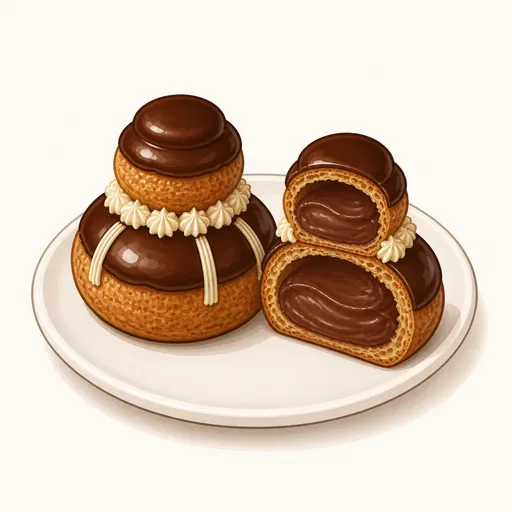
The religieuse is a classic two-tier choux pastry from Parisian bakeries: a large cream puff for the body and a small one for the head, said to resemble a nun, which is how it got its name. Both puffs are filled with chocolate pastry cream, dipped in a glossy brown glaze and joined by a collar of white buttercream. It's a fun challenge once you're comfortable making choux pastry.
- Difficulty
- Very hard
- Prep
- 1 hr 15 min
- Cook
- 40 min
- Rising or chilling
- 2 hr 30 min
- Total time
- 4 hr 25 min
- Method
- Oven-baked
Ingredients
Chocolate pastry cream
Choux pastry
Cocoa glaze
Buttercream collar
Instructions
Step 1
Heat 500 g whole milk in a saucepan until it steams; meanwhile, whisk 100 g egg yolks with 100 g granulated sugar and 40 g cornstarch. Pour the hot milk into the yolks, tip everything back into the pan and stir constantly over medium heat. Stirring nonstop keeps the cream from catching on the bottom or turning lumpy. The cream is ready when it has bubbled up a few times and thickened like mayonnaise.
Step 2
Take the pan off the heat, immediately add 80 g finely chopped dark chocolate and 25 g unsalted butter and stir until fully melted. The heat of the cream is enough to melt the chocolate without scorching it. The cream is ready when it is an even deep brown, glossy and smooth with no streaks of chocolate.
Step 3
Spread the cream in a shallow dish, press plastic wrap directly onto the surface and chill it in the fridge for about two hours. Wrap that touches the cream stops a dry skin from forming, and the shallow dish helps it cool quickly and safely. It's ready when it is completely cold and firm; whisk it for a few seconds to smooth it before piping.
Step 4
Preheat the oven to 180°C, line two baking sheets with parchment paper and draw guide circles on the underside of the paper: six 5 cm circles on one sheet and six 3 cm circles on the other, multiplied by the number of pastries you're making. The guides keep the puffs the same size so they stack evenly. You're ready when the oven is hot and the circles show clearly through the paper.
Step 5
Put 120 g water, 120 g whole milk, 100 g unsalted butter, 4 g granulated sugar and a pinch salt in a saucepan, bring it to a boil, then dump in 140 g all-purpose flour all at once and stir vigorously with a wooden spoon for about two minutes. Cooking the dough over the heat drives off some moisture so it can absorb more egg. It's ready when it gathers into a smooth ball that pulls away from the sides and leaves a thin film on the bottom of the pan.
Step 6
Transfer the dough to a bowl, beat it for a few minutes to cool it slightly, then gradually add 240 g beaten eggs a little at a time, only adding more once the last addition is fully absorbed. Adding the eggs slowly lets you control the consistency, since you may not need all of them. The dough is ready when it is glossy and smooth and falls from the lifted paddle in a V shape that slowly drops off.
Step 7
Spoon the dough into a piping bag with a round tip and pipe large puffs over the 5 cm circles and small ones over the 3 cm circles, holding the bag straight up and flicking it off quickly at the end. Gently smooth down the pointed tips with a wet fingertip. Smoothing the tips keeps the puffs evenly round and stops the tops from burning. You're done piping when the puffs are all the same height, smooth on top and at least three centimeters apart.
Step 8
Bake the sheet of small puffs at 180°C for about 20 to 25 minutes, without opening the oven door for the first fifteen minutes. Opening the oven early lets the steam escape and makes the shells collapse. The small puffs are done when they are round and puffed, evenly golden brown, golden even in the cracks and feel light when picked up.
Step 9
Bake the sheet of large puffs at 180°C for about 30 to 35 minutes, then turn off the oven, prop the door open and leave them inside for five more minutes. The longer bake dries out the inside of the large puffs and makes them sturdy enough to hold the small puffs on top. They're ready when the shells are firm, sound hollow when tapped and don't soften once out of the oven.
Step 10
Once the shells have cooled completely on a wire rack, poke a hole in the bottom of each with a small piping tip and pipe in the chocolate cream until full. Filling from the bottom keeps the tops clean and smooth for dipping in the glaze. Each puff is full when it feels heavy in your hand and a little cream just peeks out of the hole.
Step 11
Mix 200 g powdered sugar with 15 g cocoa powder, then gradually add 35 g water until it is as thick as honey, dip the top of each puff into it and wipe off the excess with your finger. A glaze of the right thickness coats evenly without dripping down the sides. The glaze is ready when it is smooth and glossy and has set on the surface after a few minutes.
Step 12
Beat 60 g softened unsalted butter with 60 g powdered sugar and 2 g vanilla extract until fluffy and white, set a small puff on the center of each large puff, then use a small star tip to pipe a ring of buttercream around the neck and a few vertical lines on the body. The buttercream acts as both glue and the pastry's signature decoration. Chill for about twenty minutes; the pastries are finished when the heads and bodies are firmly stuck together and stand up straight without tilting.
Equipment
- Oven
- Small saucepan
- Hand mixer
- Whisk
- Spatula
- Sieve
- Piping bag
- Baking sheet
- Parchment paper
- Kitchen scale
- Plastic wrap
- Refrigerator
- Wire cooling rack
Tips
- You can turn the chocolate cream into coffee cream by swapping the chocolate for strong instant coffee, another very popular version of the religieuse in France.
- If the glaze gets too thick, warm the bowl over a pan of hot water for a few seconds; if it is too thin, add a little more powdered sugar.
- Baked choux shells freeze well; just warm them at 160°C for about five minutes to crisp them up again, then let them cool.
Storage
Filled pastries need to be kept in the fridge and are best eaten within a day, as the shells gradually soften. Unfilled shells keep for two days in an airtight container at room temperature, and the chocolate cream keeps for three days in the fridge.
Common problems and how to fix them
- The small puff slides off or crushes the large puff.
- The large shell wasn't dry enough or the buttercream was too soft. Bake the large puffs a few minutes longer to firm up the shells, and chill the buttercream until firm before stacking.
- The choux shells collapse right after coming out of the oven.
- The puffs were underbaked or you opened the oven too early. Bake until even the cracks are golden and let the puffs rest in the oven with the door ajar for a few minutes.
- The choux dough is too runny and spreads when piped.
- Too much egg was added for how dry the dough was. Next time, cook the dough over the heat a little longer and add the eggs bit by bit, stopping as soon as the dough falls in a V shape.
This recipe is based on the common ratios for this bake and is written entirely in our own words.