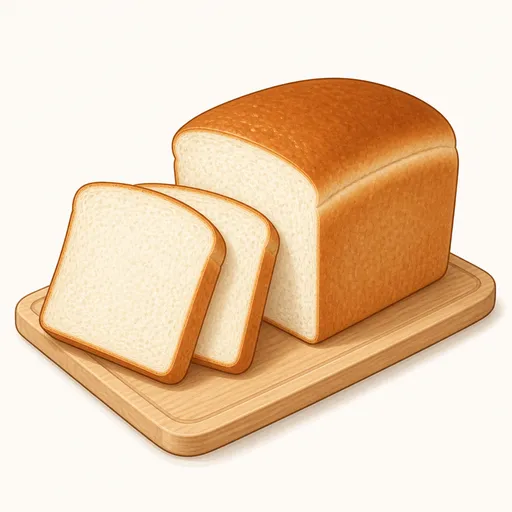
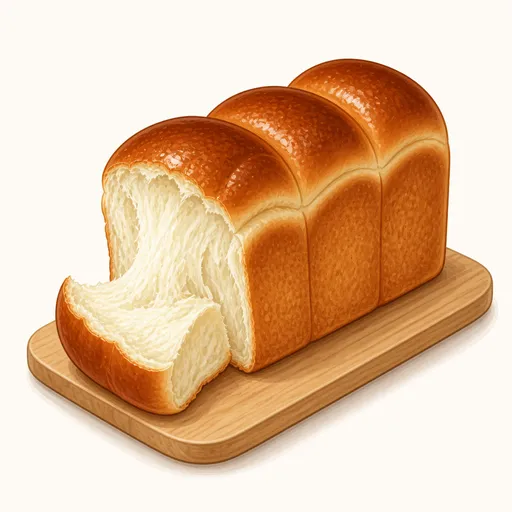
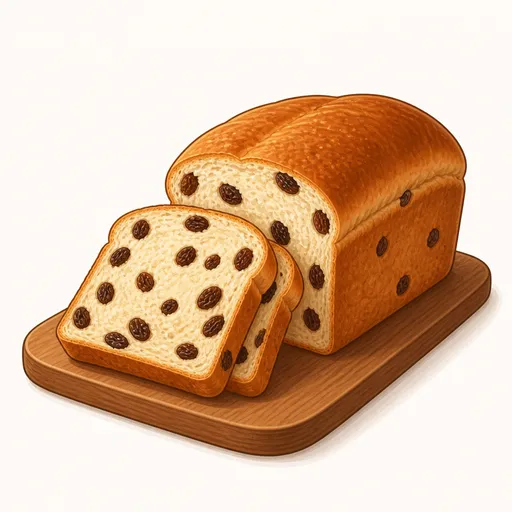
Raisin bread
This soft sandwich loaf, fragrant with milk and butter, is packed with plump, juicy raisins and a whisper of cinnamon. The thin crust bakes to a deep russet brown around an ivory crumb with even little air pockets, and it is at its best sliced, toasted and spread with butter for breakfast. The recipe is refreshingly simple, which makes it a great choice if you are just starting out with bread.
- Difficulty
- Easy
- Prep
- 30 min
- Cook
- 38 min
- Rising or chilling
- 2 hr 20 min
- Total time
- 3 hr 28 min
- Method
- Oven-baked
Ingredients
Dough
Soaked raisins
Butter for brushing
Instructions
Step 1
Soak 160 g raisins in 80 g warm water for about fifteen minutes, then drain them and pat them dry with paper towels. Soaked raisins won't draw moisture out of the crumb and won't scorch on the crust. They're ready when they look round and plump, feel soft and are dry on the outside.
Step 2
Put 400 g bread flour, 6 g instant yeast, 40 g granulated sugar, 7 g salt and 3 g ground cinnamon in a bowl, add 240 g warm whole milk and 50 g eggs and knead until the dough comes together, then add 40 g softened unsalted butter and knead for about ten minutes more. Adding the butter later lets the gluten develop first, so the crumb turns out finer. The dough is ready when it is smooth and glossy and stretches into a membrane thin enough to see light through.
Step 3
Pat the dough out thinly on the counter, scatter the raisins all over it, then roll it up and knead gently a few times. Mixing by hand keeps the raisins whole instead of letting the mixer crush them. You're done when the raisins are evenly spread through the dough and only a few peek out at the surface.
Step 4
Place the dough in a clean, oiled bowl, cover it well and let it rise somewhere warm for about seventy minutes. A full rise gives you a light loaf with a gentle yeasty aroma. The dough is ready when it has doubled in size and a fingertip pressed into it leaves a dent that stays.
Step 5
Press the dough flat and roll it into a rectangle with the short side as long as your pan, then roll it up tightly from the short side and pinch the seam closed underneath. Rolling it tightly keeps big gaps out of the slices. It's ready when you have an evenly taut log that fits snugly in the pan, seam side down.
Step 6
Set the log in a buttered 23 cm loaf pan, cover it with plastic wrap and let it rise for about fifty minutes, preheating the oven to 180°C in the meantime. This rise decides how tall and airy your loaf will be. The dough is ready when its dome has risen about 2 cm above the rim of the pan.
Step 7
Bake at 180°C for about 35 to 40 minutes, and if the top darkens too early, lay a sheet of foil over it after the first twenty minutes. With sugar and milk in the dough, this loaf browns faster than plain bread. It's done when the crust is evenly brown, the bottom sounds hollow when tapped, or the center reaches about 90°C.
Step 8
Turn the loaf out of the pan right away, brush the top with 10 g melted unsalted butter, then let it cool on its side on a wire rack for at least an hour before slicing. The butter keeps the crust soft and shiny, and waiting lets the crumb set so it won't stick to the knife. It's ready when the bottom no longer feels warm.
Equipment
- Oven
- Loaf pan
- Stand mixer
- Rolling pin
- Pastry brush
- Mixing bowl
- Kitchen scale
- Plastic wrap
- Wire cooling rack
Tips
- A serrated bread knife slices raisin bread most neatly because it doesn't squash the crumb.
- For a cinnamon swirl, sprinkle a little cinnamon sugar over the dough before you roll it up.
- Golden raisins or dried cranberries can replace part of the dark raisins, weight for weight.
Storage
Kept in a sealed bag at room temperature, the bread stays good for three days; skip the fridge, as it makes the crumb dry and firm quickly. You can also slice it ahead and freeze it for up to a month, then toast the slices straight from the freezer.
Common problems and how to fix them
- There is a large gap in the crumb just below the crust.
- The dough wasn't rolled tightly enough or the second rise went on too long. Roll the dough up snugly and get the loaf into the oven as soon as it crowns above the pan.
- The raisins on top of the loaf burned black.
- Raisins exposed on the crust scorch easily. Tuck them into the dough as you roll it and tent the loaf with foil once the top is nicely colored.
This recipe is based on the common ratios for this bake and is written entirely in our own words.