Profiteroles
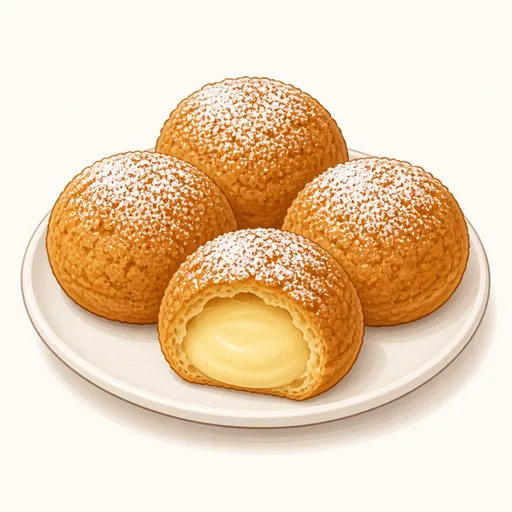
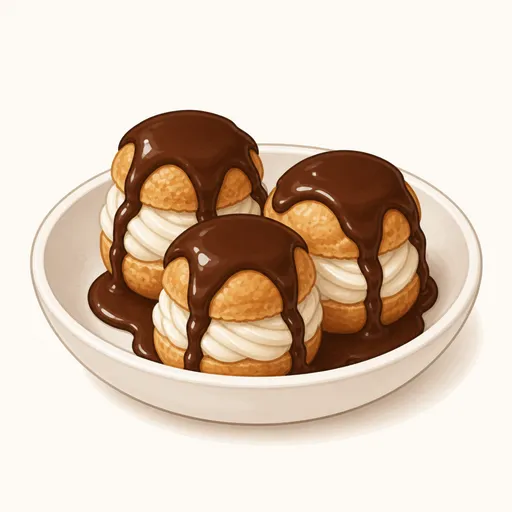
Profiteroles are small, round French choux puffs with a light, crisp shell and a hollow center, filled with crème chantilly (cream whipped with sugar and vanilla) and drizzled with warm chocolate sauce just before serving. The contrast between the cold cream and the warm sauce is what makes them so beloved. The shells are made with water only, so they're especially crisp and light.
- Difficulty
- Medium
- Prep
- 45 min
- Cook
- 35 min
- Rising or chilling
- 30 min
- Total time
- 1 hr 50 min
- Method
- Oven-baked
Ingredients
Choux pastry shells
Crème chantilly
Chocolate sauce
Instructions
Step 1
Preheat the oven to 190°C and line two baking sheets with parchment paper. Choux needs a strong blast of heat as soon as it goes in the oven so the steam inside can push the puffs up. The oven is ready when the heating light has gone off.
Step 2
Put 250 g water, 110 g unsalted butter cut into small pieces, 2 g salt and 8 g granulated sugar in a saucepan and heat over medium until the butter has completely melted and the mixture comes to a rolling boil. The butter needs to melt fully before it boils so that not too much water evaporates. This step is done when big bubbles are breaking across the whole surface.
Step 3
Lower the heat, dump in all of the 150 g all-purpose flour at once and stir vigorously with a wooden spoon, then keep pressing and turning the dough for about one to two minutes more. Stirring over low heat drives off excess moisture and cooks the starch evenly. The dough is ready when it pulls away from the sides of the pan into a smooth ball.
Step 4
Transfer the dough to a large bowl, spread it out and stir it a few times over about four minutes to let it cool down. Dough that's too hot will cook the eggs the moment they go in. It's ready when it feels warm, not scalding, to your fingertip.
Step 5
Beat 250 g eggs and add them to the dough about a quarter at a time, beating hard with a wooden spoon until the dough has absorbed each addition before adding the next. At first the dough will break into slippery pieces, but keep beating and it will come back together smoothly. The dough is ready when it's thick and glossy and a line drawn through it with your finger slowly closes up.
Step 6
Spoon the dough into a piping bag fitted with a round tip, hold the bag straight up just above the sheet and pipe rounds about three and a half centimeters across, three centimeters apart. Dip a finger in water and gently press down the peak on each one. Flattening the peaks gives the puffs evenly round tops that don't burn. The rounds are ready when they're evenly round and tall with no pointy tails.
Step 7
Bake at 190°C for about 25 to 30 minutes, keeping the oven door shut for the first fifteen minutes. The steam trapped in the oven lets the shells puff up fully before they dry out. They're done when they're deep golden, the cracks on top have browned too and the bottoms sound hollow when tapped.
Step 8
Turn off the oven, poke a hole in the bottom of each puff with the tip of a small knife, then return them to the oven with the door ajar for about five minutes. The holes let the steam inside escape so the shells don't go soft as they cool. They're ready when the shells are dry and firm and hold their shape when squeezed gently.
Step 9
Whip 400 g cold whipping cream with 40 g powdered sugar and 4 g vanilla extract on medium speed for about four minutes. Powdered sugar dissolves quickly and stabilizes the cream better than granulated sugar. The cream is ready when it holds firm peaks that stand straight up and doesn't slide when you tilt the bowl.
Step 10
Heat 180 g heavy cream with 15 g honey over low heat until it just simmers, turn off the heat, add 150 g chopped dark chocolate, wait one minute and stir gently. The honey makes the sauce silky and keeps it pourable longer as it cools. The sauce is ready when it's smooth and thick and pours in an unbroken stream.
Step 11
Spoon the crème chantilly into a piping bag with a small tip and pipe it through the hole in the bottom until each puff is full, or slice the tops off the puffs and pipe the cream into the middle. Filling them just before serving keeps the shells crisp. They're ready when they feel heavy in your hand and no cream is leaking out.
Step 12
Stack the profiteroles on a platter or serve three to four per person, then pour the warm chocolate sauce over them right at the table. The warm sauce meeting the cold cream creates the contrast this dessert is known for. It's finished when the chocolate has run down to cover half of each puff and pooled a little on the plate.
Equipment
- Oven
- Small saucepan
- Spatula
- Piping bag
- Baking sheet
- Parchment paper
- Hand mixer
- Mixing bowl
- Kitchen scale
- Wire cooling rack
Tips
- Unfilled shells keep in an airtight container for one day; before serving, recrisp them in a 160°C oven for about five minutes.
- You can swap the crème chantilly for scoops of vanilla ice cream for the original French bistro version of profiteroles.
- If the chocolate sauce thickens as it cools, warm it over a water bath and stir in a little more heavy cream, and it will turn silky again.
Storage
Empty shells keep for two days in an airtight container at room temperature or a month in the freezer. Filled profiteroles are best eaten within a few hours, and the chocolate sauce keeps in the fridge for five days.
Common problems and how to fix them
- The shells don't puff and turn out flat.
- The dough was too runny from too much egg, or the oven wasn't hot enough. Add the eggs gradually, stop when the line in the dough closes slowly, and preheat the oven long enough.
- The puffs go soft and wrinkly after cooling.
- Steam is still trapped inside the shells. Bake them longer until they're deeply browned, poke a hole in the bottoms and let them dry out a little more in the turned-off oven.
This recipe is based on the common ratios for this bake and is written entirely in our own words.