Portuguese sweet bread
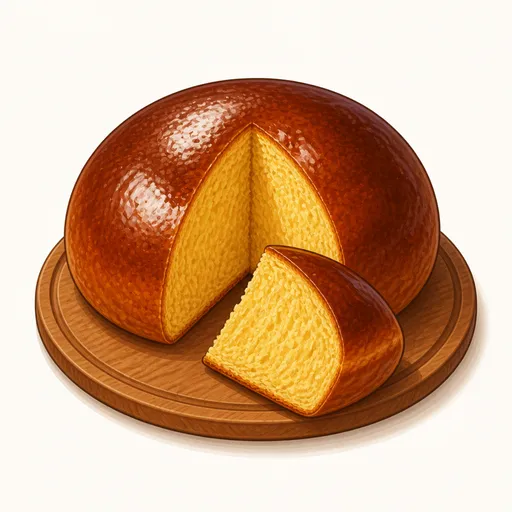
Portuguese sweet bread, also called massa sovada, is a large round loaf with a glossy brown crust and a golden crumb rich with eggs. The crumb is soft, fluffy and gently sweet, with hints of lemon zest and vanilla. It's traditionally baked for Easter and is wonderful toasted with butter.
- Difficulty
- Medium
- Prep
- 40 min
- Cook
- 35 min
- Rising or chilling
- 3 hr
- Total time
- 4 hr 15 min
- Method
- Oven-baked
Ingredients
Dough
Egg wash
Instructions
Step 1
Warm 160 g whole milk over low heat until it's about body temperature, then turn off the heat and drop in 85 g unsalted butter to melt. Warm milk wakes up the yeast and helps the butter blend more evenly into the dough. It's ready when the butter has melted completely and the mixture feels warm, not hot, on your finger.
Step 2
Put 500 g bread flour, 125 g granulated sugar, 10 g instant yeast, 6 g salt and 4 g lemon zest in the mixer bowl, then pour in the milk and butter mixture along with 150 g eggs and 4 g vanilla extract. Mixing the zest straight into the flour spreads its fragrant oils through the whole loaf. The dough is ready when everything has come together into a soft, sticky mass.
Step 3
Knead on medium speed for about twelve minutes, until the dough is less sticky and turns silky. An egg-rich dough needs a long knead to build gluten strong enough to hold up a big loaf. The dough is ready when it stretches into a thin windowpane without tearing and pulls away from the bottom of the bowl.
Step 4
Shape the dough into a ball, place it in a buttered bowl, cover it well and let it rise somewhere warm for about two hours. The high sugar content slows the yeast down, so the dough needs a long rise. It's ready when it has doubled and feels as soft as cotton when pressed gently.
Step 5
Punch down the dough, fold the edges into the center, then flip it over and rotate it on the counter into a taut ball, and set it in a buttered 23 cm pie dish. A taut surface helps the loaf rise into a tall, handsome dome. The loaf is ready when it's evenly round with a smooth top.
Step 6
Cover loosely with plastic wrap and let it rise for about an hour more, until the dough nearly fills the dish. This final rise makes the crumb light, airy and soft. It's ready when the dough has risen about two centimeters above the rim of the dish and springs back slowly when pressed gently.
Step 7
Preheat the oven to 175°C, beat 25 g eggs and brush a thin, even layer over the whole top of the loaf. The egg wash creates the glossy mahogany crust this bread is known for. It's ready when the top is covered in a thin coat of egg with no puddles.
Step 8
Bake at 175°C for about 30 to 35 minutes, laying a loose sheet of foil over the top for the last ten minutes if it's darkening too fast. A large, sugary loaf like this can burn on top before the inside is done. The bread is done when the crust is a glossy brown and a thermometer inserted in the center reads about 90°C.
Step 9
Remove the bread from the dish after ten minutes, set it on a rack and let it cool for about an hour before slicing. The warm crumb is very soft and will squash flat if you cut it right away. It's ready when the bottom of the loaf is completely cool and a knife glides smoothly through the crumb.
Equipment
- Oven
- Pie dish
- Stand mixer
- Kitchen scale
- Mixing bowl
- Pastry brush
- Plastic wrap
- Wire cooling rack
Tips
- You can swap some of the lemon zest for orange zest for a warmer aroma.
- Day-old slices toasted and spread with butter make a much-loved breakfast.
- This bread also makes excellent French toast thanks to its sturdy, egg-rich crumb.
Storage
Wrapped tightly in a bag, the bread stays soft for three days at room temperature. You can slice and freeze it for up to a month, then toast slices as you need them.
Common problems and how to fix them
- The loaf is rising very slowly even after a few hours.
- The sugar-rich dough slows the yeast down, especially in a cold kitchen. Let the dough rise in the turned-off oven with a cup of hot water next to it.
- The top burned dark while the center was still wet.
- The oven was too hot or the pan sat too high. Move the pan down one rack and cover the top with foil once it has enough color.
This recipe is based on the common ratios for this bake and is written entirely in our own words.