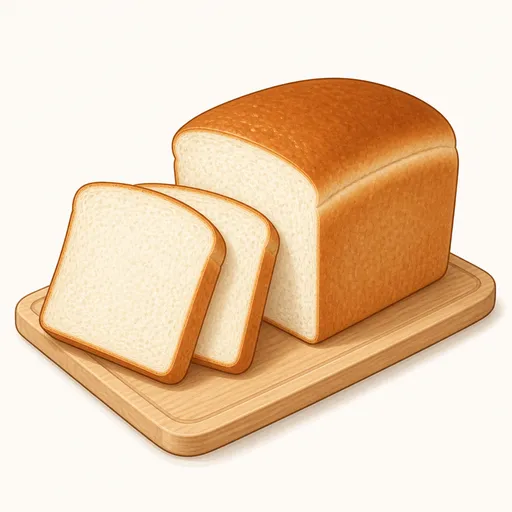
Oat bread
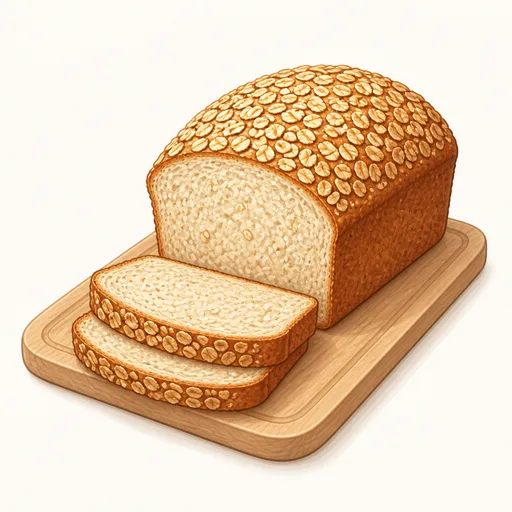
Oat bread has a soft, moist, slightly chewy crumb with a gentle hint of honey sweetness. The secret is a cooked oat porridge kneaded into the dough, which keeps the bread moist far longer than ordinary bread. The oats sprinkled on top bake up crisp and fragrant, giving the loaf a rustic, inviting look.
- Difficulty
- Easy
- Prep
- 30 min
- Cook
- 40 min
- Rising or chilling
- 2 hr 45 min
- Total time
- 3 hr 55 min
- Method
- Oven-baked
Ingredients
Oat porridge
Dough
Topping
Instructions
Step 1
Bring 200 g water to a boil in a small saucepan over medium heat, add 80 g rolled oats and stir constantly for about two minutes, then turn off the heat and add 30 g unsalted butter and 40 g honey. Cooking the oats briefly makes them swell and soften and creates a creamy texture that keeps the crumb moist. Turn off the heat when the mixture has thickened into a loose porridge and the butter has fully melted.
Step 2
Spread the oat porridge in a wide bowl and let it cool for about 25 minutes, stirring now and then to let the heat escape faster. A mixture that is still hot will kill the yeast when combined with the flour. The porridge is ready when it feels just slightly warm to the touch, about 35 degrees C.
Step 3
Put 400 g bread flour, 15 g brown sugar, 7 g instant yeast and 8 g salt in the bowl of a stand mixer, add the oat porridge along with 120 g whole milk and mix on low speed. Milk makes the crumb softer and helps the crust brown beautifully. Move on to kneading once the dough has come together with no dry white streaks of flour.
Step 4
Increase to medium speed and knead for about ten minutes, stopping the mixer once to scrape down the dough clinging to the bowl. The oats make the dough stickier than usual, but with enough kneading it will pull away from the sides on its own. The dough is right when it is soft, smooth and elastic and stretches into a thin membrane without tearing right away.
Step 5
Shape the dough into a ball, place it in an oiled bowl, cover with plastic wrap and let it rise somewhere warm for about 70 minutes. This time lets the yeast do its work and builds flavor in the crumb. The dough has risen enough when it has doubled in volume and the surface looks taut and puffy.
Step 6
Press the dough flat into a rectangle, fold the two long edges into the middle, then roll it up tightly from a short end and set it in an oiled loaf pan; brush to taste whole milk over the top and sprinkle with 10 g rolled oats. Brushing with milk helps the oats stick and gives the crust a glossy golden color. This step is done when the roll sits evenly in the pan and the top is completely covered in oats.
Step 7
Cover with a thin towel and let it rise for about 45 minutes more, turning the oven on to 190 degrees C when twenty minutes remain. A long enough second rise gives the loaf a beautifully rounded dome. The dough is ready when the dome rises about two centimeters above the rim of the pan and a light press springs back slowly.
Step 8
Bake on the middle rack at 190 degrees C for about 32 to 38 minutes, rotating the pan after twenty minutes so the crust browns evenly. Honey and milk make the crust darken quickly, so you can cover it with foil if the top browns too fast. The bread is done when the crust is a honey brown and a thermometer inserted in the center of the crumb reads about 93 degrees C.
Step 9
Turn the bread out of the pan and let it sit on a wire rack for about one hour before slicing. The crumb holds a lot of moisture from the oats, so it needs time to set. It is ready to slice when the bottom has cooled and the knife cuts through without the crumb sticking.
Equipment
- Oven
- Loaf pan
- Stand mixer
- Kitchen scale
- Mixing bowl
- Small saucepan
- Plastic wrap
- Pastry brush
- Wire cooling rack
Tips
- Use traditional old-fashioned rolled oats rather than instant oats, because the larger flakes keep a slight chew in the crumb.
- You can swap the honey for maple syrup to give the bread a light caramel note.
- For a nuttier flavor, toast the oats in a dry skillet for about three minutes before cooking them.
Storage
Oat bread stays moist very well; keep it in a sealed bag at room temperature for up to four days. To keep it longer, slice it, pack it in an airtight container and freeze for up to a month.
Common problems and how to fix them
- The dough is too sticky to shape into a ball.
- The oat porridge may have been cooked too thin or not cooled enough, making the dough runny. Knead for a few more minutes, and if it is still too sticky, add bread flour a spoonful at a time until the dough pulls away from the bowl.
- The crust is dark but the crumb is still wet.
- The oven was too hot for the time the crumb needs to bake through. Lower the oven to 180 degrees C, cover the top with foil and keep baking until the inside reaches the right temperature.
This recipe is based on the common ratios for this bake and is written entirely in our own words.