Lavash
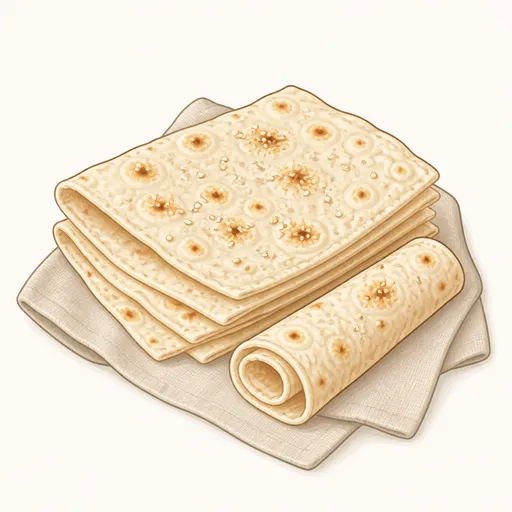
Lavash is a thin flatbread from Armenia and the Middle East, rolled out very thin and baked quickly on a hot surface. Fresh from the oven it's soft and pliable, perfect for wrapping around grilled meat and vegetables, and if you let it dry out it turns as crisp as a cracker and is great for dipping.
- Difficulty
- Easy
- Prep
- 30 min
- Cook
- 30 min
- Rising or chilling
- 1 hr 15 min
- Total time
- 2 hr 15 min
- Method
- Oven-baked
Ingredients
Dough
Topping and dusting flour
Instructions
Step 1
Mix 400 g all-purpose flour with 2 g instant yeast, 4 g sugar and 7 g salt, then pour in 230 g warm water and 20 g olive oil and mix by hand. Just the right amount of water makes the dough supple enough to roll thin without sticking. It's ready when it comes together into a soft ball that leaves the sides of the bowl clean.
Step 2
Knead the dough on the counter for about six minutes, just until smooth; there's no need to make it very elastic. Lavash is rolled extremely thin, so a dough with a little spring is all you need. It's ready when the surface is smooth and a fingertip dent slowly fills back in.
Step 3
Place the dough in a bowl, cover tightly with plastic wrap and let it rest somewhere warm for about an hour. The rest gives the yeast time to work gently and softens the dough considerably. It's ready when it has grown by about half and has a few small air pockets inside.
Step 4
Place a large baking sheet upside down on the middle rack and heat the oven to 240°C for about twenty-five minutes. The hot surface cooks the thin sheets quickly before they have a chance to dry out and harden. The oven is ready when the heating light has gone off and the sheet is evenly hot.
Step 5
Divide the dough into eight equal pieces, roll each into a ball and cover with a towel to rest for about ten more minutes. A short rest after dividing keeps the dough from shrinking back as you roll. The balls are ready when they're soft, smooth and slightly slumped under their own weight.
Step 6
Lightly dust the counter with all-purpose flour (to taste) and roll each ball into a very thin oval about 30 cm long, then brush the top with a little water and sprinkle with 15 g white sesame seeds if you like. The thinner the sheet, the softer and more evenly cooked the bread. The sheet is ready when it's thin enough that you can faintly see the grain of the counter underneath.
Step 7
Lay each sheet on the hot baking sheet and bake at 240°C for about 3 to 5 minutes, without flipping. The short baking time keeps the bread soft and pliable rather than crisp and hard. It's done when small bubbles appear on the surface along with a few pale golden spots.
Step 8
Take the breads out and stack them inside a damp kitchen towel, folding the towel over to cover the whole stack. The steam trapped in the towel softens the sheets so they can be rolled up. They're ready when you can fold one in half without it cracking at the crease.
Equipment
- Oven
- Baking sheet
- Rolling pin
- Kitchen scale
- Mixing bowl
- Pastry brush
- Plastic wrap
Tips
- For crisp lavash to eat like crackers, bake it two to three minutes longer and let it cool on a rack without covering.
- You can also cook lavash in a dry cast-iron skillet heated over medium heat, about a minute per side.
- Swap the white sesame seeds for cumin seeds or chili flakes for a new flavor without changing the dough recipe.
Storage
Soft lavash wrapped tightly in a bag keeps for two days at room temperature. When it dries out, just spritz it with a little water and warm it for a few seconds in a hot pan to make it pliable again, or freeze it for up to a month.
Common problems and how to fix them
- The dough keeps shrinking back as you roll it.
- The dough hasn't rested long enough, so the gluten is still tight. Move on to another ball and come back to this one after five minutes.
- The bread is brittle and cracks instead of staying soft enough to roll.
- It was baked too long or wasn't wrapped in a towel. Shorten the baking time and cover the bread with a damp towel as soon as it comes out of the oven.
This recipe is based on the common ratios for this bake and is written entirely in our own words.