Kugelhopf
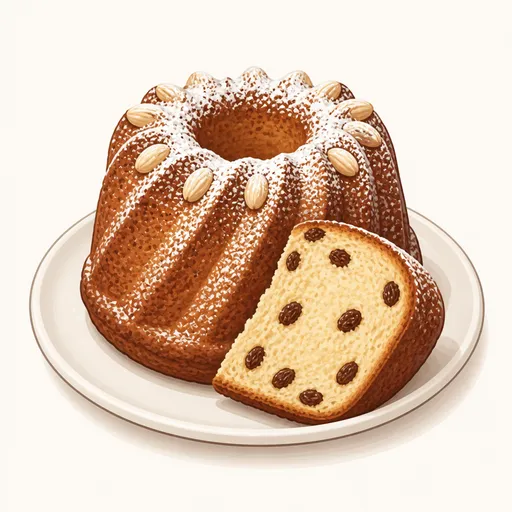
Kugelhopf is a traditional sweet yeast bread from Alsace, baked in a crown-shaped ceramic mold with swirled ridges. Its crumb is soft like brioche but lighter, studded with rum-soaked raisins and topped with a ring of crunchy almonds. In Alsace it's often enjoyed at Sunday breakfast with coffee or a glass of white wine.
- Difficulty
- Medium
- Prep
- 40 min
- Cook
- 45 min
- Rising or chilling
- 10 hr
- Total time
- 11 hr 25 min
- Method
- Oven-baked
Ingredients
Rum-soaked raisins
Yeast dough
Preparing the mold
Finishing
Instructions
Step 1
Mix 100 g raisins with 30 g dark rum in a small bowl, cover and let them soak for about 60 minutes, or ideally overnight. Soaked raisins stay plump and juicy and won't draw moisture from the crumb. They're ready when they're round, soft and have absorbed almost all of the rum.
Step 2
Put 500 g all-purpose flour, 8 g instant yeast, 80 g sugar, 3 g lemon zest if using, 200 g warm whole milk and 100 g eggs in the mixer bowl, mix on low speed, then add 9 g salt and knead on medium speed for about eight minutes. Kneading well before adding the butter builds a strong gluten network. The dough is ready when it's smooth, elastic and starting to pull away from the sides of the bowl.
Step 3
Add 150 g softened butter in three additions and keep kneading for about six minutes until it's fully absorbed. Adding the butter gradually keeps the dough from turning slippery and separating. The dough is ready when it's glossy and silky, and a small piece stretches into a thin, translucent windowpane without tearing.
Step 4
Drain off any excess rum, add the raisins to the bowl and mix on the lowest speed for just a few turns to distribute them. Mixing briefly keeps the raisins from getting crushed and discoloring the dough. The dough is ready when the raisins are spread evenly throughout; then shape it into a ball and place it in an oiled bowl.
Step 5
Cover the bowl with plastic wrap, leave the dough at room temperature for about 30 minutes, then refrigerate it overnight, about eight hours. A slow, cold rise gives the bread a deeper flavor and makes this buttery dough easier to shape. The dough is ready when it has nearly doubled and feels firm to the touch.
Step 6
Generously brush a 22 cm kugelhopf mold with softened butter (to taste), getting into every swirled ridge, then place 30 g whole almonds in the bottom of the ridges, one per ridge. The butter keeps the bread from sticking in the deep grooves, and the almonds become a decorative ring on top. The mold is ready when it's fully coated in butter and each ridge holds an almond.
Step 7
Take the cold dough out, press gently to release the air, shape it into a round, then poke a hole in the center with your fingers and stretch it into a ring. Set the ring in the mold so the center tube passes through the hole, pressing lightly to even out the dough all around. The dough is right when it's evenly distributed and fills about half the height of the mold.
Step 8
Cover with a damp towel and let the dough rise somewhere warm for about 90 minutes. Cold dough needs more time to warm up and rise for the last time. It's ready when it has risen to about 2 cm below the rim and a fingertip dent fills back in slowly.
Step 9
Preheat the oven to 180°C and set a rack on a low position, leaving enough room above for the tall mold. Placing the mold near the bottom helps the base of the ridges, which becomes the top of the bread, brown evenly. The oven is ready once it has held a steady temperature for at least fifteen minutes.
Step 10
Bake at 180°C for 40 to 45 minutes; if the top darkens too quickly, lay a sheet of foil over it after 25 minutes. Such a thick loaf needs time for the center to cook through. It's done when the top is a deep golden brown, a skewer comes out dry and the internal temperature reaches about 90°C.
Step 11
Leave the bread in the mold for about ten minutes, then turn it out onto a rack to cool completely, and dust the top with powdered sugar (to taste). Resting for a few minutes lets the bread shrink slightly and release cleanly from the ridges. It's finished when it's completely cool, the swirled ridges are sharp and the top is covered in a snowy layer of sugar.
Equipment
- Oven
- Bundt pan
- Stand mixer
- Mixing bowl
- Pastry brush
- Sieve
- Plastic wrap
- Wire cooling rack
- Kitchen scale
- Refrigerator
Tips
- A traditional ceramic mold holds heat well and gives a thicker crust; if you use a metal mold, shorten the baking time by about five minutes.
- Day-old kugelhopf, cut into thick slices and toasted until crisp, is wonderful with butter and jam.
- If you don't have rum, you can soak the raisins in kirsch or hot tea instead.
Storage
Wrapped tightly in plastic wrap, the bread stays soft at room temperature for three days. You can also slice it, wrap the portions individually and freeze them for up to a month; thaw at room temperature, then warm gently.
Common problems and how to fix them
- The bread sticks in the ridges of the mold and tears when turned out.
- The mold wasn't buttered thoroughly in every ridge. Use a pastry brush to apply a thick layer of softened butter, and chill the mold for a few minutes before adding the dough.
- The crumb is dense and heavy.
- The dough didn't rise enough before baking. Be patient and let it proof until it nearly reaches the rim of the mold, especially on cold days.
This recipe is based on the common ratios for this bake and is written entirely in our own words.