Gateau basque
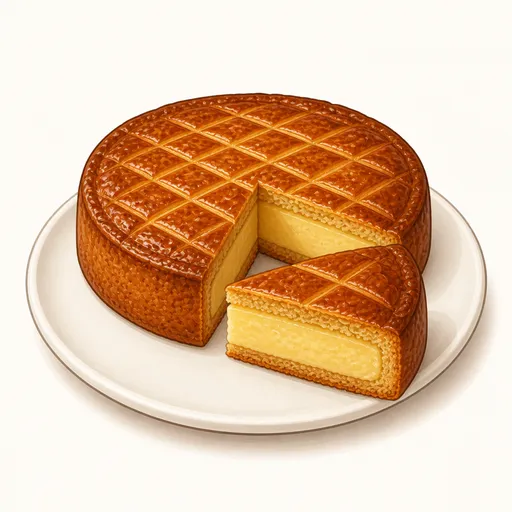
Gâteau basque is the signature cake of the Basque Country in southwestern France: two layers of soft, tender almond butter crust wrapped around a pastry cream flavored with vanilla and rum. The crust is somewhere between a cookie and a sponge cake, and the glossy golden top carries the familiar crosshatch pattern.
- Difficulty
- Medium
- Prep
- 50 min
- Cook
- 45 min
- Rising or chilling
- 4 hr
- Total time
- 5 hr 35 min
- Method
- Oven-baked
Ingredients
Almond butter crust
Pastry cream filling
Egg wash
Instructions
Step 1
Beat 150 g softened unsalted butter with 150 g granulated sugar, a pinch salt and 3 g lemon zest for about three minutes. Creaming the butter and sugar creates tiny air bubbles that keep the crust soft and tender rather than hard like a cookie. The mixture is ready when it is pale, smooth and fluffy.
Step 2
Add 50 g eggs and 18 g egg yolks and beat until combined, then sift in 250 g all-purpose flour, 50 g almond flour and 4 g baking powder and mix with a spatula. Mixing just enough keeps the crust tender and crumbly. The dough is ready when it is soft and pliable and slightly sticky, like cookie dough.
Step 3
Divide the dough into two pieces, one about one and a half times bigger than the other, place each between two sheets of parchment paper and roll it into a round about 5 mm thick, then refrigerate for two hours. This dough is very soft, so it has to be rolled between paper and chilled before you can handle it. It is ready when it has firmed up and the paper peels off without sticking.
Step 4
Heat 400 g whole milk, whisk 72 g egg yolks with 90 g granulated sugar and 35 g cornstarch, whisk in the hot milk, then pour everything back into the pan and stir constantly over medium heat until it boils and thickens. Take it off the heat and stir in 5 g vanilla extract and 20 g dark rum if using. The cream is ready when it is very thick, glossy and smooth and holds a clear line when you draw a spoon through it.
Step 5
Spread the cream on a plate, press plastic wrap directly onto the surface and refrigerate for about 60 minutes. Cold cream sets firmer, so it won't bubble out in the oven. It is ready when it is completely cool and as firm as stiffly whipped cream.
Step 6
Preheat the oven to 175°C, butter a 22 cm round pan and line the bottom with parchment paper. The parchment lets you lift the cake out in one piece without breaking its tender bottom. The oven is ready when it has been heating evenly for about fifteen minutes.
Step 7
Place the larger round of dough in the pan, press it over the bottom and up the sides to a height of about 3 cm, patching any cracks with your fingertips. The dough is soft enough to shape directly in the pan without rolling it again. The crust is ready when it is evenly thick, has no gaps and the top edge is level.
Step 8
Stir the cold cream until smooth, spread it evenly in the crust, leaving about 1 cm free at the edge, then lay the smaller round on top as a lid and press the edges firmly against the sides of the crust. A tight seal keeps the cream from bubbling out in the oven. The cake is ready when the top is flat, the edges are sealed and no cream is showing.
Step 9
Beat 18 g egg yolks with 10 g whole milk, brush two coats over the top, then use a fork to draw parallel lines in a crosshatch to make a diamond pattern. The egg wash gives the top its golden shine, while the fork lines create the traditional pattern. The top is ready when it is evenly glossy and the crosshatch is clearly visible.
Step 10
Bake at 175°C for 40 to 45 minutes, until the cake has risen slightly. Moderate heat lets the thick crust bake through without making the filling boil too hard. The cake is done when the top is a deep golden brown, the edges pull slightly away from the pan and a skewer inserted into the crust comes out dry.
Step 11
Let the cake cool in the pan for about two hours before unmolding it. The cream filling needs to cool to set, and cutting too soon will make it run. The cake is ready when the bottom of the pan is completely cool and a slice holds a neat layer of cream.
Equipment
- Oven
- Round cake pan
- Hand mixer
- Small saucepan
- Whisk
- Spatula
- Rolling pin
- Pastry brush
- Parchment paper
- Plastic wrap
- Kitchen scale
- Refrigerator
Tips
- Another traditional Basque version uses black cherry jam instead of pastry cream; use about two thirds as much jam as cream.
- If the dough is too soft when you press it into the pan, put the lined pan in the freezer for ten minutes before adding the filling.
- The cake tastes even better the next day, once the crust has soaked up the flavor of the filling.
Storage
Covered, the cake keeps for one day at room temperature; after that, refrigerate it and enjoy within four days. Take it out about thirty minutes before serving so the crust softens again.
Common problems and how to fix them
- The cream filling bubbles over the edge of the lid during baking.
- The edges of the lid weren't pressed firmly enough or the crust was overfilled. Leave a clear border and press the two layers of dough together tightly before brushing on the egg wash.
- The crust turns out dry and hard like a cookie.
- The cake was baked too long or the dough was overmixed. Start checking the cake at thirty-five minutes and mix the dough only until no dry streaks remain.
This recipe is based on the common ratios for this bake and is written entirely in our own words.