Fraisier
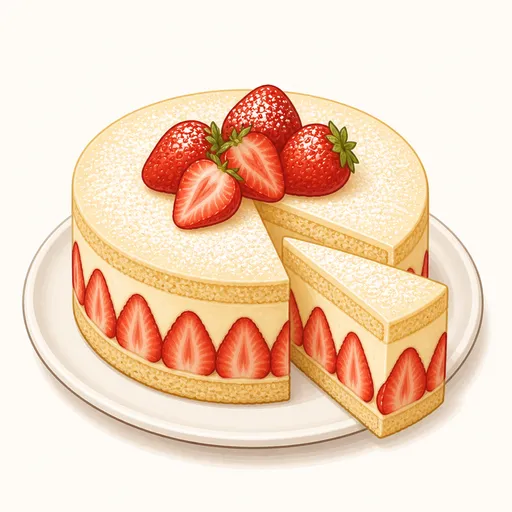
The fraisier is France's iconic springtime strawberry cake, made of two layers of génoise (a sponge made by whipping whole eggs) filled with mousseline cream (pastry cream whipped with butter) and halved strawberries lined up around the sides. Each slice shows off a bright red row of strawberries, while the lightly rich vanilla cream mingles with the sweet-tart berries.
- Difficulty
- Hard
- Prep
- 1 hr 30 min
- Cook
- 30 min
- Rising or chilling
- 5 hr
- Total time
- 7 hr
- Method
- Oven-baked
Ingredients
For the génoise sponge
For the soaking syrup
For the mousseline cream
For the strawberries and decoration
Instructions
Step 1
Line the bottom of a 20 cm round cake pan with parchment paper, grease the sides with a thin layer of butter and heat the oven to 175°C. The paper lets you remove the cake whole so you can cut even layers. The oven is ready after heating evenly for about fifteen minutes.
Step 2
Set a bowl of 200 g eggs and 120 g superfine sugar over a pot of hot water and whisk until warm to the touch, then switch to a mixer on high speed for about ten minutes. Warming the eggs dissolves the sugar and lets the foam grow to several times its volume. The mixture is ready when it's ivory, thick and the ribbon falling from the beater sits on the surface for a few seconds before disappearing.
Step 3
Sift 120 g cake flour over the eggs in three additions, each time folding very gently with a spatula from the bottom up, then mix 20 g melted unsalted butter with a little of the batter and fold it back into the bowl. Heavy butter easily breaks the foam, so it needs to be lightened first before folding. The batter is ready when it's smooth with no flour pockets and still airy.
Step 4
Pour the batter into the pan, tap it lightly to pop large bubbles and bake at 175°C for 22 to 26 minutes. Don't open the oven door for the first fifteen minutes so the cake doesn't sink. It's done when the top is evenly golden, springs back when lightly pressed and the edges pull slightly away from the sides of the pan.
Step 5
Heat 80 g water with 60 g granulated sugar until boiling and the sugar has dissolved, turn off the heat, let it cool, then stir in 20 g kirsch if using. The syrup keeps the génoise moist, soft and more fragrant. The syrup is ready when it's perfectly clear and has cooled to room temperature.
Step 6
Heat 400 g whole milk with the seeds scraped from 4 g vanilla beans, whisk 72 g egg yolks with 110 g granulated sugar and 40 g cornstarch, then whisk in the hot milk and cook again over medium heat, stirring constantly. Keep the cream at a gentle boil for one more minute so the starch cooks through and the cream won't turn runny later. The cream is ready when it's very thick, glossy and pulls away from the bottom of the pan as you stir.
Step 7
Spread the cream on a tray, press plastic wrap onto the surface and refrigerate for about 60 minutes, until it has cooled to about 20°C. The cream and butter need to be at the same temperature to blend together smoothly. The cream is ready when it's no longer warm but still soft enough to beat.
Step 8
Beat 200 g unsalted butter softened at room temperature until light and fluffy, then add the pastry cream a spoonful at a time and keep beating for about five minutes. Adding it gradually keeps the cream from splitting. The mousseline is ready when it's ivory, fluffy and smooth and holds its shape on a spoon; transfer it to a piping bag.
Step 9
Remove the génoise from the pan, trim off the top crust and slice it horizontally into two even layers, then trim both layers to fit snugly inside a 20 cm cake ring. Layers that fit snugly stop the cream from leaking down to the bottom. The layers are right when they're flat, even and sit in the ring with no gaps.
Step 10
Set the cake ring on a plate, line the inside with a strip of parchment paper or acetate, place one cake layer in the bottom and brush it with syrup. Halve about half of the 550 g fresh strawberries lengthwise and press the cut sides against the ring to form a tight circle. The strawberry ring is right when the berries are the same height, stand upright and have no gaps between them.
Step 11
Pipe mousseline cream over the bottom and fill the gaps between the strawberry halves, arrange the remaining whole strawberries in the center, then cover them completely with more cream. Set the second cake layer on top, press gently, brush with syrup and spread a thin, smooth layer of cream over it. The cake is right when the top is level with the rim of the ring and no air pockets show from the side.
Step 12
Refrigerate the cake for at least four hours, ideally overnight. The butter in the cream needs to firm up so the cake stands steady when you remove the ring. It's ready when the cream on top feels as firm as cold butter when lightly pressed.
Step 13
Warm the outside of the ring with a warm towel, then lift it off and peel away the strip of paper, arrange a few strawberries on top and dust lightly with to taste powdered sugar. The warm ring helps the cream release cleanly and smoothly. The cake is finished when the sides show a crisp row of red strawberries; slice it with a knife dipped in hot water.
Equipment
- Oven
- Round cake pan
- Stand mixer
- Whisk
- Spatula
- Sieve
- Small saucepan
- Piping bag
- Pastry brush
- Parchment paper
- Plastic wrap
- Kitchen scale
- Refrigerator
Tips
- Choose strawberries of the same size for the outer ring so the cut faces line up neatly on both sides of the cake.
- If the mousseline cream splits, it's too cold; warm the bowl over a pot of warm water for a few seconds and keep beating.
- For a traditional finish, you can cover the top with a thin sheet of rolled-out pink marzipan.
Storage
Keep the cake in an airtight container in the fridge and eat it within two days, since the strawberries start to weep if left longer. Take it out about fifteen minutes before serving so the butter cream softens a little.
Common problems and how to fix them
- The cream ran and the cake slumped when the ring was removed.
- The mousseline didn't have enough butter or the cake wasn't chilled long enough. Chill the cake overnight and make sure the pastry cream has cooled before beating it with the butter.
- The génoise is dense and flat.
- The eggs weren't whipped enough or the batter was overmixed. Whip until the ribbon clearly sits on the surface and fold only until the flour is just incorporated.
This recipe is based on the common ratios for this bake and is written entirely in our own words.