Egg tarts
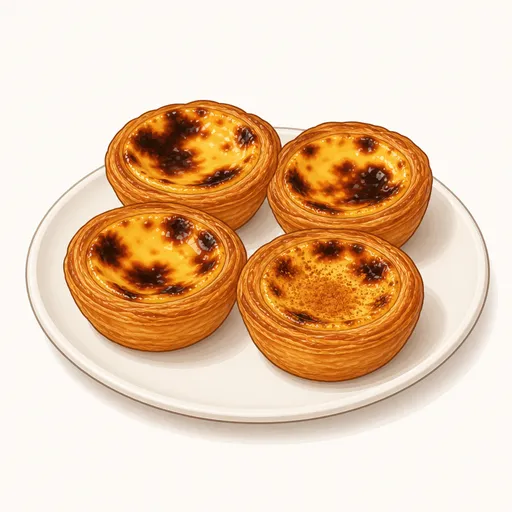
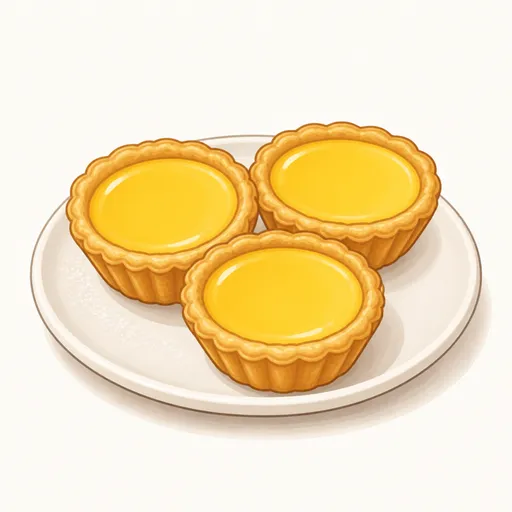
Hong Kong-style egg tarts have a buttery crust as crisp and crumbly as a cookie and a golden, silky custard filling that wobbles gently straight out of the oven. The filling is made from sugar syrup, milk and eggs, so it's delicately sweet without being too rich, and it's a familiar favorite at any dim sum meal.
- Difficulty
- Medium
- Prep
- 40 min
- Cook
- 22 min
- Rising or chilling
- 45 min
- Total time
- 1 hr 47 min
- Method
- Oven-baked
Ingredients
For the crust
For the custard filling
Instructions
Step 1
Let 120 g unsalted butter soften at room temperature, then beat it with 50 g powdered sugar and a pinch salt using a mixer on medium speed for about two minutes. Butter beaten until just fluffy makes a crisp, tender crust that still holds its shape in the oven. The mixture is ready when it turns ivory white, is smooth like frosting and has no sugar grains left.
Step 2
Beat 30 g eggs and add them to the butter in two additions, mixing well after each one. Adding the eggs gradually keeps the butter from separating and curdling. The mixture is ready when it's uniform, glossy and clings evenly around the sides of the bowl.
Step 3
Sift 200 g all-purpose flour into the bowl and fold with a spatula, pressing gently until the dough comes together. Minimal mixing keeps the crust from turning tough and shrinking in the oven. The dough is ready when it gathers into a soft mass that doesn't stick to your hands and has no streaks of dry flour.
Step 4
Press the dough into a flat rectangle about two centimeters thick, wrap it in plastic wrap and refrigerate for about thirty minutes. Cold dough lets the butter firm up, so it's easier to roll and the crust keeps its shape while baking. The dough is ready when it feels firm but still takes a slight dent when pressed.
Step 5
Heat 120 g water with 70 g granulated sugar over medium heat, stirring until the sugar has completely dissolved, then turn off the heat and let it cool completely. Hot syrup would cook the eggs into lumps when you mix them. The syrup is ready when it's perfectly clear and has come to room temperature.
Step 6
Gently whisk 150 g eggs until broken up, then pour in the cooled syrup and 60 g evaporated milk and stir well. Whisking gently keeps bubbles to a minimum, so the custard bakes up flat and glossy. The mixture is ready when it's an even pale yellow with almost no foam.
Step 7
Strain the egg mixture through a fine sieve twice and skim off any foam left on the surface. Thorough straining removes the stringy bits of egg so the custard turns out smooth as jelly. The custard is ready when it flows smoothly, looks clear and leaves no white strands in the sieve.
Step 8
Roll the dough out about three millimeters thick, use a round cutter slightly larger than the top of your tart tins to cut twelve circles, then set them in the tins and press them snugly against the bottom and sides with your fingers, leaving the edges slightly above the rim. The raised edges make up for the slight shrinking of the crust in the oven. The shells are right when they're evenly flat, hug the tins closely and have no gaps at the bottom.
Step 9
Set the tins on a baking sheet and pour the custard into each shell until about eighty percent full, taking care not to let it spill over the edge of the crust. Leaving some room lets the custard puff slightly without overflowing. You've poured enough when the custard sits about three millimeters below the edge of the crust.
Step 10
Place the sheet in an oven preheated to 200°C and bake for about 8 to 10 minutes. The high initial heat cooks the crust crisp quickly before the custard has a chance to boil. Move on to the next step when the edges of the crust start to turn pale golden.
Step 11
Lower the oven to 170°C, prop the door open about one centimeter and bake for another 10 to 12 minutes. Opening the door slightly softens the heat so the custard cooks tender without puffing up and pitting. The tarts are done when the custard jiggles like jelly when you gently shake the sheet and a toothpick inserted into it stands upright.
Step 12
Let the tarts sit in their tins for about ten minutes before gently lifting them out onto a rack. The hot crust is very crumbly and fragile, so give it a moment to firm up. The tarts are ready when the crusts release easily from the tins and the custard tops are glossy, flat and smooth.
Equipment
- Oven
- Muffin tin
- Hand mixer
- Mixing bowl
- Rolling pin
- Cookie cutter
- Small saucepan
- Sieve
- Kitchen scale
- Plastic wrap
- Refrigerator
Tips
- If you don't have evaporated milk, you can use whole milk instead; the filling will just taste a little less milky.
- Strain the custard first, then let it stand for about ten minutes so the bubbles can settle before you pour it into the shells.
- If the edges of the crust shrink down, next time chill the lined tins in the fridge for fifteen minutes before pouring in the custard.
Storage
Egg tarts are best while still warm. You can keep them in an airtight container in the fridge for up to two days, and reheat them in a 160°C oven for about five minutes to crisp the crust again.
Common problems and how to fix them
- The custard puffed up, then sank and is pitted with holes.
- The custard boiled because the oven was too hot during the second stage. Lower the heat at the right time and prop the oven door open so the custard cooks slowly.
- The crust is soft rather than crisp.
- The crust was rolled too thick or the initial heat wasn't high enough. Roll it thin, about three millimeters, and put the sheet on a lower rack so the bottom of the crust gets more heat.
This recipe is based on the common ratios for this bake and is written entirely in our own words.