Chapati
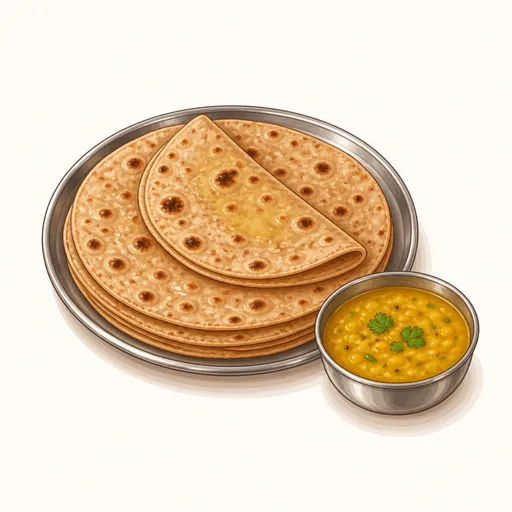
Chapati is the unleavened flatbread at the heart of everyday meals in India, made from whole wheat flour, water and a little salt. Each one is cooked on a hot pan and then held over the flame until it puffs up round, leaving it soft and full of wheaty flavor, perfect for scooping up curry or stewed lentils.
- Difficulty
- Easy
- Prep
- 25 min
- Cook
- 25 min
- Rising or chilling
- 30 min
- Total time
- 1 hr 20 min
- Method
- Pan-cooked or waffle iron
Ingredients
For the dough
For dusting and brushing with ghee
Instructions
Step 1
Mix 300 g whole wheat flour with 4 g salt and 10 g vegetable oil, then gradually add 200 g warm water, mixing with your fingers as you pour. Whole wheat flour absorbs water slowly, so add it little by little to keep the dough from getting mushy. The mixture is ready when it comes together into a soft, slightly tacky mass.
Step 2
Knead the dough for about eight minutes with the heel of your hand, dipping your hand in water now and then if the dough seems dry. Chapati dough needs to be really soft for the bread to puff up and stay tender rather than tough. The dough is ready when it's smooth, as soft as an earlobe and holds a slight dent when pressed.
Step 3
Cover the dough with a damp towel and let it rest for about thirty minutes at room temperature. During this time, the bran soaks up enough water and the gluten relaxes. The dough is ready when the surface feels completely soft and more pliable than right after kneading.
Step 4
Divide the dough into ten equal pieces, roll each one between your palms into a ball and press it into a small disc. Evenly rounded balls roll out into round breads without any trimming. They're ready when the surface is smooth, with no creases or cracks.
Step 5
Dip each ball in to taste whole wheat flour for dusting and roll it into a round about 16 cm across, using light, even pressure. An even thickness lets the steam rise evenly and puff the whole bread. The disc is ready when it's about two millimeters thick with no thick spots.
Step 6
Heat a heavy pan over medium heat, add a chapati and cook until small spots appear underneath, then flip it and cook the other side until it has brown spots. Cooking both sides first partly cooks the bread and forms a skin that traps the steam inside. It's ready when both sides are dry and dotted with light brown spots.
Step 7
Turn the heat up high and use tongs to hold the chapati directly over the flame, or press its edges gently with a cloth in the pan, then brush the top with to taste ghee. The intense heat makes the steam inside expand and split the bread into two layers. It's done when it puffs up like a balloon for a few seconds and then settles, with a fragrant, glossy buttery top.
Equipment
- Nonstick skillet
- Rolling pin
- Kitchen scale
- Mixing bowl
- Pastry brush
Tips
- Indian atta flour is milled finer than regular whole wheat flour, so if you can find it, your chapatis will be even softer.
- Keep the cooked chapatis in a towel-lined container so they steam each other and stay soft and pliable until mealtime.
- Don't use too much dusting flour, as the dry flour burns on the pan and gives the bread a bitter taste.
Storage
Chapatis are best eaten hot. Wrap leftovers in a towel and keep them in an airtight container for one day at room temperature or three days in the fridge; reheat them in a hot pan for a few seconds per side.
Common problems and how to fix them
- The chapatis don't puff up at all.
- They were rolled unevenly or the pan wasn't hot enough. Roll evenly from the center out to the edge, and only add the bread once the pan is really hot.
- The chapatis are stiff and tough once cool.
- The dough was too dry or the bread stayed on the pan too long. Knead a softer dough and shorten the cooking time on each side.
This recipe is based on the common ratios for this bake and is written entirely in our own words.