Baba au rhum
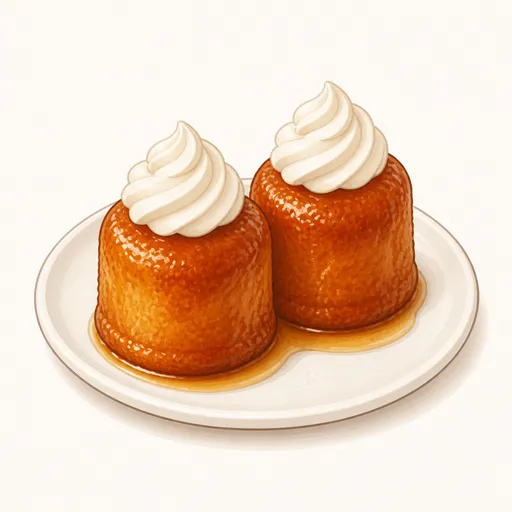
Baba au rhum are small yeasted cakes made from a dough rich in eggs and butter, baked until light and airy, then soaked in a fragrant rum syrup. The crumb is like a sponge, drenched in syrup yet still holding its shape, and the cakes are usually brushed with a shiny jam glaze and served with whipped cream. They are a classic dessert of Parisian pastry shops.
- Difficulty
- Hard
- Prep
- 40 min
- Cook
- 20 min
- Rising or chilling
- 2 hr 30 min
- Total time
- 3 hr 30 min
- Method
- Oven-baked
Ingredients
Yeasted dough
Greasing the molds
Rum syrup
Glaze and whipped cream
Instructions
Step 1
Put 250 g all-purpose flour, 7 g instant yeast and 15 g granulated sugar in the bowl of a stand mixer, add 60 g warm whole milk and 150 g eggs and knead with the dough hook on medium speed for about eight minutes before adding 5 g salt. Baba dough is very wet, and long kneading develops enough elastic gluten to trap the gas. The dough is ready when it is glossy and supple and starts pulling away from the sides of the bowl in stretchy strands.
Step 2
Add 80 g softened unsalted butter a small piece at a time and keep kneading for about five minutes, until it is fully incorporated. Adding the butter late keeps it from interfering with gluten development and makes the crumb soft and fine. The dough is ready when it is as smooth as thick cream and stretches long without breaking when pulled.
Step 3
Cover the bowl with plastic wrap and let the dough rise somewhere warm for about 45 minutes. The yeast needs this time to build flavor and get the dough rising. The dough is ready when it has visibly puffed to almost one and a half times its volume with bubbles on the surface.
Step 4
Brush to taste unsalted butter inside ten small baba molds, put the dough in a piping bag and pipe it into each mold until about one third full. Well-greased molds let the cakes rise tall and come out easily. The molds are ready when the dough sits evenly in the bottom without smearing on the upper sides.
Step 5
Set the molds on a tray, cover with a damp towel and let them rise for about 40 minutes more somewhere warm. The second rise creates a structure of large air holes that helps the cakes soak up the syrup. The dough is ready when it has risen almost to the rim of the molds.
Step 6
While the dough has its second rise, preheat the oven to 190°C with a rack in the middle. A fully heated oven makes the cakes spring up as soon as they go in. The oven is ready when the heating light has gone off.
Step 7
Bake at 190°C for 15 to 20 minutes, then unmold the cakes and set them on a rack to dry out a little. The cakes need to be well browned and dry inside so they do not fall apart when soaked. They are done when the tops are deep golden brown, they feel light and the bottoms sound hollow when tapped.
Step 8
Bring 500 g water, 250 g granulated sugar, 4 g orange zest and 4 g split vanilla beans to a boil over medium heat, turn off the heat, let it cool a little and stir in 100 g dark rum. Adding the rum once the syrup has cooled slightly preserves its fragrance. The syrup is ready when it is clear, fragrant and still warm, around 50°C.
Step 9
Drop the cakes one at a time into the warm syrup, turn them a few times and soak for about ten minutes, then lift them out onto a rack to drain. Dry cakes absorb warm syrup very evenly without breaking. They are ready when they feel heavy, are soft like a sponge and release syrup when pressed lightly.
Step 10
Warm 60 g fruit jam until runny and brush it over the cakes, then whip 200 g whipping cream with 15 g powdered sugar to stiff peaks and pipe it on top of or beside each cake. The jam seals in moisture and gives a lovely shine, while the cream softens the bite of the rum. They are finished when the tops are glossy and the cream stands in sharp peaks.
Equipment
- Oven
- Shaping molds
- Stand mixer
- Small saucepan
- Pastry brush
- Piping bag
- Hand mixer
- Wire cooling rack
- Baking sheet
- Kitchen scale
Tips
- Cakes left to dry for a day after baking soak up syrup better than ones fresh from the oven.
- For an alcohol-free version, replace the rum with orange juice and a little rum extract.
- Drizzle an extra spoonful of rum over the cakes just before serving for a bold aroma.
Storage
Unsoaked cakes keep in an airtight bag at room temperature for two days or in the freezer for a month. Soaked cakes should be refrigerated in an airtight container and eaten within three days; pipe the cream only just before serving.
Common problems and how to fix them
- The cakes fall apart in the syrup.
- The cakes were not dry enough or the syrup was too hot. Bake them darker, let them dry for a few hours and soak them only while the syrup is warm.
- The centers are still dry after soaking.
- The syrup had gone cold or the soaking time was too short. Rewarm the syrup and soak longer, turning the cakes so the syrup soaks in from every side.
This recipe is based on the common ratios for this bake and is written entirely in our own words.