Victoria sponge
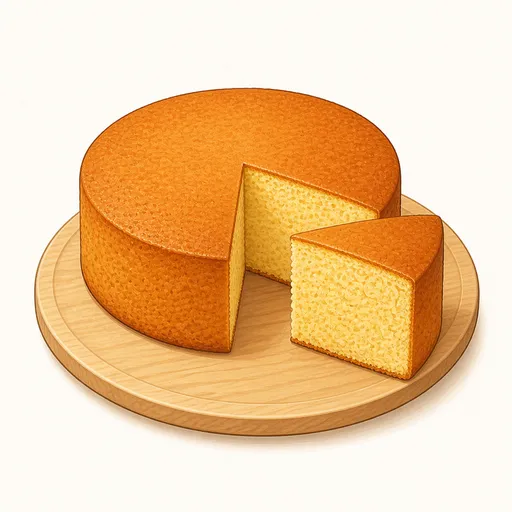
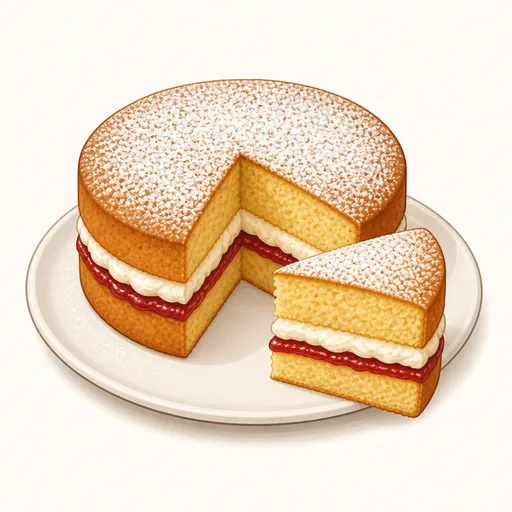
Victoria sponge is the classic British two-layer sandwich cake, named after Queen Victoria, who loved having it with afternoon tea. The sponge is made by creaming butter with sugar, so it is soft, moist and buttery, filled with red fruit jam and whipped cream and finished with just a light dusting of powdered sugar on top.
- Difficulty
- Easy
- Prep
- 30 min
- Cook
- 25 min
- Rising or chilling
- 1 hr
- Total time
- 1 hr 55 min
- Method
- Oven-baked
Ingredients
Butter sponge
Jam and whipped cream filling
Topping
Instructions
Step 1
Heat the oven to 180°C, butter and line two 20 cm round pans with parchment paper, and take the butter and eggs out of the fridge to come to room temperature. Butter and eggs at the same temperature combine easily without separating. You are ready when the butter gives easily under your finger and both pans are neatly lined.
Step 2
Beat 200 g softened unsalted butter with 200 g superfine sugar using a mixer on medium speed for about four minutes, scraping down the sides of the bowl now and then. The sugar crystals rub against the butter and create thousands of tiny air pockets, which are the very foundation of a light, airy crumb. The mixture is ready when it turns ivory white, light and fluffy and has clearly grown in volume.
Step 3
Beat 200 g eggs with 5 g vanilla extract, then add them to the butter gradually, a little at a time, beating thoroughly before each new addition. Adding the eggs slowly helps the mixture emulsify well instead of turning lumpy like curdled milk. It is ready when smooth, glossy and even; if it starts to split, sprinkle in a spoonful of the flour to bring it back together.
Step 4
Sift 200 g self-rising flour and 4 g baking powder into the bowl, fold gently with a flat spatula, then add 30 g whole milk to loosen the batter. Mixing only as much as needed limits gluten development, so the cake is tender rather than tough. The batter is ready when it drops off the spatula in soft dollops and no streaks of dry flour remain.
Step 5
Divide the batter evenly between the two pans, level the tops and bake at 180°C for about 20 to 25 minutes. Dividing it by weight gives two layers of the same height when you stack them. The cakes are done when the tops are golden, the edges pull away from the pans and a toothpick inserted in the center comes out clean.
Step 6
Leave the cakes in the pans for about five minutes, then turn them out onto a wire rack, peel off the paper and let them cool completely, about an hour. A warm sponge would make the whipped cream run and the jam soak into the cake. They are ready when both the tops and bottoms feel completely cool.
Step 7
Whip 200 g cold whipping cream with 15 g powdered sugar on medium speed until it thickens. The cream must be very cold so the fat can hold the air bubbles and keep its shape. It is ready when it forms soft peaks and does not slide when you tilt the bowl.
Step 8
Place one cake on a plate bottom side up, spread it with 160 g fruit jam, cover with the whipped cream, set the second layer on top and sift to taste powdered sugar over it. Putting the flat bottom side up gives the jam a level surface to cling to and makes the cake sit more steadily. The cake is finished when the two layers line up, the filling shows evenly around the edge and the top is covered in a fine white dusting.
Equipment
- Oven
- Round cake pan
- Hand mixer
- Mixing bowl
- Spatula
- Sieve
- Parchment paper
- Wire cooling rack
- Kitchen scale
Tips
- The traditional method is to weigh the eggs in their shells and use exactly the same weight of butter, sugar and flour, which is handy when your eggs vary in size.
- Strawberry or raspberry jam is the classic choice, but a slightly tart jam balances the rich cream best.
- If you only have one pan, bake the cake in a deep pan for about ten minutes longer, then slice it in half horizontally.
Storage
Once filled with whipped cream, keep the cake in an airtight container in the fridge and enjoy it within two days. Unfilled sponges, tightly wrapped, keep for three days at room temperature or a month in the freezer.
Common problems and how to fix them
- The top cracks and rises high in the middle.
- The oven is too hot, so the crust sets before the cake has finished rising. Check the oven with a thermometer and lower the heat by about 10°C if needed.
- The crumb is heavy and dense with wet streaks.
- The butter was not creamed long enough or the mixture split when the eggs went in. Use very soft butter, cream it longer and add the eggs a little at a time.
This recipe is based on the common ratios for this bake and is written entirely in our own words.