Génoise sponge
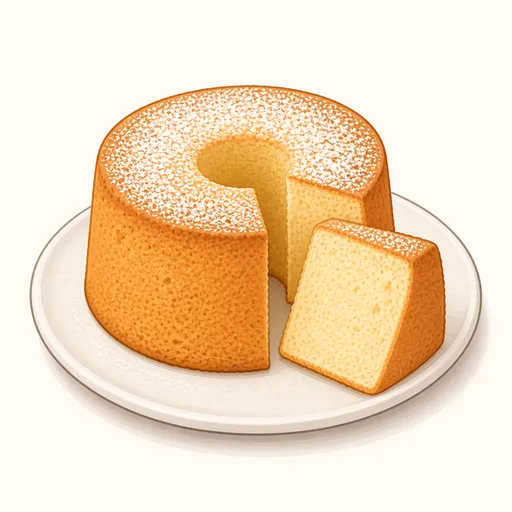
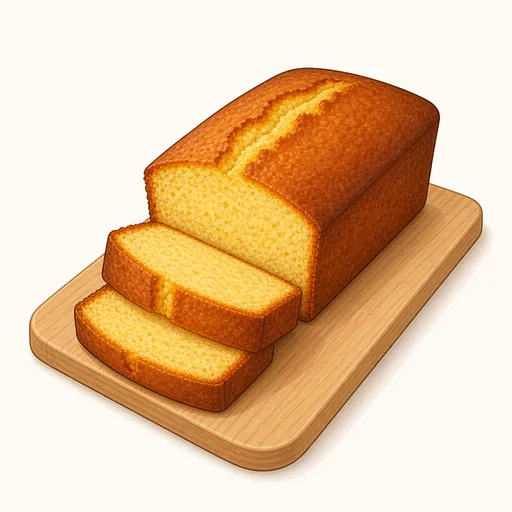
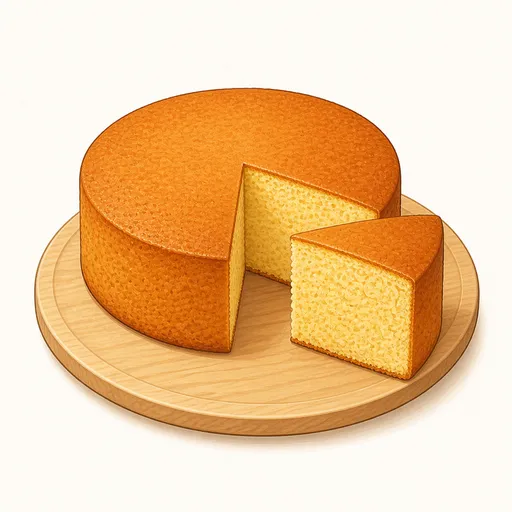
Génoise is a French sponge cake made by whipping whole eggs with sugar until very thick and billowy, with no baking powder at all. The crumb is fine, moderately firm and a little dry, which makes it perfect for brushing with syrup, frosting with whipped cream or layering with fruit for a birthday cake.
- Difficulty
- Medium
- Prep
- 25 min
- Cook
- 30 min
- Rising or chilling
- 1 hr
- Total time
- 1 hr 55 min
- Method
- Oven-baked
Ingredients
Eggs and flour
Butter and milk
Instructions
Step 1
Preheat the oven to 175°C, line the bottom of a 20 cm round pan with parchment paper and butter only the sides, very lightly. A fully preheated oven sets the air bubbles in the eggs as soon as the cake goes in, before they have a chance to burst. The pan is ready when the parchment lies flat against the bottom and the sides have a thin, shiny coat of butter.
Step 2
Crack 200 g eggs into a heatproof bowl, add 120 g superfine sugar and a pinch salt, set the bowl over a pot of gently simmering water on low heat and whisk while it warms. Warm eggs expand better and the sugar dissolves completely, making the foam fine and stable. The mixture is ready when it feels as warm as bathwater, about 40°C, and the sugar is no longer grainy.
Step 3
Take the bowl off the pot, add 4 g vanilla extract and whip with a mixer on high speed for about eight minutes, then lower to slow speed for two more minutes. Whipping slowly at the end breaks up large bubbles and leaves a fine, even foam. The eggs are ready when they have tripled in volume, turned pale yellow and, when you lift the beaters, fall in a ribbon that sits on the surface for a few seconds before sinking in.
Step 4
Put 30 g unsalted butter and 20 g whole milk in a small saucepan, heat over low until the butter melts, then keep it warm. Warm butter and milk blend into the batter faster, which cuts down the mixing that would deflate the eggs. The mixture is ready when the butter has melted completely and the pan still feels warm.
Step 5
Sift 120 g cake flour over the eggs in three additions, each time sweeping up from the bottom of the bowl with a spatula and turning the bowl a quarter turn. Sifting in several additions lets the flour fall lightly and spread evenly instead of clumping and sinking to the bottom. The batter is ready when no streaks of dry flour remain and it is still thick and airy.
Step 6
Scoop about two tablespoons of the batter into the pan of butter and milk, mix well, then pour it back into the main bowl and fold gently a few times. Lightening the butter first keeps the heavy fat from sinking to the bottom and popping the air bubbles. The batter is ready when the butter is fully blended in, the surface has a slight sheen and there are no oily streaks.
Step 7
Pour the batter into the pan, tap it once on the counter and bake at 175°C for about 25 to 30 minutes, without opening the oven door during the first twenty minutes. Steady heat helps the cake rise evenly without sinking in the middle. The cake is done when the top is evenly golden brown, the edges pull slightly away from the pan and it springs back when pressed gently.
Step 8
Take the pan out, drop it once onto the counter from a low height, turn the cake out onto a rack, peel off the parchment and flip it right side up to cool completely for about an hour. Letting it cool fully sets the crumb so it slices into neat, even layers without crumbling. The cake is ready when the center feels cool and the top is no longer tacky.
Equipment
- Oven
- Round cake pan
- Hand mixer
- Small saucepan
- Sieve
- Spatula
- Parchment paper
- Wire cooling rack
- Kitchen scale
Tips
- If you are using a hand mixer, be patient and whip a little longer, because a génoise rises only on the air whipped into the eggs.
- Génoise is fairly dry, so brush it with simple syrup flavored with a little rum or fruit juice before frosting.
- You can replace part of the flour with cornstarch for an even softer, finer crumb.
Storage
Wrapped tightly in plastic wrap, the sponge keeps for two days at room temperature or four days in the fridge. You can also freeze it for up to a month; thaw it in the fridge overnight before decorating.
Common problems and how to fix them
- The cake is short and dense with a heavy layer at the bottom.
- The eggs weren't whipped enough or the flour was folded in too roughly, knocking out the air. Whip the eggs until the ribbon sits clearly on the surface and fold very gently.
- The cake sinks in the middle after coming out of the oven.
- It wasn't fully baked or the oven door was opened too early. Bake it a few minutes longer and only check on it after twenty minutes have passed.
This recipe is based on the common ratios for this bake and is written entirely in our own words.