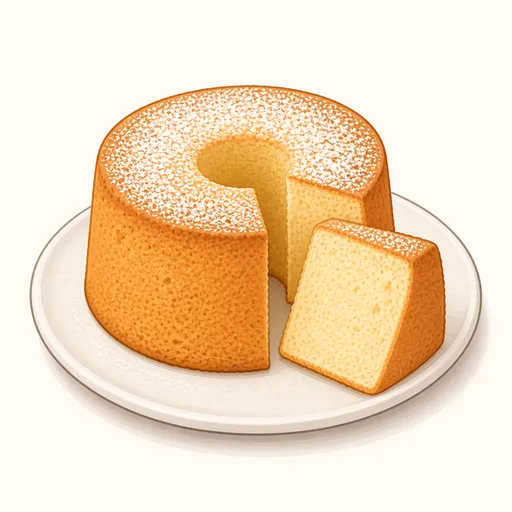
Three milk cake (tres leches)
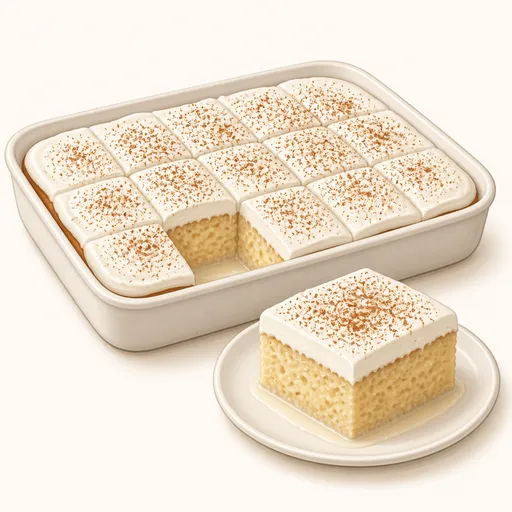
Tres leches, Spanish for "three milks," is a sponge cake loved all across Latin America. The light, airy cake is drenched in a mixture of evaporated milk, sweetened condensed milk and heavy cream and then chilled, so every bite is cool, sweet, rich and juicy without falling apart. A layer of whipped cream on top keeps it feeling light.
- Difficulty
- Medium
- Prep
- 40 min
- Cook
- 30 min
- Rising or chilling
- 5 hr
- Total time
- 6 hr 10 min
- Method
- Oven-baked
Ingredients
For the yolk batter
For the meringue
For the three-milk soak
For the whipped cream topping
For greasing the pan
Instructions
Step 1
Heat the oven to 175°C, grease a 23 x 33 cm rectangular pan all over with to taste unsalted butter, dust it with a thin layer of flour and tap out the excess. A well-prepared pan helps the cake rise evenly and keeps the sides from sticking. The pan is ready when the bottom and sides are evenly coated in a thin, hazy white layer of flour.
Step 2
Beat 90 g egg yolks with 100 g granulated sugar until pale, add 60 g whole milk and 5 g vanilla extract, then sift in 190 g all-purpose flour with 7 g baking powder and a pinch salt and mix gently until just smooth. Beating the yolks with the sugar first gives the cake an airy structure sturdy enough to soak up the milk. The mixture is ready when it's thick, creamy yellow and free of lumps.
Step 3
Put 150 g egg whites in a clean bowl, beat on medium speed until foamy, then gradually add 100 g superfine sugar and increase the speed, beating for about 5 minutes in total. The air bubbles in the whites create the tiny holes that will let the cake soak up the milk later. The meringue is ready when it's glossy and smooth, holds a straight peak when you lift the beaters and doesn't slide when you tilt the bowl.
Step 4
Mix a third of the meringue into the yolk batter to lighten it, then add the rest and use a flat spatula to scoop up from the bottom, turning the bowl steadily until combined. A gentle folding motion keeps the air bubbles from bursting. The batter is ready when it's evenly colored with no white streaks and still puffy like a cloud.
Step 5
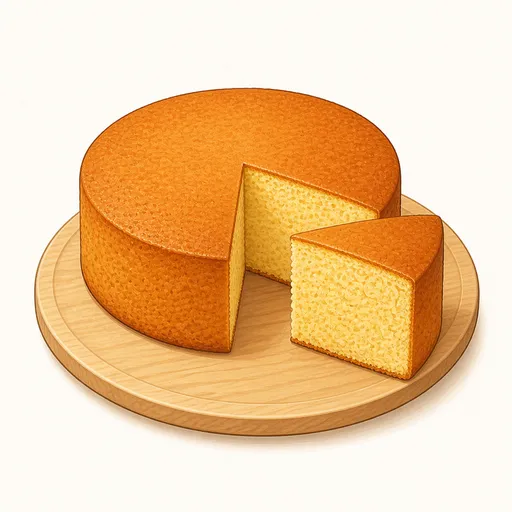
Pour the batter into the pan, smooth the top and bake at 175°C for about 25 to 30 minutes. A moderate temperature bakes the cake evenly without cracking the top. The cake is done when the top is pale golden, springs back when pressed lightly and a skewer inserted in the center comes out dry.
Step 6
Stir together 350 g evaporated milk, 395 g sweetened condensed milk and 240 g heavy cream, prick holes all over the cake with a fork while it's still warm, then slowly pour the milk mixture over it in several rounds. A warm cake full of holes soaks up the milk quickly and evenly all the way to the bottom. This step is done when the top looks glossy and wet and only a thin layer of milk remains around the edges of the pan.
Step 7
Cover the pan with plastic wrap and refrigerate for at least four hours, ideally overnight. Chilling lets the milk spread evenly through the cake and firms it up. The cake is ready when almost no milk is left pooled on top and a test slice shows an evenly moist crumb.
Step 8
Whip 360 g cold whipping cream with 30 g powdered sugar to soft peaks, spread it evenly over the cake, then sprinkle with a pinch ground cinnamon and cut into squares to serve. The whipped cream gently balances the rich sweetness of the milk below. The cake is ready when the cream is smooth on top, the squares have clean edges and a little milk seeps out when you press down with a spoon.
Equipment
- Oven
- Rectangular pan
- Hand mixer
- Whisk
- Spatula
- Sieve
- Mixing bowl
- Kitchen scale
- Refrigerator
Tips
- Pour the milk slowly and wait a few minutes between rounds so the cake has time to absorb it and it doesn't overflow at the edges.
- For a less sweet cake, you can replace the heavy cream in the milk mixture with whole milk.
- A few slices of fresh mango or strawberries on top of the cream make the cake even more refreshing.
Storage
The cake must be kept covered in the fridge and eaten within three days. It's usually even better the next day once the milk has soaked in evenly; don't freeze it, because the cream and milk will separate when thawed.
Common problems and how to fix them
- The cake is mushy and soggy at the bottom.
- The cake wasn't airy enough or the milk was poured too fast. Beat the whites until they hold straight peaks, fold gently and pour the milk in several small rounds.
- The milk doesn't soak in and pools on top.
- The cake had cooled completely or the holes weren't deep enough. Prick more holes all the way to the bottom while the cake is still warm, and wait for the milk to soak in before pouring more.
This recipe is based on the common ratios for this bake and is written entirely in our own words.