Taro fritters
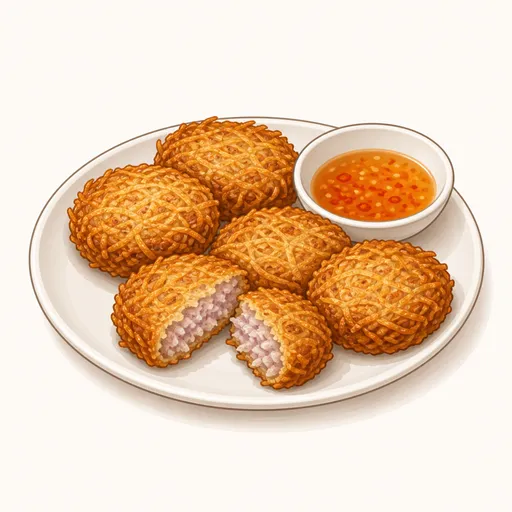
Taro fritters are a homey snack from southern Vietnam, made from shredded taro tossed with a little rice flour, tapioca starch and coconut milk, then fried into small, crisp cakes. They have crunchy edges and a nutty, chewy inside that's lightly sweet and full of taro's distinctive aroma.
- Difficulty
- Easy
- Prep
- 25 min
- Cook
- 25 min
- Rising or chilling
- 10 min
- Total time
- 1 hr
- Method
- Fried
Ingredients
For the taro fritters
For frying
Instructions
Step 1
Put on gloves, peel 500 g taro, rinse it quickly, then shred it into long strands about the size of matchsticks and pat them dry with a clean towel. Gloves keep the taro sap from making your skin itch, and drying the strands stops the oil from spattering and keeps the fritters crisp longer. The taro is ready when the strands are separate and even and no longer feel wet.
Step 2
Sprinkle 40 g granulated sugar and a pinch salt over the taro, toss gently by hand and let it sit for about 10 minutes. The sugar and salt soak in, softening the strands and seasoning them from within. The taro is ready when the strands droop a little and the surface looks slightly moist.
Step 3
Add 60 g rice flour, 40 g tapioca starch and 60 g coconut milk to the taro and toss with chopsticks so the flour coats every strand. Rice flour adds crunch, while tapioca starch holds the strands together into fritters as they fry. The mixture is ready when a pinch squeezed in your hand holds together without dripping.
Step 4
Pour to taste oil for deep-frying into a deep skillet and heat it over medium heat to about 170°C. Oil that's hot enough seals the outside of the fritters right away, keeping the strands from spreading apart and soaking up oil. You'll know the oil is ready when a strand of taro dropped in bubbles steadily and floats up after a few seconds.
Step 5
Scoop up portions of taro with a large spoon, press each one gently into a round about one centimeter thick and slide it into the oil, frying for about three minutes per side. Flattening the fritters helps them cook evenly from the edges to the center. They're ready when the edges are golden brown, the tops look dry and they feel firm when flipped without falling apart.
Step 6
Once all the fritters are fried, turn the heat up to high and return them to the oil for about one more minute per batch, then lift them onto a rack lined with paper towels. The second fry drives out the absorbed oil and keeps the crust crisp longer. The fritters are finished when they're an even shiny gold, sound crisp when tapped and leave only a little oil on the paper.
Step 7
Arrange the fritters on a plate while hot and serve with sweet-and-sour fish sauce or chili sauce if you like. Taro fritters are best in the first fifteen minutes or so, while the crust is still crisp and the inside is hot and chewy. That first bite should be crunchy outside and soft and nutty inside.
Equipment
- Deep skillet
- Mixing bowl
- Thermometer
- Wire cooling rack
- Kitchen scale
Tips
- Choose waxy taro with purple streaks that feels heavy for its size, because crumbly taro makes fritters that fall apart while frying.
- You can mix a little crushed dried shrimp or chopped scallions into the taro if you'd like a savory twist.
- If you'd rather not deep-fry, use an air fryer at 190°C for about twelve minutes, remembering to brush a little oil over the fritters.
Storage
Taro fritters are best eaten the same day. Let any leftovers cool, store them in an airtight container in the fridge for up to two days, then reheat them in the oven or an air fryer at 180°C for about five minutes to crisp them up again.
Common problems and how to fix them
- The fritters fall apart when they go into the oil.
- The mixture didn't have enough starch to bind it or the oil wasn't hot enough. Add a little more tapioca starch and wait until the oil is hot enough before adding the fritters.
- The fritters are greasy and soggy once cool.
- The taro strands were still wet or the second fry was skipped. Pat the taro very dry and fry the fritters again over high heat before lifting them out.
- Eating the fritters makes your throat itch.
- The taro wasn't fully cooked in the center. Press the fritters thinner and fry them longer over medium heat so the heat reaches the core.
This recipe is based on the common ratios for this bake and is written entirely in our own words.