Steamed layered pandan cake (banh da lon)
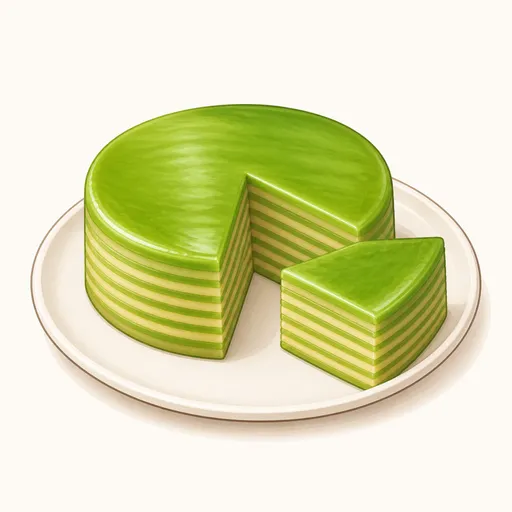
Banh da lon is a much-loved steamed layer cake from southern Vietnam, alternating rich, nutty golden mung bean layers with fragrant green pandan layers. The cake is soft and chewy, refreshingly cool and gently sweet from the coconut milk, and it tastes even better after resting a few hours so the layers can set.
- Difficulty
- Medium
- Prep
- 40 min
- Cook
- 1 hr 30 min
- Rising or chilling
- 6 hr
- Total time
- 8 hr 10 min
- Method
- Steamed
Ingredients
Coconut milk batter
Mung bean layer
Pandan layer
Preparing the pan
Instructions
Step 1
Rinse 150 g split peeled mung beans and soak them in warm water for about two hours. Beans soaked long enough cook evenly and blend more smoothly. They are ready when a bean crumbles easily when pinched between two fingers.
Step 2
Drain the beans, spread them evenly on a tray and steam over medium heat for about 25 minutes. Steaming rather than boiling keeps the beans dry, with a lovely yellow color and a nutty flavor. They are done when they are soft and mash completely under light pressure from a spoon.
Step 3
Put the still-warm beans in a blender, add a few spoonfuls of the coconut milk set aside for the batter and blend until very smooth. Smooth beans keep the yellow layers from being gritty and help them bond firmly to the green layers. The mixture is ready when it is as smooth and silky as cream with no bits left.
Step 4
Pour 400 g coconut milk, 250 g water, 260 g granulated sugar and a pinch of salt into a saucepan and stir over low heat until the sugar dissolves, then turn off the heat and let it cool. Don't let it boil, or the coconut milk may separate. The liquid is ready when it is clear with no sugar crystals left at the bottom of the pan.
Step 5
Mix 300 g tapioca starch with 60 g rice flour in a large bowl, slowly pour in the cooled coconut milk mixture while stirring, then strain it through a sieve and let the batter rest for about 30 minutes. The rest lets the flour absorb the liquid, so the cake turns out chewy rather than hard. The batter is ready when it is as smooth as milk with no lumps left in the sieve.
Step 6
Divide the batter into two equal portions. Mix one with the blended mung beans and stir 100 g pandan juice into the other. When both portions have about the same thickness, the layers come out even and the colors don't bleed into each other. You should end up with one bowl of pale yellow and one of bright green, both flowing in a smooth stream.
Step 7
Bring the water in the steamer to a boil, brush a thin layer of vegetable oil (to taste) over the bottom and sides of a 20 cm round pan and set it in the steamer to heat for about three minutes. A hot pan sets the first layer immediately so it doesn't stick to the bottom. The pan is ready when the oil looks evenly glossy and a little steam has condensed on it.
Step 8
Stir the batter before each scoop, pour in a thin pandan layer about half a centimeter thick and steam for about 7 minutes, then pour in a mung bean layer and keep alternating like this. Each layer must be set on top before you add the next, so they don't sink and mix together. A layer is cooked when its surface turns translucent and doesn't stick to your finger when touched lightly.
Step 9
After pouring the final layer, which should be green pandan, cover and steam for about 15 minutes more. This longer steaming cooks the lower layers thoroughly and fuses them together. The cake is fully cooked when the top is glossy and translucent and a toothpick comes out without any opaque white batter.
Step 10
Lift out the pan and let the cake cool naturally at room temperature for at least four hours; don't put it straight into the fridge. While still warm the cake is very soft and needs time for the starch to set and the layers to bond firmly. It is ready when the bottom of the pan is completely cool and the top feels springy and no longer sticky.
Step 11
Run a thin knife around the edge of the pan, turn the cake out onto a plate and cut it into pieces with a lightly oiled knife or a length of thread. An oiled knife gives clean cuts without dragging the layers out of line. The slices are ready when the cut sides are flat and clearly show the alternating yellow and green layers.
Equipment
- Steamer
- Round cake pan
- Blender
- Small saucepan
- Whisk
- Sieve
- Kitchen scale
- Mixing bowl
- Pastry brush
Tips
- For more fragrant pandan layers, blend about ten fresh pandan leaves with a little water and squeeze out the juice to use instead of store-bought pandan juice.
- Each time you add a new layer, wipe the condensation off the steamer lid so it doesn't drip and pit the surface of the cake.
- Use a spoon or ladle with a fixed volume to pour each layer so they all come out the same thickness.
Storage
The cake is best on the day it is made, kept covered at room temperature. To keep it longer, wrap it tightly and refrigerate for up to three days, then steam it for a few minutes so it turns soft and chewy again.
Common problems and how to fix them
- The colors of the layers bleed into each other.
- The next layer went in before the previous one had set on top. Wait until the surface turns completely translucent before adding more, and pour gently close to the surface.
- The cake turns hard and stiff once cooled.
- The batter didn't rest long enough or the steaming heat was too high. Next time, rest the batter for at least 30 minutes and keep the heat at medium throughout the steaming.
- The layers separate when sliced.
- Water pooled on the previous layer or it dried out for too long. Wipe the steamer lid often and pour each new layer as soon as the previous one has just set.
This recipe is based on the common ratios for this bake and is written entirely in our own words.