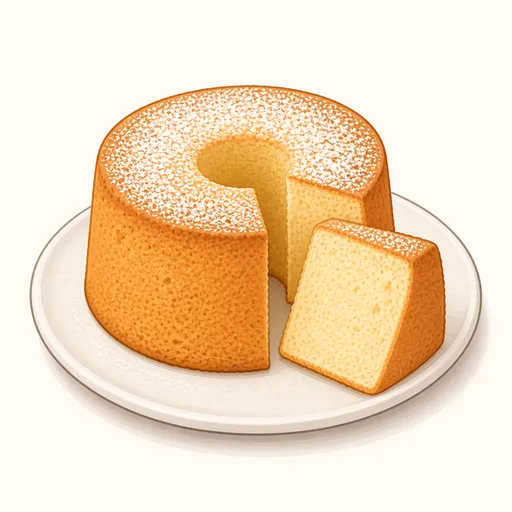
Taro chiffon cake
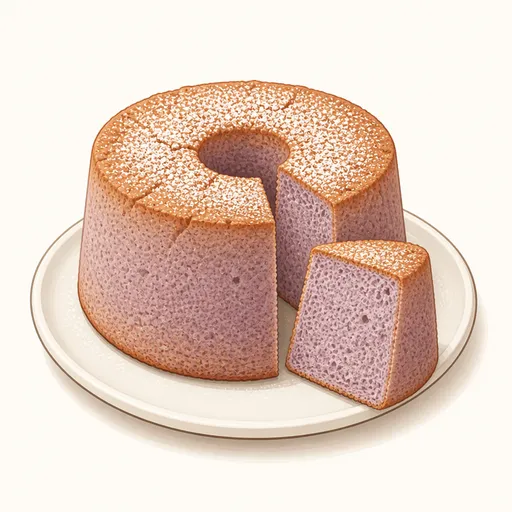
Taro chiffon cake has a soft, pale purple hue and the distinctive rich, nutty aroma of taro. Steamed taro is blended smooth with milk and mixed into the yolk batter, making the crumb softer and moister and keeping it moist longer than an ordinary chiffon.
- Difficulty
- Medium
- Prep
- 40 min
- Cook
- 1 hr 10 min
- Rising or chilling
- 1 hr 30 min
- Total time
- 3 hr 20 min
- Method
- Oven-baked
Ingredients
For the taro and yolk batter
For the meringue
Instructions
Step 1
Peel the taro, cut it into pieces about two centimeters thick, weigh out 110 g taro and steam it over high heat for about 20 minutes. Evenly sized pieces cook at the same time, with no hard or mushy spots. The taro is ready when a chopstick slides into it easily and there's no firm core left.
Step 2
Put the hot taro in a blender with 75 g whole milk and to taste purple food coloring if you like, blend until very smooth, then let it cool a little. Hot taro purées more easily, and letting it cool keeps the yolks from cooking when you mix them in. The mixture is ready when it's smooth as cream with no lumps and only slightly warm to the touch.
Step 3
Heat the oven to 160°C, set a rack one level below the middle and have a clean, dry, ungreased 20 cm tube pan ready. The oven needs enough time to heat so the batter gets the right temperature as soon as it goes in. The oven is ready when it has been on for at least fifteen minutes and the indicator light is off.
Step 4
Whisk 90 g egg yolks with 15 g granulated sugar and a pinch salt, then add 40 g vegetable oil and all of the taro purée and stir until combined. Taro is fairly thick, so mix it thoroughly with the oil to avoid lumps once the flour goes in. The mixture is ready when it's an even pale purple and as thick as yogurt.
Step 5
Sift 80 g cake flour and 2 g baking powder into the bowl and whisk gently in circles until the dry flour has just disappeared. The taro makes the mixture thicker, so a light hand keeps the crumb from turning dense. The mixture is ready when it's smooth and falls from the whisk in a thick ribbon that slowly sinks back into the surface.
Step 6
Beat 165 g egg whites on medium speed until large bubbles form, add 1 g cream of tartar, then add 65 g superfine sugar in three additions, increase the speed and beat for about seven minutes in total. The taro mixture is heavier than a regular chiffon batter, so the meringue needs to be firm enough to hold it up. The meringue is ready when it's glossy and smooth and the peak curls slightly when you turn the whisk upside down.
Step 7
Mix a third of the meringue thoroughly into the taro mixture, then pour this into the bowl with the remaining meringue and fold gently with a flat spatula, scraping from the sides of the bowl down to the bottom. Loosening the taro first lets the two mixtures blend without knocking out the air. The batter is ready when it's an even pale purple with no white streaks and still slightly puffy.
Step 8
Pour the batter into the pan, tap the pan on the counter twice, then bake at 160°C for about 45 to 50 minutes. Taro batter is moister, so it needs a little longer in the oven. The cake is done when the top has cracked and turned pale golden, the cracks look dry and a skewer comes out without wet batter.
Step 9
Take the pan out and immediately turn it upside down onto a rack or a bottle, and leave it like that for about an hour and a half until completely cool. If left upright, the moist, heavy crumb of a taro cake would weigh itself down and the cake would sink. It's ready when the sides of the pan feel completely cool.
Step 10
Turn the pan right side up, run a thin-bladed knife firmly around the sides and the center tube, lift out the base and run the knife underneath to release the cake. Keeping the knife pressed against the metal keeps the pale purple crust intact. The cake is ready when it stands tall with an evenly purple cut face and small, fine air holes; you can dust it with a little powdered sugar.
Equipment
- Oven
- Steamer
- Tube pan (chiffon pan)
- Hand mixer
- Whisk
- Spatula
- Sieve
- Kitchen scale
Tips
- Choose waxy, starchy taro with clear purple streaks so the cake is fragrant and naturally colored without needing much food coloring.
- Wear gloves when peeling taro, since its sap can make your skin itch.
- For a stronger taro flavor, you can replace half of the milk with coconut milk.
Storage
Wrapped tightly, the cake stays soft at room temperature for about a day. In the fridge it keeps for three to four days; let it come back to room temperature before serving so the taro aroma comes through more clearly.
Common problems and how to fix them
- The crumb has gritty bits of taro.
- The taro wasn't steamed soft enough or blended long enough. Steam it until completely crumbly and blend it while hot, straining it through a sieve if needed.
- The cake rose poorly and has a dense layer at the bottom.
- The taro mixture was too thick, so it crushed the meringue during folding. Thoroughly mix in a third of the meringue first to loosen the taro, then fold in the rest.
This recipe is based on the common ratios for this bake and is written entirely in our own words.