Strawberry cream cake
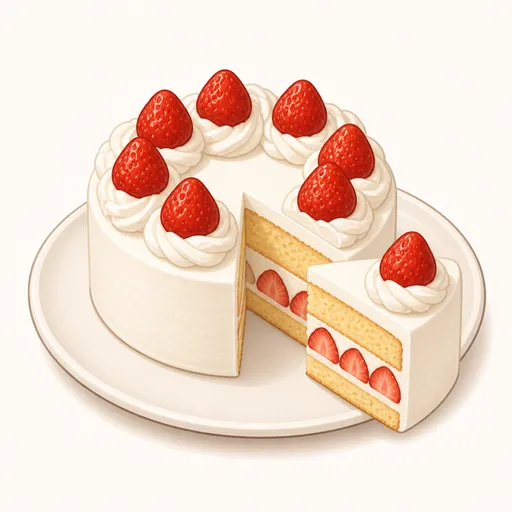
This Japanese-style strawberry cream cake has two soft, airy layers of egg sponge filled with lightly whipped cream and sweet-tart strawberry slices. The sponge is made genoise style, meaning whole eggs are whipped with sugar until very thick, so the cake is light yet sturdy enough to hold the cream. It's a beloved cake for birthdays and Christmas in Japan.
- Difficulty
- Medium
- Prep
- 50 min
- Cook
- 30 min
- Rising or chilling
- 2 hr
- Total time
- 3 hr 20 min
- Method
- Oven-baked
Ingredients
Sponge cake
Syrup for brushing
Whipped cream
Strawberries
Instructions
Step 1
Preheat the oven to 170°C and line the bottom and sides of an 18 cm round pan with parchment paper. Parchment helps the cake release easily without tearing its thin crust. The pan is ready when the paper rises about two centimeters above the rim and hugs the sides snugly.
Step 2
Crack 200 g eggs into a large bowl, add 100 g superfine sugar, then set the bowl over a pot of barely simmering water and whisk steadily with a balloon whisk. Warm eggs dissolve the sugar completely and whip up faster and thicker. Take the bowl off when a thermometer reads about 40°C, or when the mixture feels as warm as bathwater on your finger.
Step 3
Beat the egg mixture on high speed for about six minutes, then lower to low speed and beat for two minutes more. The low-speed stage breaks up the big air bubbles so the crumb is fine and even. The eggs are ready when they've turned ivory, tripled in volume and, when you lift the beaters, the falling ribbon can draw a figure eight that holds for a few seconds.
Step 4
Sift 100 g cake flour directly over the eggs in two additions, each time using a flat spatula to scoop up from the bottom of the bowl while turning the bowl a quarter turn. Sifting spreads the flour thinly so it disappears quickly, meaning fewer strokes and more air kept in the batter. Stop as soon as you can no longer see any streaks of dry flour on the surface.
Step 5
Melt 20 g unsalted butter with 30 g whole milk and 3 g vanilla extract until quite warm, stir in a few spoonfuls of the egg batter, then pour this mixture back into the main bowl and fold gently. Mixing in some batter first keeps the fat from sinking to the bottom and deflating the eggs. The batter is ready when it's glossy, smooth, evenly colored and flows in a thick ribbon when you lift the spatula.
Step 6
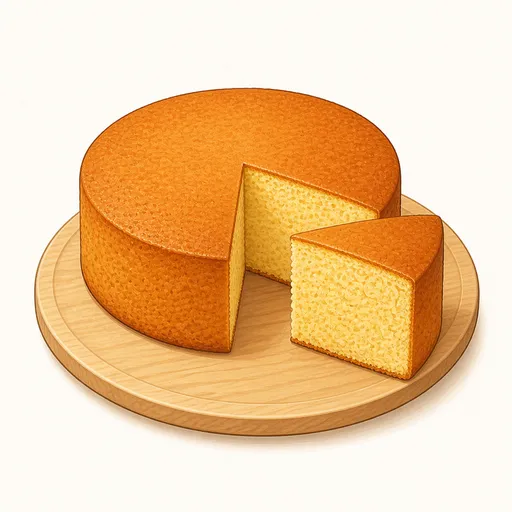
Pour the batter into the pan, tap the pan on the counter twice to pop any large bubbles, then bake on the middle rack at 170°C for 28 to 32 minutes. A moderate temperature helps the cake rise evenly without cracking on top. It's done when the top is evenly golden brown, springs back when pressed gently and a skewer inserted in the center comes out clean.
Step 7
As soon as it comes out of the oven, drop the pan onto the counter once from about ten centimeters up, then remove the cake and turn it upside down on a wire rack to cool completely for about an hour. The drop lets steam escape so the cake doesn't shrink, and cooling it upside down keeps the top flat. It's ready to cut when the center no longer feels warm.
Step 8
Put 60 g water and 30 g granulated sugar in a small saucepan, heat over medium and stir gently until the sugar dissolves, then turn off the heat and let it cool. Brushing syrup over the sponge keeps the cake moist so it doesn't dry out in the fridge. The syrup is ready when it's completely clear with no undissolved sugar at the bottom of the pan.
Step 9
Gently rinse 350 g fresh strawberries, pat them completely dry with paper towels and hull them. Pick out about eight of the prettiest berries for decorating and slice the rest about half a centimeter thick. Wet strawberries make the cream weep and slide off the cake. The strawberries are ready when they're completely dry and the slices are fairly even in thickness.
Step 10
Set the bowl of cream over a bowl of ice, add 400 g whipping cream and 32 g powdered sugar and whip on medium speed. Keeping the cream very cold helps it whip up smooth without turning to butter. Scoop out about a third of the cream at the soft, curling-peak stage for covering the outside, then keep whipping the rest until it holds stiff peaks for the filling.
Step 11
Slice the sponge horizontally into two layers, brush syrup over the cut side, spread on a layer of stiff cream, cover it completely with strawberry slices, top with more cream and set the second layer of sponge on top. Then brush syrup over the top layer, cover the cake with the soft cream and pipe a few rosettes to hold the whole strawberries. The cake is right when it stands straight, the layers aren't shifted and the outer cream is smooth.
Step 12
Refrigerate the cake for at least one hour before cutting; there's no need to cover it if your fridge doesn't have strong odors. Chilling firms up the cream and lets the sponge soak up the syrup evenly. The cake is ready when the knife cuts clean slices and the layers of cream and strawberries show clearly on the cut side.
Equipment
- Oven
- Round cake pan
- Hand mixer
- Spatula
- Sieve
- Small saucepan
- Thermometer
- Parchment paper
- Wire cooling rack
- Piping bag
- Pastry brush
- Kitchen scale
- Refrigerator
Tips
- Dip your knife in hot water and wipe it dry before each cut for sharp slices that don't drag the cream.
- If the strawberries are very tart, toss the slices with a little sugar for ten minutes, then pat them dry before layering them into the cake.
- Choose whipping cream with at least thirty-five percent fat so the cream holds its shape longer at room temperature.
Storage
The cake is best eaten the day it's made, while the strawberries are fresh and the cream is silky. Store leftovers in an airtight container in the fridge for up to two days; unfrosted sponge can be wrapped tightly and frozen for up to a month.
Common problems and how to fix them
- The sponge is short and dense, with a thick layer at the bottom.
- The eggs weren't whipped enough, or the butter and milk were added too quickly and burst the air bubbles. Next time, whip the eggs until they can draw a figure eight and remember to mix the butter and milk with a little batter before adding it to the main bowl.
- The cream turns grainy and weeps when spread on the cake.
- The cream was overwhipped or got too warm. Add a few spoonfuls of cold unwhipped cream and stir gently with a flat spatula until it's smooth again.
- The cake leans and the strawberries slide out.
- The strawberries were still wet or the filling cream was too soft. Pat the strawberries completely dry and whip the filling cream until it holds stiff peaks.
This recipe is based on the common ratios for this bake and is written entirely in our own words.