Steamed taro cake
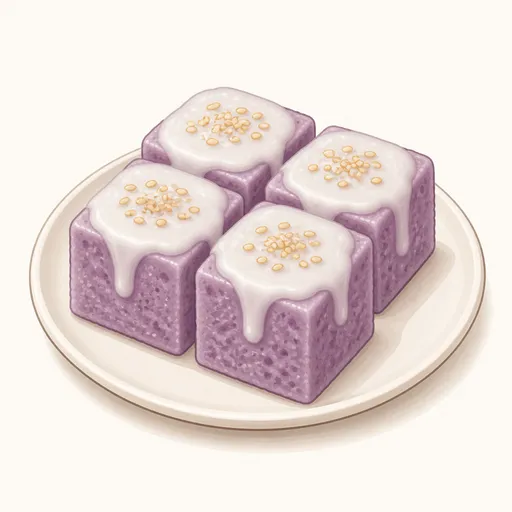
Steamed taro cake has a natural pale purple color and a soft, chewy crumb, nutty with taro and rich with coconut milk. It's steamed whole in a pan, then cut into pieces and served drizzled with thick coconut sauce and sprinkled with toasted sesame. It's an easy, foolproof homemade treat that's perfect for an afternoon snack.
- Difficulty
- Easy
- Prep
- 40 min
- Cook
- 1 hr 10 min
- Rising or chilling
- 2 hr
- Total time
- 3 hr 50 min
- Method
- Steamed
Ingredients
Taro cake batter
Coconut sauce for drizzling
Topping
Greasing the pan
Instructions
Step 1
Peel 500 g taro, rinse off the slippery sap, cut it into pieces about two centimeters thick and steam over high heat for about 20 minutes. Steaming instead of boiling keeps the taro from getting waterlogged, so it stays nutty and dense. It's done when a chopstick slides all the way through easily and the edges of the pieces are slightly crumbly.
Step 2
Put the still-warm taro in a blender with 300 g coconut milk, 60 g water, 150 g granulated sugar and a pinch salt and blend until smooth. Pour it into a bowl, sift in 120 g rice flour and 60 g tapioca starch and stir well. Blending while the taro is warm makes the mixture smooth and dissolves the sugar completely. The batter is ready when it's as thick as a thin porridge, evenly colored and free of dry lumps.
Step 3
Brush a thin layer of to taste vegetable oil over the bottom and sides of a 20 cm round pan, bring the steamer to a boil and wrap a towel around the lid. The oil helps the cake release easily, and the towel stops condensation from dripping and pitting the top. The pan is ready when it's evenly glossy and the steamer is billowing steam.
Step 4
Pour the batter into the pan, smooth the top, set it in the steamer basket and steam over medium heat for about 40 to 45 minutes. Medium heat cooks the cake slowly from the outside in without cracking the top. It's done when the top turns a glossy grayish purple and a skewer inserted in the center comes out free of wet batter.
Step 5
Lift out the pan and let the cake cool completely at room temperature for about two hours before unmolding. The cake only sets once fully cool, so the pieces cut cleanly without sticking to the knife. It's ready when it feels cool to the touch, springs back gently when pressed and pulls away from the sides of the pan easily.
Step 6
Mix 8 g tapioca starch with a spoonful of water and put it in a saucepan with 200 g coconut milk, 20 g granulated sugar and a pinch salt. Stir over low heat for about 4 minutes, until it just starts to simmer, then turn off the heat. Gentle heat keeps the coconut milk from splitting so it stays white and smooth. The sauce is ready when it's lightly thickened and coats the back of a spoon in a thin layer.
Step 7
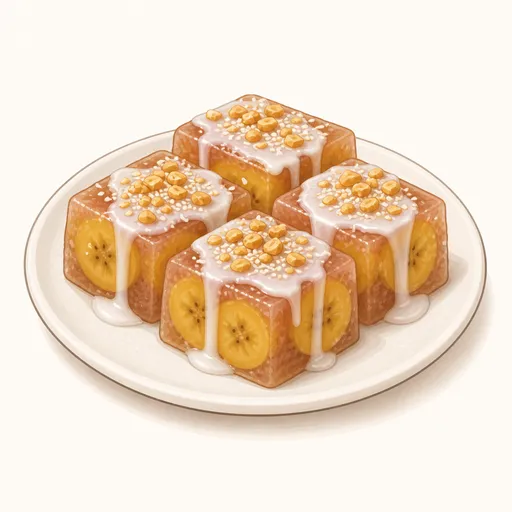
Use an oiled knife to cut the cake into bite-sized pieces, arrange them on a plate, drizzle with the coconut sauce and sprinkle with 10 g toasted white sesame seeds. An oiled knife cuts cleanly and keeps the cake from tearing. The cake is ready when every piece has a smooth, evenly colored cut side and the coconut sauce runs gently down the edges.
Equipment
- Steamer
- Round cake pan
- Blender
- Whisk
- Small saucepan
- Mixing bowl
- Kitchen scale
- Sieve
Tips
- Wear gloves when peeling taro, since its sap can make your skin itch.
- For a deeper purple color, add a little steamed purple sweet potato to the blender with the taro.
- Chilling the cake overnight makes it firmer and chewier, so it's very easy to cut into neat squares.
Storage
Covered tightly, the cake keeps at room temperature for a day. In the fridge it keeps for three days; steam it again for about five minutes to make it soft and chewy again. Store the coconut sauce separately and warm it before serving.
Common problems and how to fix them
- The cake is mushy and sticks to your teeth.
- The taro was too watery or there wasn't quite enough flour. Next time, let the steam evaporate from the taro after steaming and reduce the water in the batter a little.
- The top of the cake is pitted and has pools of water.
- Condensation from the lid dripped onto the cake. Wrap the lid in a clean towel and don't lift it during the first half of steaming.
This recipe is based on the common ratios for this bake and is written entirely in our own words.