Steamed cassava cake with coconut milk
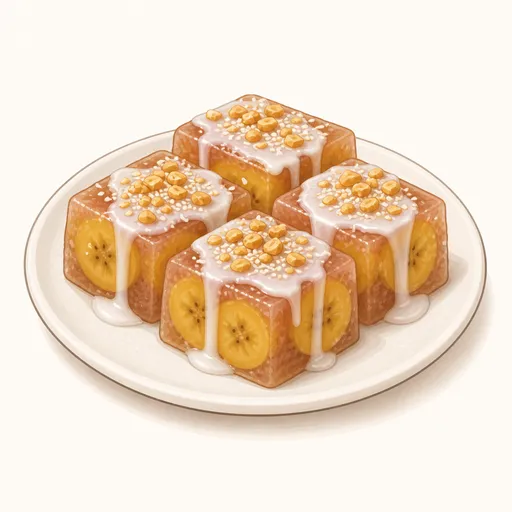
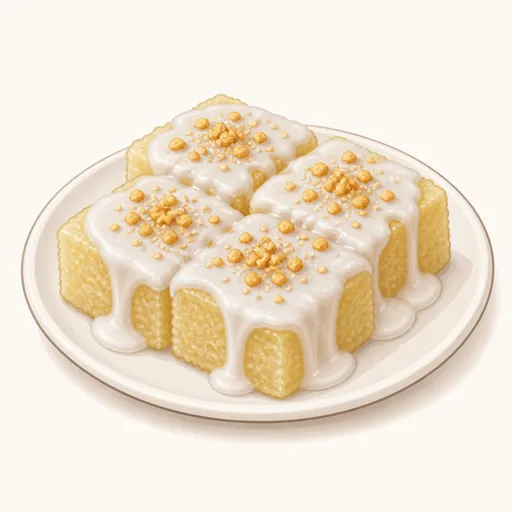
Steamed cassava cake (banh khoai mi hap) is a humble countryside treat from southern Vietnam, made from finely grated fresh cassava mixed with sugar and grated coconut, then steamed into a chewy, translucent, gently sweet cake. To serve, you drizzle it with thick, creamy coconut sauce and sprinkle it with peanuts and toasted sesame, so the nutty, rich and chewy flavors come together beautifully.
- Difficulty
- Easy
- Prep
- 35 min
- Cook
- 55 min
- Rising or chilling
- 2 hr
- Total time
- 3 hr 30 min
- Method
- Steamed
Ingredients
Cassava cake
Coconut sauce for drizzling
Peanut and sesame topping
Pan prep
Instructions
Step 1
Peel off the brown outer skin and the pink inner layer of the cassava, split it in half and pull out the woody core, soak it in lightly salted water for a few hours, then grate or blend it finely to get 1,000 g fresh cassava. Soaking in salted water removes some of the bitterness and natural toxins found in the root. The cassava is ready when it's finely grated, ivory white and free of large fibers.
Step 2
Put the grated cassava in a clean cloth bag and squeeze gently to remove about a third of the liquid, then keep the white starch that settles at the bottom of the squeezed liquid and mix it back into the cassava. Squeezing moderately keeps the cake chewy, while the settled starch makes it translucent and helps it hold together. The cassava is ready when it feels moist when squeezed, holds its shape when you open your hand and doesn't drip.
Step 3
Mix the cassava with 200 g granulated sugar, 100 g freshly grated coconut, 100 g coconut milk and a pinch salt, let it stand for about ten minutes so the sugar dissolves, then pour it into a pan greased with to taste vegetable oil and smooth the top. Dissolving all the sugar before steaming keeps the cake evenly sweet and not grainy. The mixture is ready when it's thick and slightly glossy, with no visible sugar grains.
Step 4
Set the pan in the steamer once the water is boiling hard, cover with a towel-wrapped lid and steam over high heat for about fifty minutes, checking halfway and topping up with boiling water. A thick cake needs strong, steady heat to cook all the way to the bottom of the pan. The cake is done when the whole surface has turned translucent yellow with no opaque white patches and a skewer comes out only slightly sticky.
Step 5
Remove the pan and let the cake cool completely at room temperature for about two hours before cutting. Hot cassava cake is very soft and sticky; only as it cools does the starch set into a firm, chewy block. It's ready when the bottom of the pan feels cool and the top has firmed up.
Step 6
Dissolve 10 g tapioca starch in 30 g water. Heat 250 g coconut milk with 30 g granulated sugar, a pinch salt and 10 g pandan leaves over low heat, and when it starts to simmer, pour in the starch mixture and stir for about one minute, then turn off the heat. Low heat keeps the coconut milk from splitting, and the tapioca starch gives it just the right thickness. The sauce is ready when it's smooth and thick enough to coat the back of a spoon in a thin layer.
Step 7
Toast 10 g white sesame seeds in a dry pan over low heat until fragrant, then crush 40 g roasted peanuts and mix them with the sesame. Toasting brings out the sesame's aroma, and crushed peanuts stay crunchy when sprinkled over the cake. The topping is ready when the sesame is pale golden and the peanuts are broken into pieces about the size of rice grains.
Step 8
Turn the cake out onto a cutting board, cut it into squares or diamonds with an oiled knife, arrange on a plate, then drizzle with the coconut sauce and sprinkle with the peanut and sesame mixture. An oiled knife cuts cleanly and doesn't stick to the cake. It's ready when each piece is topped with a glossy layer of white coconut sauce and golden peanuts stand out on top.
Equipment
- Steamer
- Round cake pan
- Food processor
- Small saucepan
- Nonstick skillet
- Mixing bowl
- Spatula
- Kitchen scale
Tips
- Choose cassava with thin skin and white flesh that snaps crisply; avoid roots with green veins or dark spots, as they're often bitter and fibrous.
- If you use store-bought frozen grated cassava, thaw it completely and squeeze it only very lightly, since it's usually already well drained.
- Adding a little pandan juice to the cassava mixture gives you a green cake fragrant with pandan.
Storage
Covered tightly, the cake keeps at room temperature for a day; it keeps in the fridge for three days but firms up, so steam it again for about five minutes to soften it before eating. Store the coconut sauce separately in a sealed jar and use it within two days.
Common problems and how to fix them
- The cake still has opaque white, undercooked patches in the middle.
- The cake wasn't steamed long enough or the heat was too weak and uneven. Steam it for another ten to fifteen minutes over high heat, and pour a thinner layer of cassava next time.
- The cake is mushy and won't cut into pieces.
- The cassava still had too much liquid or the cake was cut while warm. Squeeze the cassava a little more thoroughly and wait until the cake is completely cool before cutting.
This recipe is based on the common ratios for this bake and is written entirely in our own words.