Puto
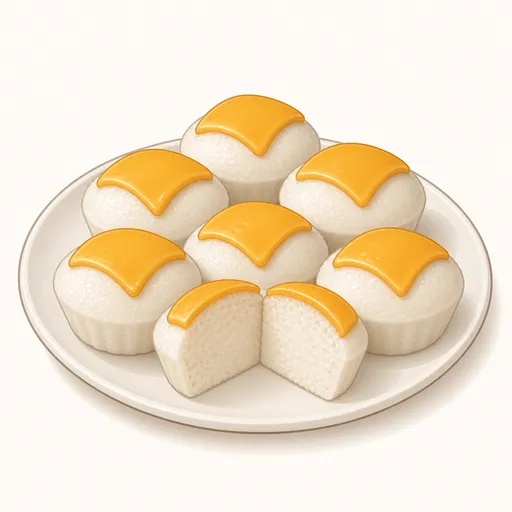
Puto are dainty steamed rice cakes from the Philippines, distant cousins of Vietnamese steamed rice cupcakes but with a finer, more evenly fluffy crumb. They're lightly sweet and fragrant with coconut milk, usually steamed in small molds with a slice of cheese on top, and served alongside dinuguan (a savory pork stew) or with an afternoon coffee.
- Difficulty
- Easy
- Prep
- 20 min
- Cook
- 18 min
- Rising or chilling
- 30 min
- Total time
- 1 hr 8 min
- Method
- Steamed
Ingredients
Batter
Cheese and greasing oil
Instructions
Step 1
Sift 250 g rice flour with 12 g baking powder into a large bowl, add 120 g granulated sugar and a pinch salt and whisk well. Mixing the dry ingredients first spreads the baking powder evenly, so the cakes rise with nicely rounded tops. The mixture is ready when it's an even color with no clumps of sugar in the flour.
Step 2
Whisk 50 g eggs with 240 g coconut milk and 120 g water, pour it into the dry ingredients and stir well, then add 30 g melted unsalted butter. Adding the butter last keeps the crumb soft and moist and prevents lumps. The batter is ready when it's smooth, as thick as thin cream and falls from the whisk in ribbons.
Step 3
Strain the batter through a sieve until smooth, cover it and let it rest for about thirty minutes. Rice flour needs time to absorb the liquid; if you steam it right away, the cakes will be gritty. The batter is ready when a few tiny bubbles appear on the surface and it feels silkier when stirred than it did at first.
Step 4
Fill the steamer pot about a third full of water, cover it with a lid wrapped in a kitchen towel and bring it to a rolling boil over high heat. Plenty of steam right from the start helps the cakes rise quickly and split prettily on top. The steamer is ready when lots of steam is escaping around the edge of the lid.
Step 5
Brush the small molds lightly with to taste vegetable oil, give the batter one gentle stir, then pour it into the molds until they're about nine-tenths full. Oiled molds let the cakes come out cleanly without tearing on the bottom. You're done when every mold holds the same amount of batter.
Step 6
Arrange the molds in the steamer basket, cover and steam over high heat for about 15 minutes without lifting the lid. Opening the lid partway through lets the heat drop and the tops will sink. The cakes are done when they've puffed up with rounded tops and a toothpick inserted in the center comes out clean.
Step 7
Lift the lid, lay a thin slice of 40 g cheddar on top of each cake, then cover and steam for about two more minutes. The remaining heat is just enough to soften the cheese so it sticks to the cakes. This step is done when the cheese slices have drooped and softened but not melted all over.
Step 8
Take the molds out and let the cakes cool for about ten minutes, then run a thin skewer around the inside of each mold to release them. Cakes that are still too hot stick and tear easily when you remove them. They're ready when they come out of the molds cleanly, with smooth tops and a fine, fluffy crumb.
Equipment
- Steamer
- Small cup molds
- Whisk
- Kitchen scale
- Mixing bowl
- Sieve
- Pastry brush
Tips
- You can replace some of the water with pandan juice or ube jam (purple yam paste) for green or purple puto.
- Wrap a towel around the steamer lid so condensation doesn't drip onto the cakes and pit their tops.
- If you don't care for cheese, sprinkle the cakes with freshly grated coconut when serving.
Storage
Covered, the cakes keep for one day at room temperature or three days in the fridge. Before eating, steam them again for about three minutes so they turn soft and fluffy again.
Common problems and how to fix them
- The cakes didn't rise and the crumb is dense.
- The baking powder was old or the water in the steamer wasn't boiling hard enough. Use fresh baking powder and only put the cakes in once the steamer is billowing steam.
- The tops of the cakes are pitted and watery.
- Condensation from the lid dripped onto the cakes. Wrap a clean towel around the steamer lid and keep the heat steady the whole time you're steaming.
This recipe is based on the common ratios for this bake and is written entirely in our own words.