Pandan kaya cake
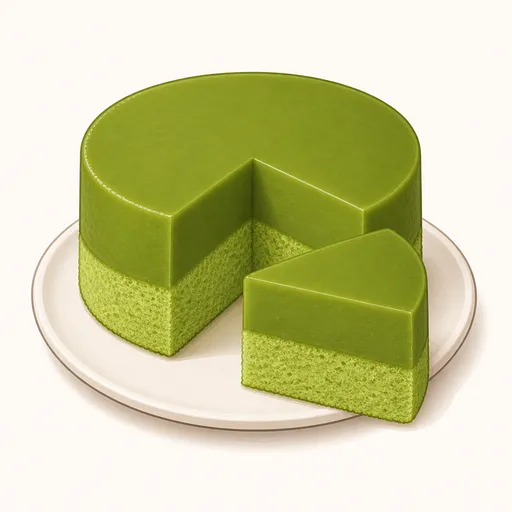
Pandan kaya cake is a favorite in Singapore and Malaysia: a soft, light pandan sponge on the bottom topped with a vivid green layer of coconut and egg kaya custard. The kaya is set just enough to be as smooth as a milk jelly, fragrant with pandan and coconut milk. Served cold, it is wonderfully refreshing on hot days.
- Difficulty
- Hard
- Prep
- 50 min
- Cook
- 45 min
- Rising or chilling
- 4 hr
- Total time
- 5 hr 35 min
- Method
- Oven-baked
Ingredients
Egg yolk batter for the sponge
Whipped egg whites (meringue)
Pandan kaya layer
Instructions
Step 1
Preheat the oven to 165°C and line the bottom of a 20 cm round springform pan with parchment paper, leaving the sides ungreased. Dry sides let the sponge cling and rise tall and even. The oven is ready once it has been preheating for about fifteen minutes.
Step 2
Whisk 72 g egg yolks with 20 g granulated sugar, add 50 g coconut milk, 30 g pandan juice and 35 g vegetable oil, then sift in 70 g cake flour, 2 g baking powder and a pinch salt and whisk until smooth. A smooth yolk batter is the base that lets the meringue fold in easily. The mixture is ready when it is pale green, silky and free of flour lumps.
Step 3
Put 130 g egg whites and 1 g cream of tartar in a clean bowl, whisk until large bubbles form, then gradually add 50 g superfine sugar over about six minutes. A stable meringue is what keeps the sponge light and airy. The meringue is ready when it is glossy and smooth and the peaks curl slightly when you lift the whisk.
Step 4
Stir one third of the meringue into the yolk batter to loosen it, then pour the mixture back into the meringue bowl and fold gently from the bottom up until the color is even; pour it into the pan. Folding keeps the whipped-in air bubbles. The batter is ready when it is evenly green, with no white streaks, and still light and fluffy.
Step 5
Tap the pan gently on the counter to burst any large air bubbles and bake at 165°C for 30 to 35 minutes. A moderate temperature lets the cake rise evenly without the top cracking badly. The sponge is done when the top springs back when pressed and a skewer inserted in the middle comes out clean.
Step 6
Let the sponge cool completely, slice off the top crust to level it, set the cake back on the clean base of the pan and wrap a strip of parchment or acetate about 10 cm tall around the sides. Removing the top crust helps the kaya cling firmly to the sponge. The pan is ready when the sponge sits flat against the sides and the collar stands straight with no gaps.
Step 7
Whisk 30 g cornstarch, 15 g custard powder, 4 g agar powder, 100 g granulated sugar and a pinch salt into 150 g pandan juice, add 300 g coconut milk and 100 g beaten eggs, strain through a sieve, then stir constantly over low heat for about ten minutes. Low heat cooks the eggs gently into a smooth custard without lumps. The kaya is ready when it is thick and glossy and a spoon drawn across the bottom of the pot leaves a clear trail.
Step 8
Pour the hot kaya over the sponge right away, tap the pan gently to level the top and pop any rising air bubbles with a toothpick. The kaya must go on while hot, because the agar begins to set as it cools. The layer is right when it covers the cake evenly, about two to three centimeters thick, with a smooth, glossy surface.
Step 9
Let the cake cool at room temperature for about twenty minutes, then refrigerate for at least four hours. A long enough chill lets the kaya set firm so it cuts into neat pieces. The cake is ready when the kaya feels firm and springy to a light touch and does not stick to your finger.
Step 10
Remove the ring of the pan, peel off the collar and cut the cake into pieces with a knife dipped in hot water and wiped dry. A warm knife glides through the kaya without tearing the sponge. The pieces are right when the cut side shows two clean, level layers of deep green and pale green.
Equipment
- Oven
- Springform pan
- Hand mixer
- Whisk
- Spatula
- Small saucepan
- Sieve
- Kitchen scale
- Parchment paper
- Refrigerator
Tips
- For deeply colored pandan juice, blend fresh pandan leaves with a little water, strain and let it settle overnight in the fridge, using only the deep green concentrate at the bottom.
- You can bake the sponge a day ahead and wrap it well; the next day, just cook the kaya and let it set.
- If you do not have custard powder, replace it with the same amount of cornstarch; the kaya will be paler and have less vanilla flavor.
Storage
Always keep the cake in the fridge, covered well so the kaya does not pick up other smells; it is best within three days. Do not freeze it, because the kaya weeps water when thawed.
Common problems and how to fix them
- The kaya layer is lumpy like scrambled eggs.
- The heat was too high or you did not stir constantly. Cook over the lowest heat, stir along the bottom of the pot the whole time and strain the mixture before cooking.
- The kaya separates from the sponge when sliced.
- The kaya was poured after it had cooled down, or the sponge still had its top crust. Trim off the top crust and pour the kaya as soon as you take the pot off the heat.
This recipe is based on the common ratios for this bake and is written entirely in our own words.