Pandan chiffon cake
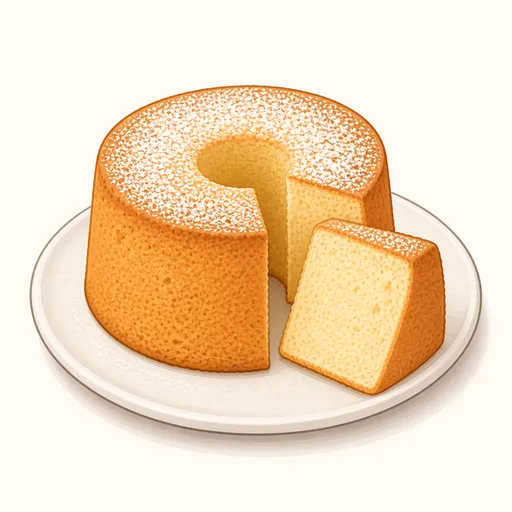
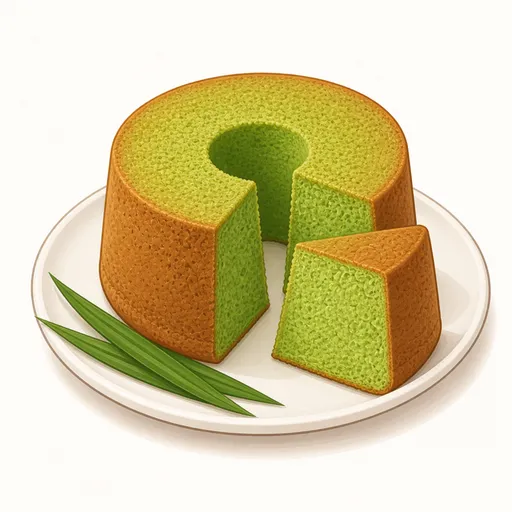
Pandan chiffon is a beloved sponge cake all over Southeast Asia, with a natural jade green color from fresh pandan juice. Coconut milk in the batter adds a light richness that pairs with the gentle pandan fragrance, and the crumb is soft, moist and springs back like a cushion when you press it.
- Difficulty
- Medium
- Prep
- 40 min
- Cook
- 45 min
- Rising or chilling
- 1 hr 30 min
- Total time
- 2 hr 55 min
- Method
- Oven-baked
Ingredients
Pandan egg yolk batter
Whipped egg whites (meringue)
Instructions
Step 1
Chop about ten fresh pandan leaves, blend them with a little water, then strain through a cloth and squeeze out 50 g concentrated pandan juice; let it settle in the fridge if you have time. As the juice settles, a deep green sediment separates at the bottom, giving stronger color and fragrance. The juice is ready when it is deep green, intensely fragrant and free of leaf pulp.
Step 2
Preheat the oven to 165°C with a rack in the middle, and have a dry, ungreased 20 cm tube pan ready. Pandan cakes darken easily, so a moderate temperature keeps their pretty green color. The oven is ready once it has been preheating for a full fifteen minutes.
Step 3
Whisk 90 g egg yolks with 20 g granulated sugar and a pinch salt, then add 50 g vegetable oil, 50 g coconut milk and the pandan juice one after another, whisking until fully blended. Adding the liquids in order helps the oil and water emulsify with the yolks, creating a silky base for the batter. The mixture is ready when it is an even yellow-green with no drops of oil floating on top.
Step 4
Sift 100 g cake flour and 3 g baking powder into the pandan mixture and whisk gently until just smooth. Sifted flour dissolves quickly, so a few turns are all you need and the cake will not be tough. The batter is ready when it is glossy and smooth, moderately thick and falls from the whisk in a continuous ribbon.
Step 5
Add 1 g cream of tartar to 180 g egg whites and whisk until finely foamy, then slowly sprinkle in 70 g superfine sugar with the mixer running and keep whisking on medium-high speed. Adding the sugar little by little makes the meringue glossy and stable enough to hold its air during folding. The meringue is ready when it is as glossy as silk and the peaks stand firm, with just the tips drooping slightly.
Step 6
Whisk one third of the meringue gently into the pandan bowl until even, then pour this mixture into the remaining meringue and fold it in with a spatula. Lightening the yolk batter first helps the two mixtures combine quickly, so you need fewer strokes. The batter is ready when it is an even green, light and airy, with no white specks of meringue.
Step 7
Pour the batter into the pan, run a skewer around the inside to remove large air bubbles, then bake at 165°C for 40 to 45 minutes. Baking for the full time sets the structure completely, so the cake does not shrink as it cools. The cake is done when it has risen above the rim of the pan, the top is pale golden and a skewer inserted in the middle comes out clean.
Step 8
Turn the pan upside down onto a bottle as soon as it comes out of the oven and let it cool naturally for about an hour and a half. Gravity pulls the crumb downward so the air pockets keep their shape, which keeps the cake tall and airy. The cake is ready when the pan is completely cool and the top of the cake is no longer warm.
Step 9
Run a thin knife around the sides of the pan and the center tube, push out the base and release the cake from the bottom, then slice it with a serrated knife. Working the knife carefully lets the cake come out whole with its thin crust intact. The cake is right when the cut side is jade green and evenly fine and the cake springs right back when pressed.
Equipment
- Oven
- Tube pan (chiffon pan)
- Hand mixer
- Whisk
- Spatula
- Sieve
- Blender
- Kitchen scale
- Mixing bowl
Tips
- If you do not have fresh pandan leaves, use frozen pandan juice, or replace it with water and add a few drops of pandan extract.
- Pandan leaves that are mature but not old, neither too young nor too tough, give the most fragrant and greenest juice.
- Serve the cake with a little toasted shredded coconut or whipped coconut cream to bring out the pandan flavor.
Storage
Wrapped well, the cake keeps for one day at room temperature and about four days in the fridge. Because it contains coconut milk, do not leave it somewhere hot for too long, and let it come back to room temperature before eating.
Common problems and how to fix them
- The cake is pale green or turns yellowish brown.
- The pandan juice was too thin or the oven was too hot. Squeeze a more concentrated juice, let it settle and use the deeper part, and lower the oven temperature slightly if the top browns quickly.
- The crumb has large, uneven air holes.
- Large air bubbles were not removed or the meringue was overwhipped and dry. Stop whisking as soon as the peaks stand, and run a skewer through the batter before baking.
This recipe is based on the common ratios for this bake and is written entirely in our own words.