Pan de sal
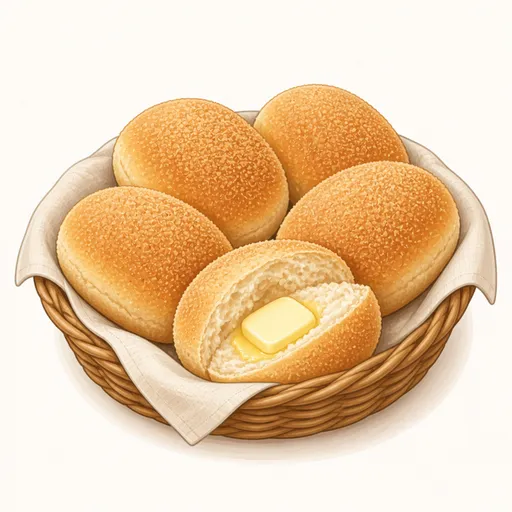
Pan de sal are the small round bread rolls no Filipino breakfast is complete without, often bought hot from the bakery before dawn. They have a coating of breadcrumbs, a thin, soft crust and a lightly sweet crumb, perfect for dunking in coffee or filling with butter, eggs and cheese.
- Difficulty
- Easy
- Prep
- 35 min
- Cook
- 18 min
- Rising or chilling
- 2 hr
- Total time
- 2 hr 53 min
- Method
- Oven-baked
Ingredients
Dough
Breadcrumb coating
Instructions
Step 1
Combine 500 g bread flour, 60 g granulated sugar and 7 g instant yeast in the bowl of a stand mixer, pour in 200 g warm whole milk, 80 g water and 50 g eggs and mix on low speed, then finally add 8 g salt and 50 g softened unsalted butter. The sugar and milk give these rolls their gentle sweetness and signature soft crumb. The dough is ready when it comes together in a soft mass with no lumps of butter clinging to it.
Step 2
Knead on medium speed for about ten minutes, until the dough is smooth and elastic. Well-developed gluten lets even these small rolls rise round with an airy crumb. The dough is ready when it no longer sticks to your hands, looks smooth and stretches into a thin windowpane.
Step 3
Shape the dough into a ball, put it in an oiled bowl, cover with plastic wrap and let it rise in a warm spot for about an hour. The first rise gives the bread a fragrant yeasty aroma and a light crumb. The dough is ready when it has doubled and a fingertip pressed into it leaves a dent that does not spring back.
Step 4
Punch down the dough, roll it into a log about 60 cm long, then use a bench scraper to cut it into twenty equal pieces, the traditional way. Cutting from a long log gives rolls with two flat cut sides and the slightly square shape they are known for. The pieces are right when each is evenly about three centimeters thick.
Step 5
Pour 40 g breadcrumbs onto a plate, roll each piece of dough in them until coated on all sides, then arrange them on a parchment-lined baking sheet, cut side up. The breadcrumbs make a slightly rough crust and keep the rolls from sticking together as they rise. The pieces are ready when each one has an even, thin coating of crumbs.
Step 6
Cover with a towel and let rise for about 45 minutes more, spacing the pieces about three centimeters apart so they just touch as they rise. Rolls that touch as they rise keep soft sides and rise taller. They are ready when they have grown by half and are just touching each other.
Step 7
While the rolls have their final rise, preheat the oven to 190°C with a rack in the middle. This moderate heat keeps the crust thin and soft rather than crisp and hard. The oven is ready once the temperature has settled.
Step 8
Bake at 190°C for about 15 to 18 minutes, until the rolls have puffed up round. Baking just long enough keeps the crumb moist and soft. They are done when the tops are pale golden and a roll pulled apart shows a white, airy, dry crumb.
Step 9
Let the rolls rest on the tray for about ten minutes, then pull them apart and enjoy them warm. Pan de sal is at its best when just warm, while the milky, yeasty aroma is still strong. They are ready when they feel warm in your hand and the crust is soft.
Equipment
- Oven
- Baking sheet
- Parchment paper
- Stand mixer
- Kitchen scale
- Bench scraper
- Plastic wrap
- Mixing bowl
Tips
- Filling a warm roll with a pat of butter and a slice of cheese is the most popular way to eat them for breakfast in the Philippines.
- If you do not have store-bought breadcrumbs, you can grind day-old dry bread finely.
- You can knead the dough the night before, let it rise slowly in the fridge overnight, then shape and bake in the morning for hot rolls at breakfast.
Storage
The rolls keep for two days in an airtight bag at room temperature. You can freeze them for up to a month; to serve, reheat at 170°C for about five minutes so they are soft and warm like fresh from the oven.
Common problems and how to fix them
- The rolls spread out flat.
- The dough was too wet or overproofed. Measure the liquids precisely and put the rolls in the oven as soon as they have grown by half.
- The breadcrumbs fall off during baking.
- The surface of the dough was too dry for the crumbs to stick. Mist the pieces of dough with a little water before rolling them in the breadcrumbs.
This recipe is based on the common ratios for this bake and is written entirely in our own words.