Ondeh-ondeh
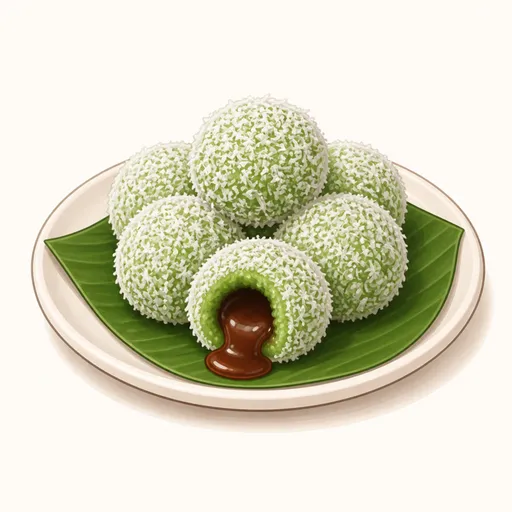
Ondeh-ondeh, known as klepon in Indonesia, are little pandan-green glutinous rice balls that are boiled and then rolled in grated coconut. The real magic is the melted palm sugar hidden inside: bite in and a rush of fragrant, sweet syrup bursts out and mingles with the rich, slightly salty coconut.
- Difficulty
- Easy
- Prep
- 35 min
- Cook
- 15 min
- Total time
- 50 min
- Method
- Boiled or simmered
Ingredients
Glutinous rice dough
Palm sugar filling
Coconut coating
Instructions
Step 1
Toss 100 g freshly grated coconut with a pinch salt, spread it on a plate lined with 10 g pandan leaves, and steam for about ten minutes. A quick steam keeps the coconut from turning sour too fast and gives it more pandan fragrance. The coconut is ready when the shreds are soft, slightly moist and clearly fragrant.
Step 2
Grate or finely chop 100 g palm sugar into crumbs about the size of a mung bean. Small crumbs melt completely during boiling and turn into a runny filling instead of a hard lump. The sugar is ready when it is loose and crumbly, with no pieces bigger than your little fingernail.
Step 3
Mix 200 g glutinous rice flour, 20 g tapioca starch and a pinch salt, then gradually pour in 160 g pandan juice and knead by hand. Add the liquid a little at a time, because every brand of glutinous rice flour absorbs water differently. The dough is ready when it is as soft as an earlobe, does not stick to your hands and does not crack at the edges when you roll it into a ball.
Step 4
Pinch off pieces of dough about the size of a longan, flatten each one in your palm, add a little of the sugar crumbs, then gather the edges together and roll it into a tightly sealed ball. The ball must be completely sealed so the sugar cannot leak out when it hits the boiling water. The balls are ready when they are smooth and round, with no cracks or sugar showing.
Step 5
Drop the balls into a pot of gently boiling water over medium heat in small batches, stirring gently so they do not stick to the bottom. Cooking a few at a time keeps the water from cooling down and lets the dough cook evenly. They are done once they float right up to the surface; wait about one more minute, then lift them out with a slotted spoon.
Step 6
Let the balls drain for a few seconds, then roll them right away in the steamed coconut until they are completely covered. The dough is still warm and moist, so the coconut clings much better than it would once the balls have cooled. They are finished when they are evenly coated in white coconut over a soft, glossy green shell.
Equipment
- Small saucepan
- Mixing bowl
- Kitchen scale
- Blender
- Sieve
- Steamer
Tips
- Eat them right away while they are still warm, when the sugar filling is still runny and the pandan aroma is at its best.
- If your palm sugar is very hard, steam it for about three minutes to soften it before chopping.
- Pop each ball into your mouth whole, because biting it in half will send the syrup running down your hand.
Storage
Ondeh-ondeh are best within a few hours of making them; keep them covered at room temperature. By the next day the dough turns firm and the coconut can go sour, so make only as many as you will eat.
Common problems and how to fix them
- The balls crack and the sugar leaks into the pot.
- The dough is too dry or the balls were not sealed properly. Knead in a little more water to soften the dough, and pinch the seams together carefully before boiling.
- The sugar filling still has hard bits when you eat it.
- The sugar was chopped too coarsely to melt in time. Next time, grate it very finely or use a softer palm sugar.
This recipe is based on the common ratios for this bake and is written entirely in our own words.