Malasadas
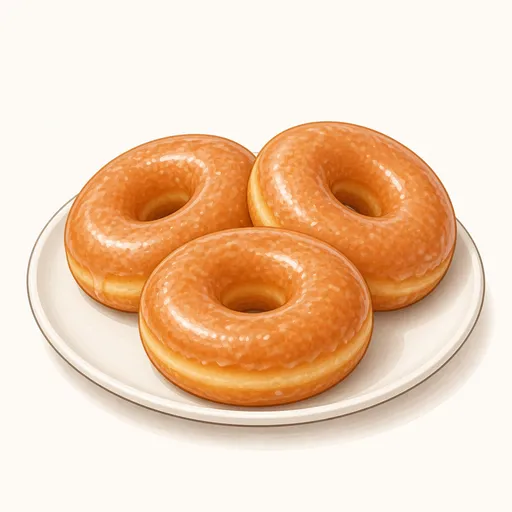
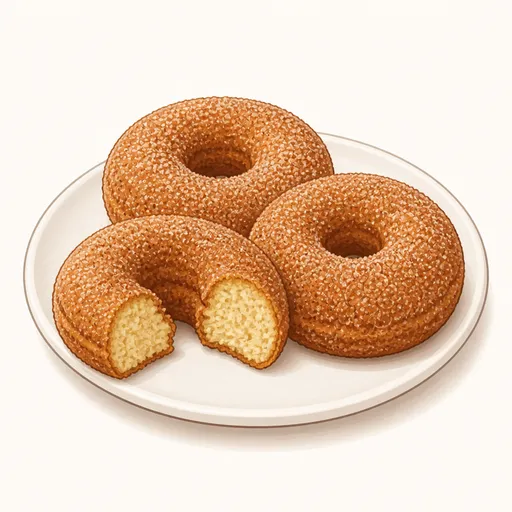
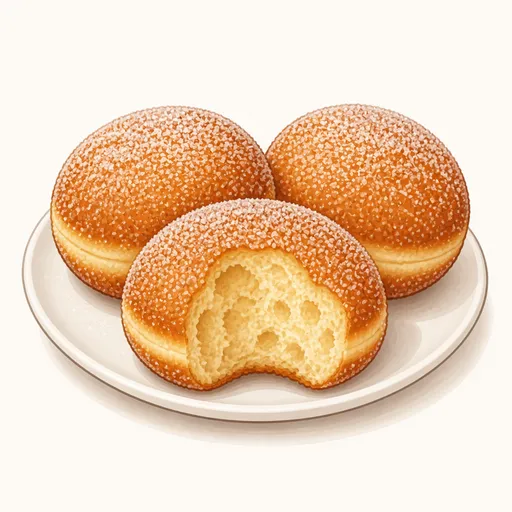
Malasadas are hole-less doughnuts that originated in Portugal and became famous in Hawaii. A yeast dough rich in eggs and milk makes them puff up big, with a thin golden crust and a cloud-soft inside, while the coating of sugar they're rolled in gives a lovely crunch with every bite.
- Difficulty
- Medium
- Prep
- 30 min
- Cook
- 30 min
- Rising or chilling
- 2 hr
- Total time
- 3 hr
- Method
- Fried
Ingredients
Dough
Sugar coating
Frying oil
Instructions
Step 1
Put 500 g all-purpose flour, 65 g granulated sugar, 7 g instant yeast and 5 g salt in the bowl of a stand mixer, add 150 g eggs, 120 g evaporated milk and 60 g warm water, and knead with the dough hook on low speed. Once the dough starts to come together, gradually add 55 g softened butter and knead for about eight more minutes until the butter is fully worked in. The dough is ready when it's soft, slightly sticky at the bottom of the bowl but pulling away from the sides, and stretches thin without tearing right away.
Step 2
Shape the dough into a ball, place it in a lightly oiled bowl, cover with plastic wrap and let it rise in a warm spot for about an hour and a half. A dough rich in eggs and butter rises more slowly than plain bread dough, so give it plenty of time. It has risen enough when it has doubled in size and a fingertip pressed into it leaves a dent that slowly fills back in.
Step 3
Turn the dough out onto a lightly floured counter, roll it into a sheet about one and a half centimeters thick, then cut it into squares about seven centimeters on each side and set each one on its own small piece of parchment paper. The parchment lets you lower the doughnuts into the oil without deflating or misshaping them. The squares are ready when they have neat edges and are roughly the same size.
Step 4
Lay a sheet of plastic wrap loosely over the squares and let them rise for about thirty minutes more. This second rise builds in the air that makes the doughnuts puff up round in the hot oil. They're ready when they're visibly puffy and feel soft and pillowy when touched lightly.
Step 5
Heat the frying oil (to taste) to about 175°C. Holding the edge of the parchment, flip each doughnut face down into the oil, peel off the paper and fry for about two minutes per side. A steady temperature lets the outside brown evenly while the inside cooks through. They're done when they've puffed up round, both sides are golden brown and a pale ring runs around the middle.
Step 6
Lift the doughnuts onto a rack to drain for about a minute, then roll them right away in 150 g superfine sugar. While they're still warm, the sugar clings in a thick, even layer. They're finished when they're completely coated in sparkling sugar and, when torn open, the inside is pale yellow, soft and full of tiny air pockets.
Equipment
- Stand mixer
- Mixing bowl
- Rolling pin
- Deep skillet
- Thermometer
- Wire cooling rack
- Parchment paper
- Plastic wrap
- Kitchen scale
Tips
- Malasada dough is quite soft and sticky; don't add too much extra flour, or the doughnuts will lose their signature softness.
- Once the doughnuts have cooled a little, you can pipe in pastry cream, guava jam or coconut cream using a piping bag with a long tip.
- Use a thermometer to keep the oil steady, since every batch you add makes the temperature drop quite a bit.
Storage
Malasadas are best on the day they're made. Keep leftovers in a paper bag at room temperature until the next day, then warm them in the microwave for about ten seconds to soften the inside again.
Common problems and how to fix them
- The doughnuts are greasy and heavy.
- The oil wasn't hot enough or you fried too many at once. Let the oil come back up to about 175°C between batches and fry only a few at a time.
- The outside is dark but the inside is still doughy.
- The oil was too hot or the dough was rolled too thick. Lower the oil temperature a little and roll the dough thinner next time.
This recipe is based on the common ratios for this bake and is written entirely in our own words.