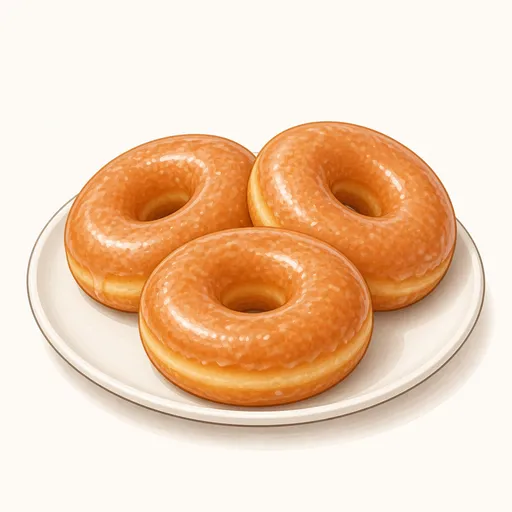
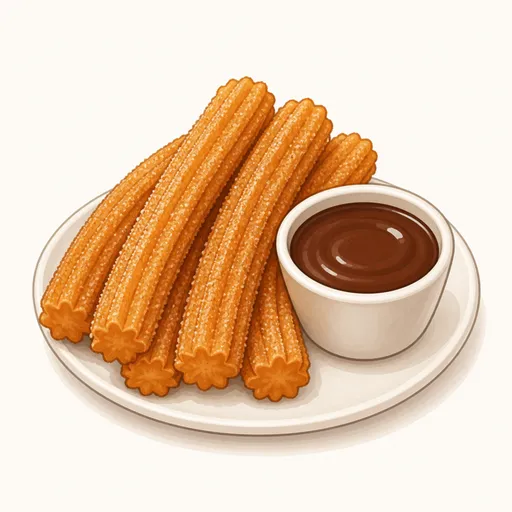
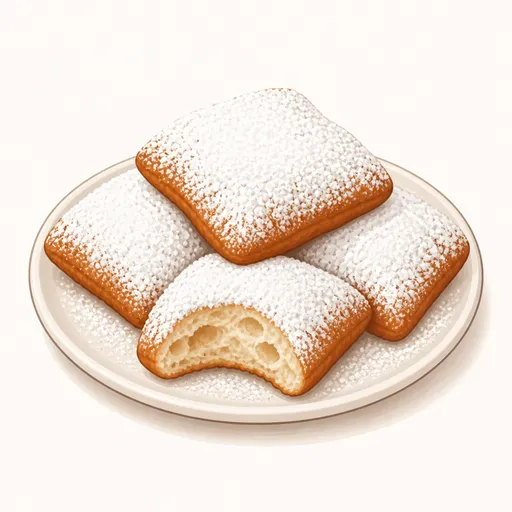
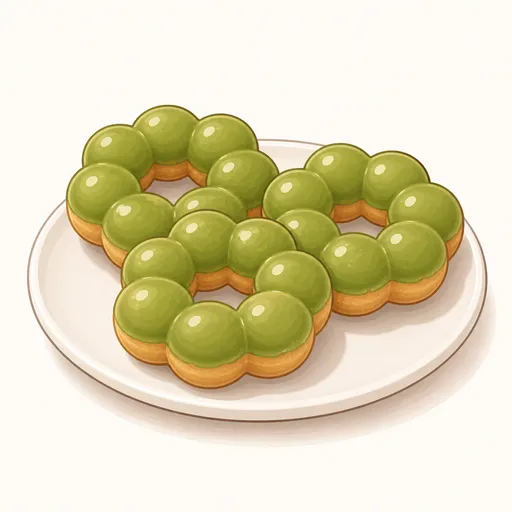
Cake doughnuts
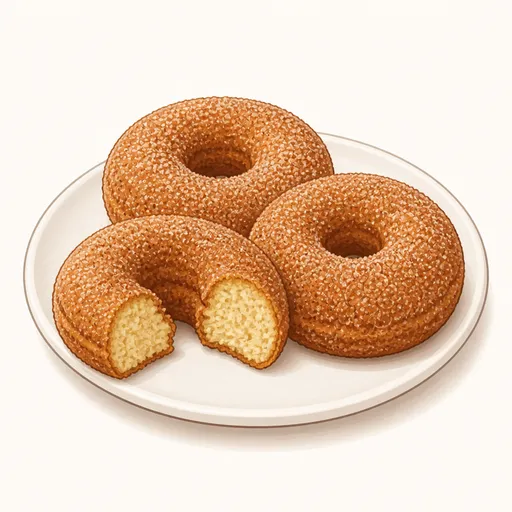
Cake doughnuts use baking powder and baking soda instead of yeast, so there's no long wait for the dough to rise, yet you still get doughnuts with a lightly crisp outside and a soft, tight, cake-like crumb. A hint of nutmeg and a coating of cinnamon sugar make them irresistibly fragrant straight from the fryer.
- Difficulty
- Medium
- Prep
- 30 min
- Cook
- 25 min
- Rising or chilling
- 1 hr
- Total time
- 1 hr 55 min
- Method
- Fried
Ingredients
Dough
Frying and dusting
Cinnamon sugar coating
Instructions
Step 1
Whisk 375 g all-purpose flour, 10 g baking powder, 2 g baking soda, 4 g salt and a pinch ground nutmeg together in a large bowl. The leaveners must be evenly distributed for the doughnuts to puff up round without a soapy aftertaste. The mixture is ready when it's evenly loose with no small lumps.
Step 2
In another bowl, whisk 100 g eggs with 150 g granulated sugar until dissolved, then add 180 g buttermilk, 40 g melted and cooled unsalted butter and 5 g vanilla extract. The acidity of buttermilk activates the baking soda and keeps the crumb tender. The mixture is ready when it's uniform, slightly thick and free of sugar grains.
Step 3
Pour the wet mixture into the dry ingredients and fold with a spatula just enough to form a soft, slightly sticky dough. Overmixing makes the doughnuts chewy and robs them of their soft, cakey texture. The dough is ready when no dry streaks remain but it still looks rough rather than smooth.
Step 4
Turn the dough out onto a sheet of plastic wrap, press it into a slab about three centimeters thick, wrap tightly and chill for about an hour. Cold dough is less sticky, easier to roll and holds its shape better when it hits the hot oil. The dough is ready when it has firmed up and no longer sticks to your fingers.
Step 5
Dust the counter with to taste all-purpose flour, roll the dough about one and a half centimeters thick, then cut out doughnuts with a round cutter that has a center hole and set them on parchment paper. Cut decisively without twisting the cutter, so the edges puff evenly when fried. The doughnuts are ready when they have clean edges and keep their round shape when lifted.
Step 6
Pour to taste oil for deep-frying into a deep pot so it's at least five centimeters deep, and heat over medium heat to about 185°C. The right temperature cooks the doughnuts through without the outside soaking up oil. The oil is ready when a thermometer reads 185°C or a small scrap of dough rises to the surface immediately and sizzles steadily.
Step 7
Lower two or three doughnuts into the oil, fry for about a minute and a half per side, then flip, keeping the oil between 180 and 190°C. Frying just a few at a time keeps the oil temperature from dropping, so the doughnuts puff up evenly. They're done when both sides are golden brown, there's a pale ring around the middle and one broken open is dry inside.
Step 8
Lift the doughnuts out with a spider and let them drain on a wire rack for about a minute. Draining on a rack rather than paper keeps the bottoms from going soggy and lets the excess oil drip away. They're ready when the outside is dry, just slightly shiny and still warm.
Step 9
Mix 100 g granulated sugar with 4 g ground cinnamon in a wide bowl and roll each warm doughnut in it until both sides are fully coated. Warm doughnuts hold on to the sugar much better than cooled ones. They're finished when evenly covered in sparkling cinnamon sugar with no bare spots.
Equipment
- Deep skillet
- Thermometer
- Rolling pin
- Cookie cutter
- Wire cooling rack
- Whisk
- Spatula
- Mixing bowl
- Kitchen scale
- Plastic wrap
Tips
- Gather the scraps left after cutting and roll them out once more, or fry the round centers as little doughnut holes.
- If you don't have buttermilk, mix whole milk with a little lemon juice and let it sit for ten minutes.
- Instead of cinnamon sugar, dip them in a glaze of powdered sugar and milk for glazed doughnuts.
Storage
Cake doughnuts are best the day they're fried. You can keep them in a paper-lined container at room temperature for one day, then reheat them in a 160°C oven for about five minutes so the outside crisps up again.
Common problems and how to fix them
- The doughnuts are greasy and heavy.
- The oil wasn't hot enough, or too many doughnuts went in at once and the temperature dropped. Use a thermometer to keep the oil around 185°C and fry just a few per batch.
- The outside is dark but the inside is still wet.
- The oil is too hot or the dough was rolled too thick. Lower the heat to bring the oil back to about 180°C and roll the dough to just about one and a half centimeters.
- The doughnuts split open and lost their round shape.
- The dough was too dry or the cutter was twisted while cutting. Keep the dough slightly moist, brush off excess flour and press the cutter straight down in one go.
This recipe is based on the common ratios for this bake and is written entirely in our own words.