Lemon cheesecake
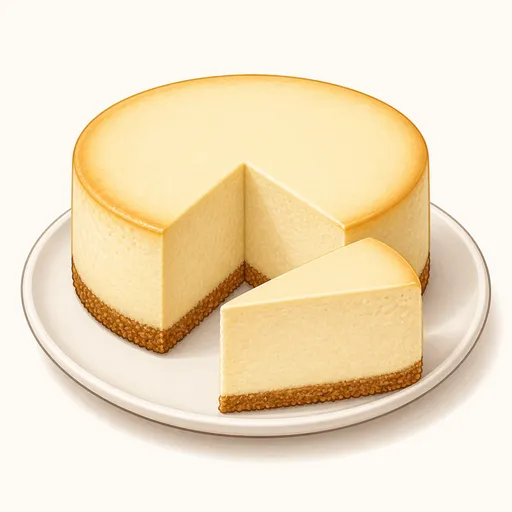
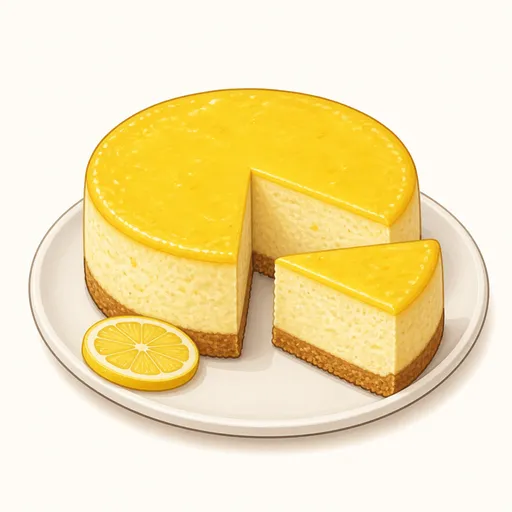
This baked lemon cheesecake has a dense, silky, rich cream cheese filling brightened with lemon zest and lemon juice. The graham cracker crust is crisp and buttery, and the top can be finished with a glossy layer of lemon curd for an even bolder sweet-tart flavor.
- Difficulty
- Medium
- Prep
- 35 min
- Cook
- 1 hr 15 min
- Rising or chilling
- 7 hr
- Total time
- 8 hr 50 min
- Method
- Oven-baked
Ingredients
Cookie crust
Lemon cheese filling
Topping
Instructions
Step 1
Preheat the oven to 175°C and wrap two layers of foil tightly around the outside bottom of a 20 cm springform pan. The foil keeps water from seeping into the pan during the water bath later on. The oven is ready once it has preheated for about fifteen minutes.
Step 2
Mix 150 g graham cracker crumbs with 20 g sugar and 70 g melted butter, press firmly into the bottom of the pan and bake at 175°C for 8 to 10 minutes, then lower the oven to 160°C. Prebaking keeps the crust crisp so it doesn't go soggy under the moist filling. The crust is ready when it smells buttery and the edges have darkened slightly.
Step 3
Beat 680 g softened cream cheese with 180 g sugar, 15 g cornstarch and 6 g grated lemon zest on low speed, scraping down the bowl a few times. Low speed limits air bubbles, the main cause of cracked tops. The mixture is ready when it's completely smooth with no lumps of cheese.
Step 4
Add 150 g eggs one at a time, mixing just until combined, then add 120 g sour cream, 45 g lemon juice and 5 g vanilla extract. Overbeaten eggs make the cheesecake puff up and then sink as it cools. The filling is ready when it's thick and silky and falls from the whisk in a heavy ribbon.
Step 5
Pour the filling over the crust, tap the pan gently to bring air bubbles to the surface, set it in a deep roasting pan and pour in hot water to come about two centimeters up the side of the cake pan. The surrounding water keeps the heat gentle so the filling bakes evenly and smoothly. The setup is right when the water level is steady and doesn't reach the top edge of the foil.
Step 6
Bake at 160°C for about 55 to 65 minutes. Low heat and a long baking time let the filling set without cracking or browning. It's done when the edges have set about five centimeters in from the side of the pan and the center wobbles gently like jelly when you shake the pan.
Step 7
Turn off the oven, prop the door ajar and leave the cheesecake inside for about an hour, then run a knife around the edge of the pan. Cooling gradually keeps it from shrinking suddenly and cracking. It's ready when it's just slightly warm and the edges have pulled away a little from the pan.
Step 8
Cover the pan and refrigerate for at least six hours, ideally overnight. A baked cheesecake only becomes truly firm and full-flavored once thoroughly chilled. It's ready when the center is firm and a knife cuts a smooth surface.
Step 9
Remove the ring of the pan, spread 150 g lemon curd in a thin layer over the top and slice with a hot knife. The lemon curd adds fresh tang and hides any small cracks. It's finished when the top is evenly glossy and golden and each slice has clean, sharp edges.
Equipment
- Oven
- Springform pan
- Hand mixer
- Spatula
- Kitchen scale
- Mixing bowl
- Deep skillet
- Refrigerator
Tips
- Leave the cream cheese, eggs and sour cream at room temperature for at least an hour beforehand so the filling turns out smooth without long beating.
- Zest only the yellow part of the lemon peel and avoid the white pith, which will make the cheesecake bitter.
- If you can't find graham crackers, digestive biscuits make an excellent substitute.
Storage
Covered, the cheesecake keeps for five days in the fridge. You can freeze it without the lemon curd topping for up to a month and thaw it overnight in the fridge.
Common problems and how to fix them
- A long crack runs across the middle of the cheesecake.
- Too much air was beaten into the filling or the cheesecake cooled too quickly. Beat on low speed and let it cool gradually in the switched-off oven.
- The crust is wet and mushy.
- Water from the bath seeped into the pan. Wrap it tightly in two layers of foil, or set it inside a larger pan before placing it in the water bath.
This recipe is based on the common ratios for this bake and is written entirely in our own words.