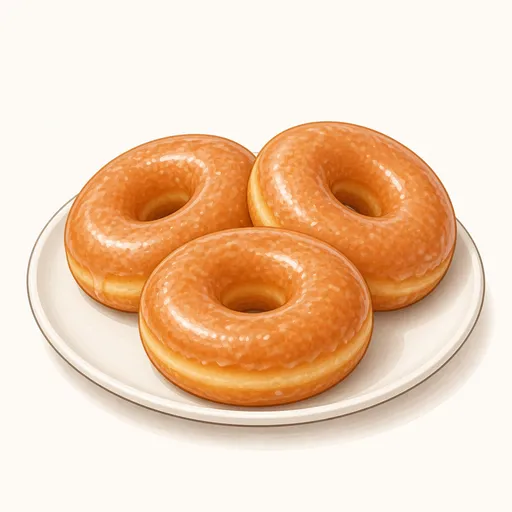
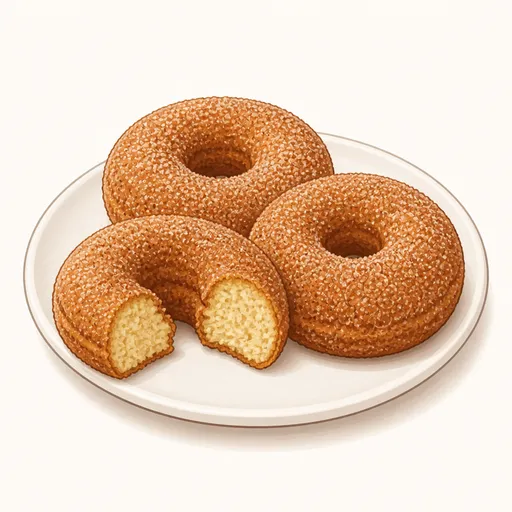
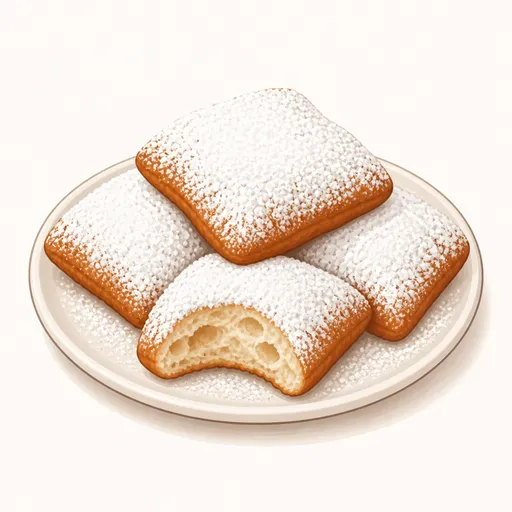
Jelly doughnuts
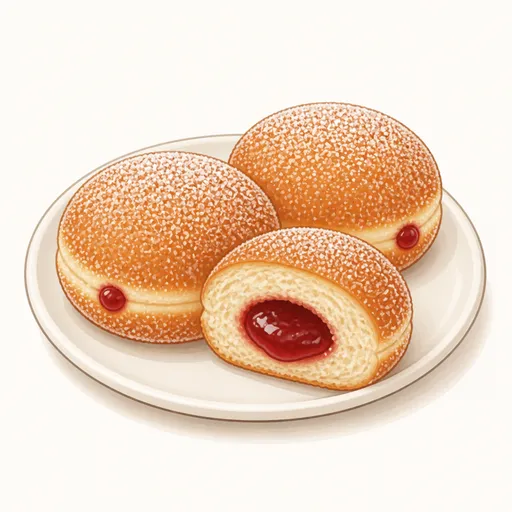
Jelly doughnuts are round doughnuts with no hole, fried from a yeasted dough rich in butter and eggs and filled with sweet-tart fruit jam. The sugar-rolled outside is delightfully crunchy, the inside is soft as cotton, and with every bite the fragrant jam spills out, which wins over kids and grown-ups alike.
- Difficulty
- Medium
- Prep
- 40 min
- Cook
- 30 min
- Rising or chilling
- 2 hr 15 min
- Total time
- 3 hr 25 min
- Method
- Fried
Ingredients
Dough
Jam filling
Frying and sugar coating
Instructions
Step 1
Put 500 g bread flour, 60 g granulated sugar, 7 g instant yeast and 8 g salt in the mixer bowl, pour in 250 g warm whole milk and 100 g eggs, and knead until the dough comes together, then gradually add 60 g softened unsalted butter. Keep kneading for about ten minutes so the dough is elastic enough to trap gas as it rises. The dough is ready when a small piece stretches thin enough to be almost translucent without tearing right away.
Step 2
Shape the dough into a ball, place it in an oiled bowl, cover it with plastic wrap, and let it rise in a warm spot for about an hour and a half. All the butter and eggs make the yeast work more slowly than in a plain dough, so be patient. The dough is ready when it has doubled in volume and the surface looks taut and smooth.
Step 3
Punch down the dough, roll it out about 1.5 cm thick, and cut out rounds with an 8 cm round cutter, gathering the scraps and rerolling them once. This thickness leaves enough room inside for the jam while still cooking through evenly. The rounds are ready when they are circular, with straight edges and an even thickness.
Step 4
Set each round on its own small square of parchment paper on a baking sheet, cover with a towel, and let them rise for about forty-five minutes more. This rise makes the crumb lightly puffy, and the parchment lets you lower the doughnuts into the oil without misshaping them. They're ready when they've clearly puffed up and a gentle poke leaves a dent that slowly fills back in.
Step 5
Heat the oil for frying (to taste) to about 170°C, add two or three doughnuts per batch, and fry for about one and a half to two minutes per side. Moderate heat cooks the thick center through without burning the outside. The doughnuts are done when both sides are evenly golden brown and a pale ring shows around the middle.
Step 6
Let the doughnuts drain on a wire rack for about two minutes, then roll each one in a bowl of 80 g superfine sugar while still warm. The outside is still slightly oily, so the sugar clings evenly all over. They're ready when they're covered in a sparkling, even coat of sugar with no bare patches.
Step 7
Poke a hole in the side of each doughnut with a skewer or the handle of a spoon and wiggle it gently to make a pocket, then spoon 240 g fruit jam into a piping bag fitted with a long round tip and fill each one. Making a pocket first lets the jam go deep into the center instead of squirting back out. The doughnuts are ready when they feel heavier in your hand and a little jam peeks out of the hole.
Equipment
- Stand mixer
- Mixing bowl
- Rolling pin
- Cookie cutter
- Deep skillet
- Thermometer
- Wire cooling rack
- Piping bag
- Kitchen scale
- Plastic wrap
Tips
- Strawberry, raspberry or blueberry jam all work well; if your jam is very thick, stir in a few drops of warm water so it pipes easily.
- You can swap the jam for pastry cream (custard) or chocolate ganache for more flavors.
- Reroll the scraps only once, since dough that's rolled too many times turns tough and doesn't rise well.
Storage
The doughnuts are best on the day they're made. You can keep them in an airtight container at room temperature until the next day; if you fill them with pastry cream instead of jam, keep them in the fridge and eat them within a day.
Common problems and how to fix them
- The doughnuts have a very wide white ring and the centers are raw.
- The doughnuts overproofed or the oil wasn't hot enough, so they floated too high and weren't flipped in time. Shorten the second rise and keep the oil at about 170°C.
- The jam squirts out as soon as you fill them.
- The pocket inside wasn't big enough or you piped too fast. Widen the inside of the doughnut first and squeeze the piping bag slowly, stopping as soon as the doughnut feels heavy.
This recipe is based on the common ratios for this bake and is written entirely in our own words.