Japanese custard pudding
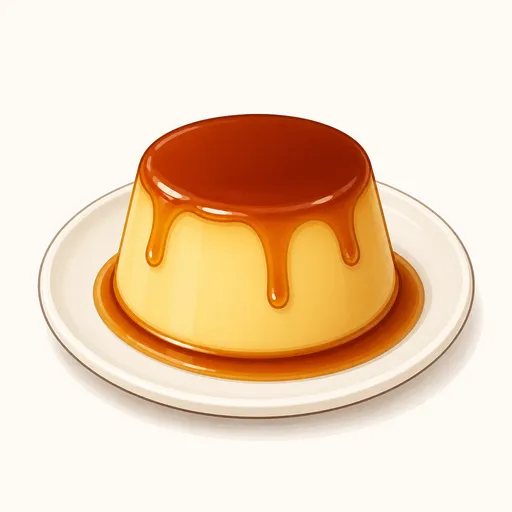
Purin is a much-loved egg pudding in Japan, a little firmer and silkier than Vietnamese flan and topped with a gently bitter caramel. It bakes in a water bath at low heat, so the cut surface is perfectly smooth without a single air hole, and it's wonderfully refreshing served cold.
- Difficulty
- Easy
- Prep
- 25 min
- Cook
- 35 min
- Rising or chilling
- 4 hr
- Total time
- 5 hr
- Method
- Oven-baked
Ingredients
For the caramel
For the custard
Instructions
Step 1
Put 60 g granulated sugar and one-third of the 30 g water in a small saucepan and cook over medium heat without stirring until the sugar turns a deep amber, then turn off the heat, pour in the rest of the water, and swirl the pan to combine. The water added at the end loosens the caramel so it doesn't set hard in the cups right away. The caramel is ready when it is a glossy reddish brown; pour it quickly into the bottoms of six ramekins.
Step 2
Preheat the oven to 150°C, set the caramel-lined ramekins in a deep baking dish, and have a kettle of hot water ready. Low heat and the surrounding water let the eggs cook slowly so the pudding doesn't turn pitted. The oven is ready after about fifteen minutes of preheating.
Step 3
Warm 400 g whole milk with 60 g granulated sugar over low heat, stirring until the sugar dissolves and the milk reaches about 60°C. Warm milk dissolves the sugar completely and shortens the baking time. The milk is ready when it feels hot to the touch but isn't steaming much yet.
Step 4
With chopsticks, beat 150 g eggs and 18 g egg yolks using a side-to-side cutting motion so you don't whip in bubbles, then pour in the warm milk a little at a time and add 4 g vanilla extract. Any air bubbles mixed in will leave holes on the surface of the pudding after baking. The mixture is ready when it is evenly yellow, runny, and almost free of bubbles.
Step 5
Strain the custard through a sieve twice, then pour it gently into the ramekins and skim off any remaining surface bubbles with a paper towel. Thorough straining removes the stringy bits of egg so the pudding is silky smooth. The ramekins are ready when the surface is still and flat with no bubbles left.
Step 6
Pour hot water into the baking dish until it comes about halfway up the sides of the ramekins, cover each ramekin with a square of foil, and bake at 150°C for about 30 to 38 minutes. The foil keeps the surface of the pudding from drying out and forming a skin. The pudding is done when a gentle shake makes the center wobble like jelly without any liquid sloshing.
Step 7
Lift the ramekins out of the water, let them cool to room temperature, then cover them and chill for at least four hours. As it chills, the pudding firms up and the caramel at the bottom melts into a sauce. The pudding is ready when it is cold all the way to the center and the surface is dry.
Step 8
Run a thin knife around the inside of each ramekin, place a plate on top, then flip it over in one confident motion and give it a gentle shake so the pudding drops out. Running the knife around lets air reach the bottom so the pudding releases in one piece. It's ready when the pudding stands firmly on the plate with caramel flowing down around it.
Equipment
- Oven
- Ramekins
- Small saucepan
- Whisk
- Sieve
- Kitchen scale
- Deep skillet
- Refrigerator
Tips
- If you prefer a softer, melt-in-your-mouth pudding, replace a quarter of the milk with heavy cream and use fewer whole eggs.
- Lay a thin towel on the bottom of the baking dish so the ramekins don't touch the direct heat, which keeps the bottoms from pitting.
- You can also steam the puddings over very low heat for about twenty minutes; just leave the lid slightly ajar so condensation doesn't drip onto them.
Storage
Covered, the puddings keep for three days in the fridge; leave them in their ramekins and turn them out only when serving. Don't freeze them, as the eggs will weep.
Common problems and how to fix them
- The top and sides of the pudding are full of holes like a honeycomb.
- The oven was too hot and the custard boiled inside. Use an oven thermometer, keep it at exactly 150°C, and always bake in a water bath.
- The caramel sets hard and sticks to the bottom of the ramekins.
- The caramel cooked too long or didn't have enough water. Add the hot water once the sugar changes color, and chill the puddings for the full four hours so the caramel melts.
This recipe is based on the common ratios for this bake and is written entirely in our own words.