Hot milk sponge cake
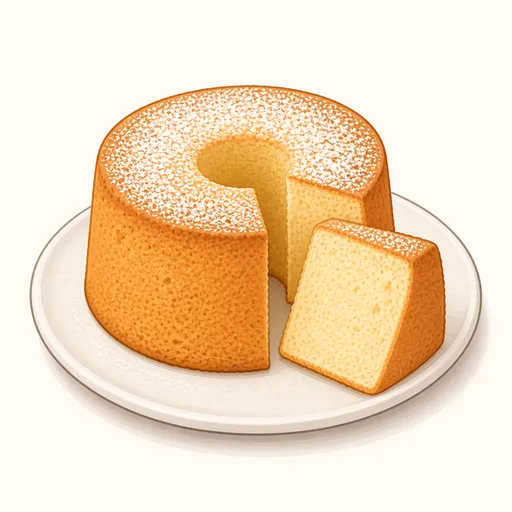
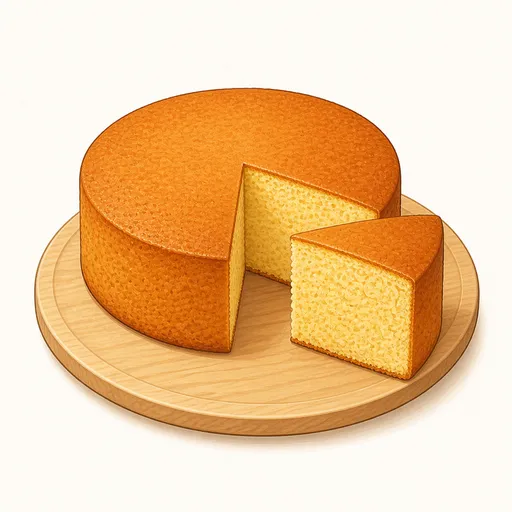
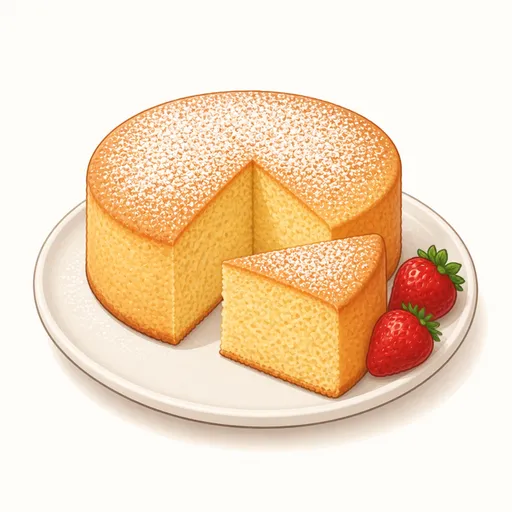
Hot milk sponge cake has been a familiar treat in American home kitchens since the early twentieth century. The eggs and sugar are whipped until very fluffy, then combined with hot milk and melted butter, which gives the cake a soft, moist, fine crumb full of buttery, milky flavor, all without separating any eggs. It's lovely on its own and also makes a great base for a layer cake.
- Difficulty
- Easy
- Prep
- 25 min
- Cook
- 30 min
- Rising or chilling
- 30 min
- Total time
- 1 hr 25 min
- Method
- Oven-baked
Ingredients
For the egg batter
For the hot milk
Instructions
Step 1
Preheat the oven to 175°C, line the bottom of a 20 cm round pan with parchment paper, and brush a very thin layer of butter around the sides. The oven needs to be hot and ready because whipped eggs slowly lose their air if they have to wait. The oven is ready after about fifteen minutes of preheating, once the indicator light goes off.
Step 2
Put 120 g whole milk and 40 g unsalted butter in a small saucepan and heat over low heat, stirring gently until the butter has completely melted, then turn off the heat and cover the pan to keep it hot. Very hot milk makes the starch swell slightly when mixed in, and that's the secret to this cake's signature soft, fine crumb. The milk is ready when the butter has fully melted and small bubbles form around the edge of the pan without boiling over.
Step 3
Crack 150 g room-temperature eggs into a large bowl, add 150 g superfine sugar and 4 g vanilla extract, and beat on high speed for about seven minutes. Long whipping traps lots of air bubbles, which, together with the baking powder, makes the cake rise tall. The mixture is ready when it turns a pale creamy yellow, nearly triples in volume, and a ribbon falling from the beaters sits on the surface for a few seconds before sinking in.
Step 4
Sift 150 g all-purpose flour, 6 g baking powder and a pinch of salt over the eggs in two additions, each time folding very gently with a flat spatula, scooping up from the bottom of the bowl. Sifted flour spreads evenly and doesn't weigh down the whipped eggs. Stop folding as soon as no streaks of dry flour remain on the surface.
Step 5
Spoon about two tablespoons of the batter into the pan of hot milk and butter and stir until smooth, then pour this mixture back into the bowl of batter and fold it in quickly. Thinning the milk with a little batter first keeps the heavy liquid from sinking to the bottom of the bowl. The batter is ready when it is smooth, slightly runny, even in color, and there's no milk pooling at the bottom of the bowl.
Step 6
Pour the batter into the pan right away, tap the pan once on the counter to pop any large air bubbles, and bake at 175°C for about 28 to 32 minutes. Don't open the oven door during the first twenty minutes, or the cake may sink in the middle. The cake is done when the top is evenly golden, the edges pull slightly away from the pan, and a toothpick inserted in the center comes out clean.
Step 7
Let the cake rest in the pan for about ten minutes, run a knife around the edge, then turn it out onto a rack, peel off the parchment, and let it cool for about twenty minutes more. The cake is very tender straight from the oven, so it needs a short rest in the pan to set. It's ready when the bottom no longer feels warm and the crumb doesn't stick to the knife when you slice it.
Equipment
- Oven
- Round cake pan
- Hand mixer
- Small saucepan
- Sieve
- Spatula
- Kitchen scale
- Mixing bowl
- Parchment paper
- Wire cooling rack
Tips
- Room-temperature eggs whip up faster and fluffier than cold ones; if you forgot to take them out early, soak them in a bowl of warm water for about ten minutes.
- You can replace half of the milk with coconut milk for a hint of coconut while keeping the cake just as soft.
- This cake is wonderful with a thin layer of buttercream, or simply dusted with powdered sugar and served with fresh strawberries.
Storage
Wrapped tightly in plastic wrap, the cake stays soft at room temperature for two days. You can freeze the cooled cake for up to a month; just let it thaw at room temperature for about an hour before serving.
Common problems and how to fix them
- There is a dense, wet layer at the bottom of the cake.
- The milk and butter weren't blended in evenly and sank to the bottom of the pan. Next time, thin the milk with a little batter first, then fold thoroughly until there are no streaks of milk and butter at the bottom of the bowl.
- The cake didn't rise much and the crumb is dense and heavy.
- The eggs weren't whipped enough, or you stirred too hard when adding the flour. Whip the eggs until the ribbon sits on the surface, and fold very gently.
This recipe is based on the common ratios for this bake and is written entirely in our own words.