Gulab jamun
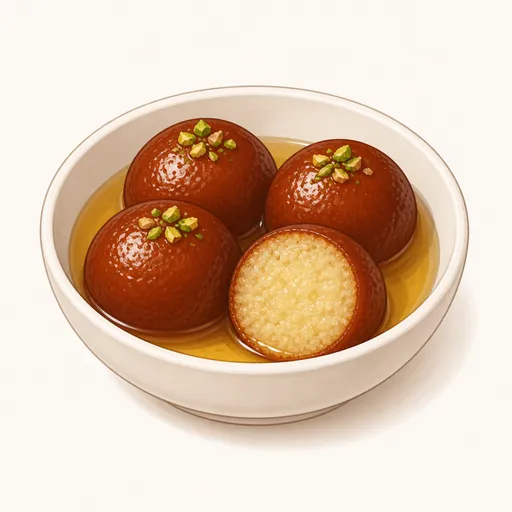
Gulab jamun is a beloved festive sweet in India: balls of milk dough fried to a deep golden brown and soaked in a syrup scented with cardamom and rose water. They are as soft and spongy as can be, and warm syrup oozes out with every bite, intensely sweet but wonderfully fragrant.
- Difficulty
- Medium
- Prep
- 25 min
- Cook
- 30 min
- Rising or chilling
- 2 hr 10 min
- Total time
- 3 hr 5 min
- Method
- Fried
Ingredients
Milk dough
Soaking syrup
Frying oil
Instructions
Step 1
Put 300 g granulated sugar and 300 g water in a saucepan, bring to a boil over medium heat, then add 1 g ground cardamom and 5 g lemon juice and keep it at a gentle simmer for about eight minutes. A little lemon juice keeps the syrup from crystallizing as it cools. Turn off the heat and stir in 5 g rose water; the syrup is ready when it is slightly thick and feels a little sticky between two fingers but doesn't form a thread.
Step 2
Mix 120 g milk powder, 30 g all-purpose flour and 1 g baking soda in a bowl, rub in 15 g ghee until crumbly, then gradually drizzle in 50 g whole milk and bring the dough together with your fingertips. Just gather it gently without kneading hard, because heavy kneading makes the balls tough so they won't soak up the syrup. The dough is ready when it is soft, slightly sticky and has no dry patches.
Step 3
Cover the bowl with plastic wrap and let the dough rest for about ten minutes at room temperature. Resting lets the milk powder absorb the liquid evenly, so the balls won't crack when you roll them. The dough is ready when it feels more pliable and less sticky than when you first mixed it.
Step 4
Rub a little ghee on your palms, divide the dough into small balls about the size of a cherry and roll them gently between your palms until round. The balls nearly double in size when fried and soaked, so don't make them too big. Each ball is ready when its surface is perfectly smooth, without a single crack.
Step 5
Heat the to taste oil in a deep pan over low heat to about 150°C, add the balls in batches and gently swirl the pan instead of stirring them with chopsticks for five to seven minutes. Moderately hot oil lets the balls cook evenly to the center without the outside darkening too soon. They are ready when they are an even reddish brown all over and float fully to the surface.
Step 6
Lift the balls out, let them drain for about half a minute, then drop them straight into the warm syrup and soak for at least two hours. Hot balls in warm syrup draw the syrup deep inside instead of just into the outer layer. They have soaked enough when they have swelled noticeably and sit half submerged in the syrup.
Step 7
Spoon the gulab jamun into small bowls with a few spoonfuls of syrup and sprinkle with chopped pistachios or almonds if you like. They are best warm, when the centers are softest and the syrup is most fragrant. They are perfect when a halved ball shows an even, creamy, spongy center soaked with syrup all the way through.
Equipment
- Mixing bowl
- Small saucepan
- Deep skillet
- Thermometer
- Spatula
- Kitchen scale
- Plastic wrap
Tips
- Use whole milk powder; the fat makes the centers much softer and more fragrant than nonfat milk powder.
- Fry one test ball first: if it falls apart in the oil, add a little flour to the dough; if it turns out hard, add a few drops of milk.
- The syrup should be warm, not boiling, when the balls go in, because syrup that is too hot will make them mushy and break apart.
Storage
Keep the gulab jamun submerged in syrup, covered, in the fridge for up to five days. Before serving, gently warm the balls and syrup together in the microwave or over low heat so they soften again.
Common problems and how to fix them
- The balls crack or fall apart while frying.
- The dough was too dry or the balls weren't rolled smooth. Add a few drops of milk to the dough and roll each ball thoroughly until there are no cracks.
- The centers are raw and dense.
- The oil was too hot, so the outside browned before the heat reached the center. Next time, lower the heat and fry them longer; they need to color slowly.
- The balls are hard and don't absorb the syrup.
- The dough was overworked or the syrup had gone cold when soaking. Gather the dough together gently and keep the syrup warm the whole time you add the balls.
This recipe is based on the common ratios for this bake and is written entirely in our own words.