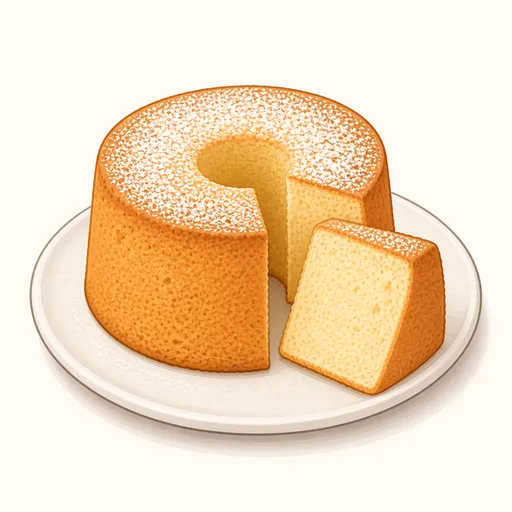
Earl Grey chiffon cake
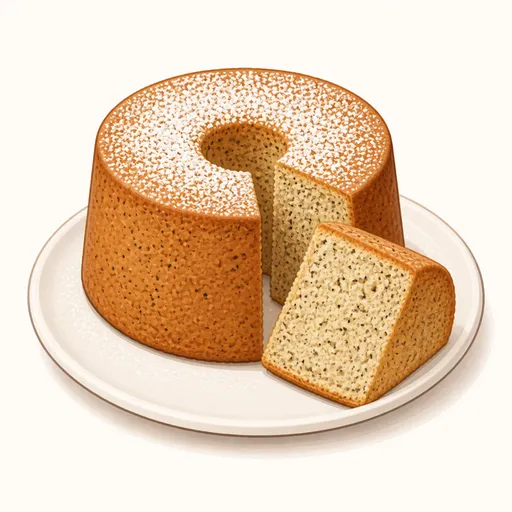
Earl Grey chiffon cake carries the elegant fragrance of Earl Grey black tea scented with bergamot orange oil, woven through a soft, airy crumb that's light as a cloud. Milk steeped with tea leaves plus a little finely ground tea folded into the batter means every bite is flecked with tea and gently fragrant down to the last crumb.
- Difficulty
- Medium
- Prep
- 40 min
- Cook
- 45 min
- Rising or chilling
- 1 hr 30 min
- Total time
- 2 hr 55 min
- Method
- Oven-baked
Ingredients
For the tea-infused milk
For the yolk batter
For the meringue
Instructions
Step 1
Heat 100 g whole milk over low heat until it steams and bubbles gently around the edge of the pan, then turn off the heat, add 6 g Earl Grey tea leaves, cover and steep for about 10 minutes before straining out the leaves, pressing them lightly. Warm milk draws out the bergamot oil better than water, giving a rounder, creamier tea flavor. The tea milk is ready when it's light brown like milk tea and has cooled until just warm to the touch.
Step 2
Heat the oven to 160°C for at least fifteen minutes with a rack in the lower middle, and have a clean, dry 20 cm tube pan ready, left ungreased. The bare sides give the batter something to cling to as it climbs while rising. The oven is ready when the temperature inside has stabilized and the heating light turns off.
Step 3
Whisk 90 g egg yolks with 20 g granulated sugar and a pinch salt, then add 45 g vegetable oil and all of the strained tea milk and stir until combined. Emulsifying the oil with the yolks keeps the cake soft and moist even when chilled. The mixture is ready when it's pale yellow and smooth with no slick of oil separating out.
Step 4
Grind 2 g Earl Grey tea leaves very finely with a mortar or spice grinder, sift 90 g cake flour and 2 g baking powder into the yolk mixture, add the ground tea and stir gently in a zigzag motion. The finer the tea, the more evenly the flecks spread and the less they puncture the air bubbles. The batter is ready when it's silky smooth, speckled with brown tea and falls in ribbons when you lift the whisk.
Step 5
Beat 170 g egg whites with 1 g cream of tartar on medium speed until foamy with fine bubbles, then add 65 g superfine sugar in three additions and increase the speed. Cream of tartar stabilizes the meringue so it holds up when folded into the heavier tea batter. The meringue is ready when it's glossy and smooth and forms an upright peak with a slightly drooping tip when you lift the beater.
Step 6
Mix about a third of the meringue into the yolk batter to lighten it, then pour it all back into the meringue bowl and fold with a spatula, turning the bowl with each stroke. Folding in a circular motion brings the batter together quickly without popping the air bubbles. The batter is ready when no white streaks remain, it looks billowy and it falls in folds that slowly melt away.
Step 7
Pour the batter into the tube pan, swirl a skewer through it a few times to break up air pockets, tap the pan lightly and bake at 160°C for 40 to 45 minutes. A moderately low temperature lets the cake rise tall and even without deep cracks on top. It's done when the top is golden brown, springs back when lightly pressed and a bamboo skewer inserted near the tube comes out clean.
Step 8
As soon as it comes out of the oven, drop the pan onto the counter from a height of about ten centimeters, then turn it upside down over the neck of a bottle and let it cool for about an hour and a half. Cooling upside down keeps the airy structure stretched while the cake sets. It's ready when the pan is completely cool and the cake no longer feels warm.
Step 9
Turn the pan right side up, run a thin-bladed knife around the outer edge and the center tube, lift out the base and cut along the bottom to free the cake, then dust the top with a little powdered sugar. Keeping the knife pressed against the pan keeps the brown crust intact. The cake is perfect when it stands straight with smooth sides and a soft, fine crumb flecked with tea.
Equipment
- Oven
- Tube pan (chiffon pan)
- Small saucepan
- Hand mixer
- Whisk
- Spatula
- Sieve
- Mixing bowl
- Kitchen scale
Tips
- You can use Earl Grey tea bags: just cut them open for leaves that are already finely chopped, which makes them easy to mix straight into the batter.
- Adding a little grated orange zest to the yolk batter brings out the bergamot notes in the tea.
- This cake is lovely with whipped cream sweetened with a touch of honey or with milk tea cream.
Storage
Wrapped in plastic wrap, the cake keeps for one day at room temperature or up to four days in the fridge. The tea flavor deepens the next day, so let the cake come to room temperature for about twenty minutes before serving.
Common problems and how to fix them
- The cake tastes bitter and astringent.
- The tea leaves steeped too long or the milk was too hot. Steep for only about ten minutes and turn off the heat before the milk comes to a rolling boil.
- The crumb has large, uneven air holes.
- The air pockets weren't broken up after filling the pan, or the batter wasn't folded evenly. Swirl a skewer through the batter and tap the pan lightly before baking.
- The cake slid out of the pan while hanging upside down.
- The pan had a nonstick coating or was greased. Use a bare aluminum pan and make sure it's completely clean and dry.
This recipe is based on the common ratios for this bake and is written entirely in our own words.