Coffee chiffon cake
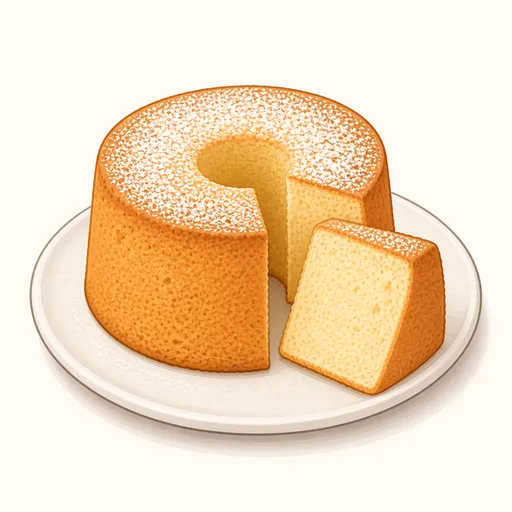
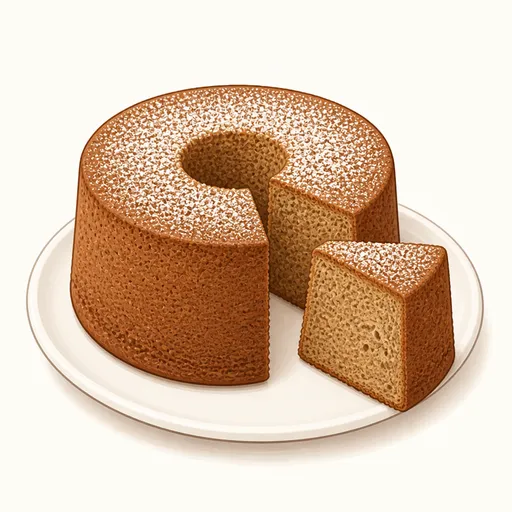
This coffee chiffon cake pairs the gently bitter aroma of instant coffee with the mellow sweetness of brown sugar, and the oil keeps its crumb light, fine and moist. It's a perfect cake for afternoon tea, delicious on its own and even more tempting with a layer of whipped cream on top.
- Difficulty
- Medium
- Prep
- 30 min
- Cook
- 45 min
- Rising or chilling
- 1 hr 30 min
- Total time
- 2 hr 45 min
- Method
- Oven-baked
Ingredients
Coffee yolk batter
Meringue
Instructions
Step 1
Turn the oven on to 160 degrees Celsius about fifteen minutes before baking and set the rack one notch below the middle. Keep the tube pan completely dry and don't grease it with butter or oil, because the batter needs to cling to the sides to rise tall. The oven is ready when the heating light switches off for the first time.
Step 2
Dissolve 8 g instant coffee in 75 g hot water, stirring until fully dissolved, then let it cool a little. Coffee that is too hot will cook the yolks when you mix it in. The coffee is ready when it is clear and dark, with no undissolved granules, and just warm to the touch.
Step 3
Put 90 g egg yolks, 20 g brown sugar and a pinch salt in a bowl and whisk, then slowly pour in 45 g vegetable oil and the coffee while whisking constantly. Pouring slowly lets the oil emulsify evenly with the yolks so the cake won't have oily streaks. The mixture is ready when it is an even milky brown with no streaks of oil on the surface.
Step 4
Sift 90 g cake flour and 3 g baking powder into the coffee mixture and whisk gently until the flour has just disappeared. Mixing only as much as needed keeps the gluten from overdeveloping, so the crumb stays tender. The batter is ready when it is smooth, flows in an unbroken ribbon and has no lumps.
Step 5
Beat 160 g egg whites at medium speed, and when fine bubbles cover the surface, add 1 g cream of tartar and gradually sprinkle in 65 g superfine sugar in three additions. Adding the sugar in stages helps it dissolve fully and makes the meringue more elastic and stable. The meringue is ready when it is glossy and smooth and the peak stands up but curls slightly at the tip when you lift the beaters.
Step 6
Stir a third of the meringue into the coffee batter to loosen it, then tip this mixture into the remaining meringue and fold it up from the bottom of the bowl with a spatula. Gentle folding keeps the tiny air bubbles that make the cake rise light and airy. The batter is ready when it is an even brown with no white flecks and still slightly puffy.
Step 7
Pour the batter into the tube pan, draw a chopstick in circles through the batter to break up large air bubbles, then tap the pan gently on the counter twice. Bake at 160 degrees Celsius for about 40 to 45 minutes so the cake cooks evenly from the inside out. The cake is done when the top is dark brown and slightly cracked, springs back when pressed and a skewer comes out clean.
Step 8
Take the pan out of the oven, drop it onto the counter once to let the steam escape, then turn it upside down onto the neck of a bottle and let it cool for about an hour and a half. Hanging it upside down lets the crumb cool without collapsing under its own weight. The cake is ready when the sides of the pan feel completely cool.
Step 9
Turn the pan right side up, run a thin knife tightly around the outer wall and the center tube, push out the base, then slide the knife underneath to release the cake. Pressing the knife against the metal keeps the brown crust from tearing. The cake is perfect when it stands tall and the slices show a light brown crumb with even air holes; you can dust a little powdered sugar on top.
Equipment
- Oven
- Tube pan (chiffon pan)
- Hand mixer
- Whisk
- Spatula
- Sieve
- Kitchen scale
- Mixing bowl
Tips
- You can replace the hot water and instant coffee with cooled strong drip coffee, as long as you keep the total amount of liquid the same.
- Brown sugar gives the cake a hint of caramel, but if you prefer a lighter color you can use the same weight of white granulated sugar.
- Spreading whipped cream flavored with a little coffee over the top turns it into a light, tiramisu-style cake.
Storage
Wrap the cake tightly in plastic wrap and keep it at room temperature for up to one day, or in the fridge for up to four days. Before serving, let it sit out for about twenty minutes so the crumb becomes soft and fragrant again.
Common problems and how to fix them
- The cake tastes harshly bitter and is too dark.
- The coffee may be too strong for your taste. Next time, cut the instant coffee by about a third and keep the water the same.
- The crumb has wet oily streaks and large, uneven holes.
- The oil wasn't emulsified with the yolks, or the batter wasn't tapped to break up large air bubbles. Pour the oil very slowly while whisking constantly, and remember to run a chopstick through the pan before baking.
- The cake slips out of the pan and shrinks when turned upside down.
- The pan was greased or nonstick, so the cake couldn't cling to it. Use a plain aluminum pan, washed and dried thoroughly before adding the batter.
This recipe is based on the common ratios for this bake and is written entirely in our own words.