Coconut layer cake
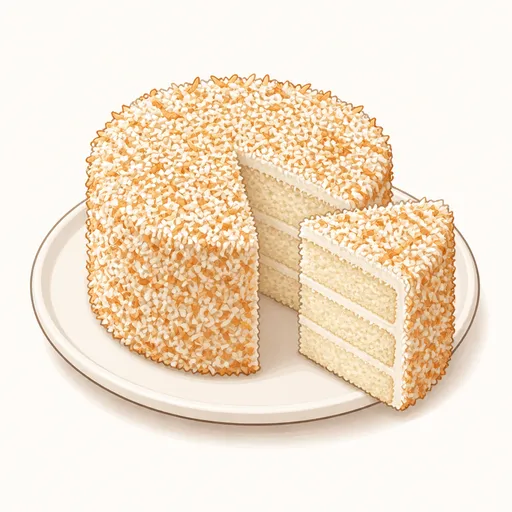
Coconut layer cake is a pure white cake from the American South, with three layers made from egg whites and coconut milk for a white, soft and tender crumb. A cloud-light meringue buttercream covers the outside, which is then coated all over in fragrant toasted coconut.
- Difficulty
- Hard
- Prep
- 1 hr
- Cook
- 40 min
- Rising or chilling
- 1 hr 30 min
- Total time
- 3 hr 10 min
- Method
- Oven-baked
Ingredients
Coconut cake layers
Swiss meringue buttercream
Coconut coating
Preparing the pans
Instructions
Step 1
Preheat the oven to 175 degrees Celsius, brush to taste unsalted butter inside three 20 cm round pans, line the bottoms with parchment paper and dust the sides with a thin layer of flour. The butter and flour help the white cake layers release from the pans without tearing. The pans are ready when the sides are evenly coated in a pale white film with no bare spots.
Step 2
Sift 340 g cake flour with 12 g baking powder and 3 g salt twice. Low-protein cake flour gives a soft, fine crumb, and sifting twice makes it extra light. The mixture is ready when it is light and fine with no compacted bits of flour.
Step 3
Beat 225 g softened unsalted butter with 380 g granulated sugar on medium speed for about four minutes until very fluffy. Because the cake uses egg whites, most of its lightness comes from this creaming step. The mixture is ready when it is ivory, light and clings to the paddle in soft peaks.
Step 4
Lightly whisk 240 g egg whites with 50 g eggs and 5 g vanilla extract until blended, then pour slowly into the butter mixture with the mixer running. The egg whites keep the crumb white, while the whole egg keeps the cake soft and stops it from drying out. The mixture is ready when it is smooth like cream and not curdled.
Step 5
Add the dry ingredients to the bowl in three additions, alternating with 300 g coconut milk, then fold in 60 g desiccated coconut at the end. Using coconut milk instead of milk gives the cake its signature rich, fragrant flavor. The batter is ready when it is thick and smooth with the coconut evenly distributed.
Step 6
Divide the batter evenly among the three pans, smooth the tops and bake at 175 degrees Celsius for about 25 to 30 minutes. This is a white cake, so take it out as soon as the tops just start to turn golden to keep the crumb from drying out. The layers are done when the tops are pale golden, spring back when lightly pressed and a skewer comes out clean.
Step 7
Leave the layers in their pans for about ten minutes, turn them out onto a rack, peel off the paper and let them cool completely for about an hour. Meringue buttercream will melt instantly if it touches a warm cake. The layers are ready when both the tops and bottoms feel cool to the touch.
Step 8
Spread 150 g desiccated coconut on a baking sheet and toast at 160 degrees Celsius for about 6 to 8 minutes, stirring once halfway through. Lightly toasted coconut has a buttery aroma and a warm ivory color that stands out against the white frosting. The coconut is ready when some of the shreds have turned light golden and it smells fragrant.
Step 9
Put 150 g egg whites and 220 g granulated sugar in a heatproof bowl, set it over a pan of barely simmering water on low heat and whisk constantly until it reaches 70 degrees Celsius. Heating it this way dissolves the sugar completely and makes the egg whites safe to eat. The mixture is ready when it feels smooth with no sugar grains when rubbed between two fingers and the thermometer reads the right temperature.
Step 10
Move the bowl to the mixer and beat on high speed until the meringue is glossy and cool, then add 340 g softened unsalted butter one piece at a time, and finally add 40 g thick coconut cream and a pinch salt, for a total of about ten minutes. The meringue must be completely cool before the butter goes in, or the buttercream will be runny. The buttercream is ready when it is silky, glossy white and holds clear swirls when spread.
Step 11
Place one layer on a plate, spread on a thick layer of buttercream, repeat with the remaining two layers, then spread a thin coat of buttercream over the whole cake, chill for fifteen minutes and add a second coat. The first coat traps the crumbs, and the second gives a smooth surface for the coconut to cling to. The cake is ready when it stands straight and is evenly covered in buttercream.
Step 12
With one hand, gently tilt the cake plate, and with the other, scoop up handfuls of toasted coconut and press them lightly onto the sides of the cake, then sprinkle the rest over the top. Pressing gently helps the coconut stick firmly without denting the frosting. The cake is finished when it is evenly covered in a fluffy layer of coconut with no white frosting showing through.
Equipment
- Oven
- Round cake pan
- Stand mixer
- Small saucepan
- Whisk
- Thermometer
- Spatula
- Sieve
- Mixing bowl
- Kitchen scale
- Parchment paper
- Wire cooling rack
- Baking sheet
Tips
- If the buttercream turns soupy, chill the bowl for about fifteen minutes and beat it again; if it looks curdled, warm the sides of the bowl and keep beating.
- You can use large coconut flakes instead of fine desiccated coconut for a fluffier, more striking coating.
- Shake the can of coconut milk well before weighing, since the rich cream usually rises and separates from the liquid.
Storage
Thanks to the fairly stable meringue buttercream, the cake keeps for one day at cool room temperature. After that, store it in an airtight container in the fridge for up to five days, and let it sit out for about forty minutes before eating so the buttercream turns soft and silky again.
Common problems and how to fix them
- The meringue buttercream is runny and sliding off.
- The meringue was still warm when the butter went in, or the butter was too soft. Put the whole bowl in the fridge for about fifteen minutes, then beat it again on high speed.
- The cake layers are dry and dense.
- The butter and sugar were not creamed long enough or the layers baked too long. Cream the butter for at least four minutes and take the layers out as soon as the skewer just comes out clean.
This recipe is based on the common ratios for this bake and is written entirely in our own words.