Chocolate Swiss roll
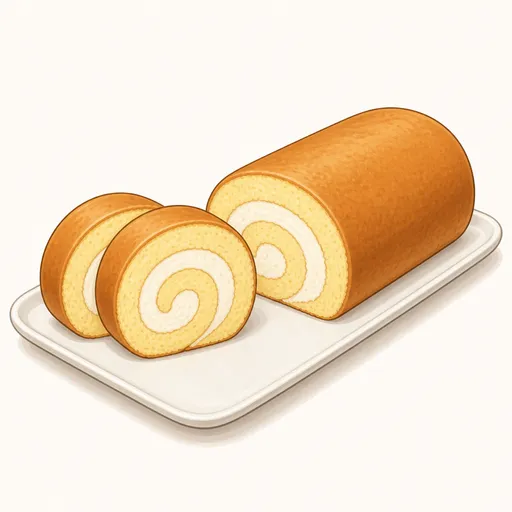
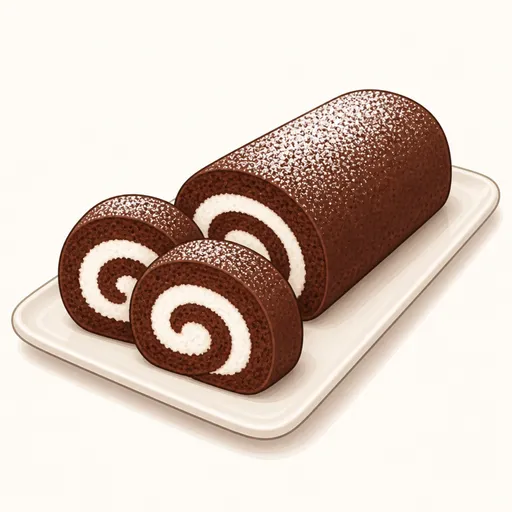
This chocolate Swiss roll has a thin, soft and moist cocoa chiffon sponge rolled around a cool whipped cream filling. The gentle bitterness of the cocoa balances the light sweetness of the cream, so every slice tastes fresh and delicate. The sponge is rolled up loosely while still warm, so it will not crack when you roll it with the filling.
- Difficulty
- Medium
- Prep
- 45 min
- Cook
- 14 min
- Rising or chilling
- 1 hr 30 min
- Total time
- 2 hr 29 min
- Method
- Oven-baked
Ingredients
Cocoa and yolk batter
Whipped egg whites (meringue)
Whipped cream filling
Instructions
Step 1
Preheat the oven to 170 degrees Celsius and line a 25 x 35 cm rectangular pan with parchment paper, letting the paper stand a little above the sides on all four edges. The parchment lets you lift out the whole sheet of cake without tearing the delicate top. The pan is ready when the paper lies flat, fits snugly into the corners and does not puff up.
Step 2
Heat 50 g water until very hot, pour it into a bowl with 20 g cocoa powder and stir until dissolved, then add 40 g vegetable oil and keep stirring. Hot water blooms the cocoa, bringing out its aroma and deepening its color. The mixture is ready when it is glossy and smooth like chocolate sauce, with no lumps.
Step 3
While the cocoa mixture is still slightly warm, whisk in 80 g egg yolks, 20 g granulated sugar and a pinch salt, then sift in 50 g cake flour and stir gently. Sifting the flour prevents lumps and gives a finer sponge. The batter is ready when it is smooth and silky and flows in an unbroken stream when you lift the whisk.
Step 4
Beat 150 g egg whites with 1 g cream of tartar on medium speed until the foam is fine, then sprinkle in 60 g superfine sugar in three additions. A Swiss roll needs a supple, not overly stiff, meringue so it rolls easily later. Stop when the meringue is glossy and the peak bends over slightly as you lift the beaters.
Step 5
Mix a third of the meringue into the cocoa batter to lighten it, then pour it all into the meringue bowl and fold with a spatula, sweeping up from the bottom and turning the bowl after each stroke. Gentle movements keep the air bubbles from bursting, so the sponge stays light and soft. The batter is ready when it is an even brown with no white streaks and still a little puffy.
Step 6
Pour the batter into the pan, smooth it with a spatula to an even thickness, tap the pan gently on the counter and bake at 170 degrees Celsius for about 12 to 14 minutes. The thin layer bakes very quickly, so do not overbake it or the sponge will dry out and crack easily. The sponge is done when the top springs back to the touch and is no longer sticky.
Step 7
As soon as it comes out of the oven, lift the sponge out of the pan, set it on a fresh sheet of parchment and loosely roll it up from a short side together with the paper, then let it cool on a rack for about 30 minutes. Rolling while warm helps the sponge remember its rolled shape so it will not crack the second time. The sponge is ready when it has cooled completely but is still soft and flexible.
Step 8
Put 220 g well-chilled whipping cream in a bowl, add 22 g powdered sugar and 2 g vanilla extract and whip on medium speed. Cold cream whips quickly and holds its shape when sliced. The cream is ready when it reaches fairly stiff peaks, the whisk leaves clear trails and the peaks stand straight up.
Step 9
Gently unroll the sponge, spread the cream evenly over the whole surface, leaving a narrow strip bare along the far edge, then roll it up again firmly and wrap it in parchment. Leaving that edge bare keeps the cream from squeezing out as you reach the end of the roll. The roll is ready when it is evenly round, the seam sits underneath and no cream pokes out of the ends.
Step 10
Refrigerate the roll for about 60 minutes to set the cream, then trim off both ends and slice with a serrated knife dipped in warm water, dusting with a little extra powdered sugar if you like. Cold cream and a warm knife give clean slices that do not squash. The cake is ready when each slice shows a crisp brown and white spiral.
Equipment
- Oven
- Rectangular pan
- Parchment paper
- Hand mixer
- Whisk
- Spatula
- Sieve
- Mixing bowl
- Kitchen scale
- Wire cooling rack
- Refrigerator
Tips
- If the sponge cracks when rolling, cut a minute or two off the baking time next time, since an overly dry sponge is the most common cause.
- You can add a little instant coffee to the hot water when blooming the cocoa for a deeper chocolate flavor without any noticeable coffee taste.
- Chill the bowl and whisk in the fridge for about ten minutes before whipping so the cream whips up quickly and smoothly.
Storage
Because of the whipped cream filling, keep the cake in an airtight container in the fridge and eat it within two days. Do not leave it at room temperature for more than an hour, or the cream will melt and the roll will lose its shape.
Common problems and how to fix them
- The sponge cracks wide open when rolled with the filling.
- The sponge was overbaked or was not rolled up while still warm. Next time, shorten the baking time and roll it as soon as it comes out of the oven.
- The sponge is thin, flat and a little chewy.
- The meringue deflated from rough mixing or was not beaten enough. Beat the egg whites until the peaks bend over slightly and fold very gently.
- The cream filling turns watery when sliced.
- The cream was not whipped enough or the cake was not chilled long enough. Whip the cream until the peaks stand straight and refrigerate the cake for at least an hour.
This recipe is based on the common ratios for this bake and is written entirely in our own words.