Chocolate mousse cake
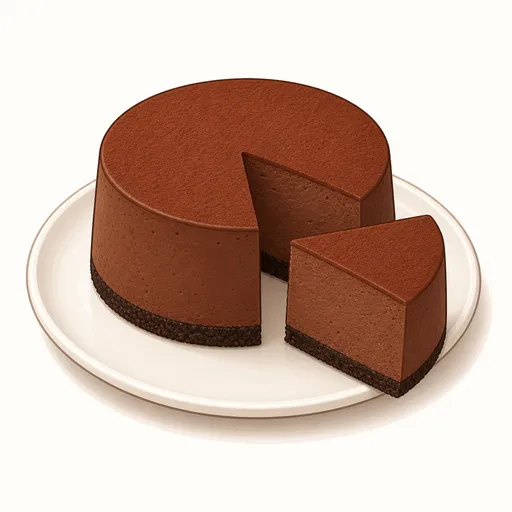
Chocolate mousse cake is a dessert for true chocolate lovers: a glossy dark mousse, smooth and light as whipped cream, sitting on a crisp chocolate cookie crust. A cooked custard base makes the mousse rich, silky and safe to eat, while a dusting of cocoa powder on top adds a subtle, elegant bitterness.
- Difficulty
- Medium
- Prep
- 45 min
- Cook
- 10 min
- Rising or chilling
- 6 hr 15 min
- Total time
- 7 hr 10 min
- Method
- Chilled
Ingredients
Chocolate cookie crust
Chocolate mousse
Dusting
Instructions
Step 1
Grind 180 g chocolate sandwich cookies into fine crumbs, mix them with 50 g melted unsalted butter, press firmly into the bottom of a lined springform pan and refrigerate. A chilled crust sets hard and will not crumble when you pour the mousse over it. The crust is ready when it is flat, compact and firm after about fifteen minutes in the fridge.
Step 2
Sprinkle 6 g powdered gelatin over 30 g cold water and let it sit for about five minutes. Only a small amount of gelatin is used, so the mousse holds its shape when sliced yet still melts in your mouth. The gelatin is ready when it has absorbed all the water and looks like a spongy block of jelly.
Step 3
Whisk 54 g egg yolks with 40 g granulated sugar until pale, slowly pour in 100 g heated whole milk, then return the whole mixture to the pan and cook over low heat, stirring constantly with a spatula. Cooking slowly lets the yolks reach about 82 degrees Celsius without curdling like scrambled eggs. The custard is ready when it thickens, coats the back of the spatula and a finger drawn through it leaves a clear line.
Step 4
Turn off the heat, stir the bloomed gelatin into the hot custard until dissolved, then strain it through a sieve over 250 g chopped dark chocolate, let it stand for one minute and stir from the center outward. The heat of the custard is just enough to melt the chocolate without scorching it or making it split. The mixture is ready when it is glossy black, completely smooth and has cooled to about 35 degrees Celsius.
Step 5
Whip 400 g cold whipping cream for about three minutes until it reaches soft peaks. Overwhipped cream will make the mousse grainy and heavy. The cream is ready when it has thickened, holds the trail of the whisk and the peaks droop softly.
Step 6
Stir a third of the cream into the chocolate to lighten it, then gently fold in the remaining cream in two additions and pour the mousse over the crust. This first step brings the two mixtures to a similar consistency, so they combine quickly with little loss of air. The mousse is ready when it is an even brown with no streaks of cream and a silky smooth surface.
Step 7
Smooth the top, cover with plastic wrap and chill for at least six hours or overnight. The chocolate and gelatin need enough time to set so the mousse holds its shape when sliced. The cake is ready when the surface of the mousse is firm, not sticky to the touch and does not wobble when you tilt the pan.
Step 8
Warm the sides of the pan with a hot towel, run a thin knife around the edge and release the ring, then sift to taste cocoa powder over the top. The warm pan lets the mousse come away cleanly with smooth sides. The cake is finished when the top is covered in a velvety layer of cocoa and the sides stand straight.
Equipment
- Springform pan
- Food processor
- Small saucepan
- Thermometer
- Hand mixer
- Whisk
- Spatula
- Sieve
- Kitchen scale
- Refrigerator
Tips
- Use dark chocolate with about 55 to 70 percent cocoa; chocolate that is too bitter will make the mousse firm and hard to enjoy.
- If you do not have a thermometer, cook the custard just until it thickens and take it off the heat right away so the eggs do not turn grainy.
- You can add a splash of rum or espresso to the melted chocolate for a deeper flavor.
Storage
Covered, the cake keeps for four days in the fridge. You can also freeze the whole cake for up to a month, thaw it in the fridge overnight and dust it with cocoa only when you are ready to serve.
Common problems and how to fix them
- The mousse is grainy with tiny bits of chocolate.
- The chocolate was either too hot or had cooled too much when it met the cold cream, so it seized into specks. Let the chocolate come to about 35 degrees Celsius before folding and work quickly.
- The custard curdled like scrambled eggs.
- The heat was too high or the custard was not stirred constantly. Cook over low heat, stir steadily and strain the custard through a sieve as soon as you see the first few lumps.
This recipe is based on the common ratios for this bake and is written entirely in our own words.