Chocolate lava cake
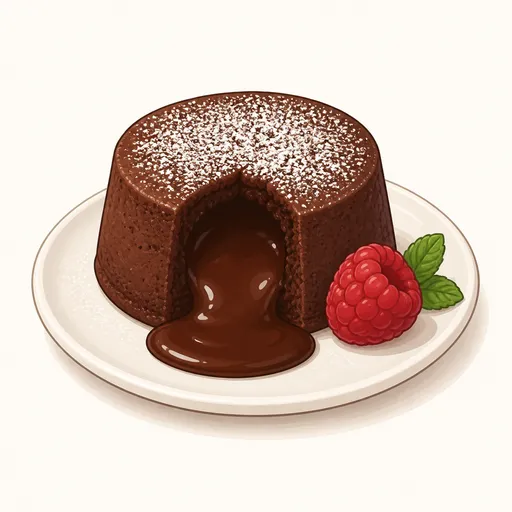
Chocolate lava cake has a soft, tender outer shell wrapped around a hot, glossy core of molten chocolate. The cakes bake quickly at high heat right in small ramekins, and a gentle cut with a spoon sends the chocolate flowing out, making this a lovely dessert for special occasions.
- Difficulty
- Easy
- Prep
- 20 min
- Cook
- 14 min
- Total time
- 34 min
- Method
- Oven-baked
Ingredients
Preparing the ramekins
Chocolate batter
Instructions
Step 1
Turn the oven on to 220 degrees Celsius with a rack in the middle, and have a baking sheet ready to hold the ramekins. The high heat sets the outside of the cake quickly while the center stays runny, and that is the whole secret of this dessert. The oven is ready once it has preheated for a full twenty minutes.
Step 2
Brush to taste softened unsalted butter over the bottom and sides of four ceramic ramekins, using upward strokes from the base, then add to taste cocoa powder, rotate to coat evenly and tap out the excess. The butter and cocoa form a nonstick layer so the cakes turn out whole. The ramekins are ready when they are completely covered in a thin layer of cocoa with no bare spots.
Step 3
Put 115 g chopped dark chocolate and 115 g unsalted butter in a bowl, set it over a pan of hot water on low heat and stir until melted, then let it cool a little. Melting over a water bath keeps the chocolate glossy and stops it from scorching. The mixture is ready when it is smooth and feels only warm to the touch.
Step 4
Whisk 100 g eggs, 36 g egg yolks, 50 g powdered sugar and a pinch salt by hand for about two minutes. Lightly whisking the eggs to a little foam makes the shell of the cake airier. The mixture is ready when it turns pale, thickens slightly and has tiny bubbles on the surface.
Step 5
Pour the chocolate mixture into the bowl of eggs and gently fold with a spatula until the two become one. The chocolate needs to cool a bit first so it does not cook the eggs into patches. The mixture is ready when it is an even deep brown and smooth and glossy.
Step 6
Sift 25 g all-purpose flour over the top and fold a few times, just until no dry flour remains. There is only a little flour, just enough to hold the shell together, so mix gently to keep the center soft and runny. The batter is ready when it is smooth and falls slowly from the spatula like a thick sauce.
Step 7
Divide the batter evenly among the four ramekins, filling each about three quarters full, then set them on the baking sheet. Leaving some room lets the cakes rise without spilling over. This step is done when all four ramekins hold the same amount of batter; if you are not baking right away, you can refrigerate them for up to a day.
Step 8
Bake at 220 degrees Celsius for about 12 to 14 minutes, adding two minutes if the batter has just come out of the fridge. Just a minute or two decides whether the center stays molten or sets firm. The cakes are done when the edges have puffed and set while the middle is still soft and jiggles slightly when you give them a gentle shake.
Step 9
Let the cakes rest for one minute, run a thin knife around the inside of each ramekin, place a plate over the top, then flip it over and lift the ramekin away. That one-minute rest makes the shell firm enough to stand up when you turn it out. The cake is ready when it stands round on the plate and hot melted chocolate pours out as you press a spoon into the center.
Equipment
- Oven
- Ramekins
- Small saucepan
- Mixing bowl
- Whisk
- Spatula
- Sieve
- Kitchen scale
- Pastry brush
Tips
- Bake one ramekin first as a test to find the timing that suits your oven, then bake the rest.
- You can hide a piece of chocolate in the middle of each ramekin before baking for an even more reliably molten center.
- Serve with a scoop of vanilla ice cream or a few strawberries to balance the richness and make it even more tempting.
Storage
The cakes are best eaten right out of the oven. To prepare ahead, fill the ramekins with batter, cover them tightly and refrigerate for up to one day, then bake just before serving.
Common problems and how to fix them
- The center is not molten and has baked through solid.
- The cakes baked too long, or the ramekins were too small for the amount of batter. Next time, take one to two minutes off the time and pull the cakes out while the middle still jiggles.
- The cakes collapse and break when turned out.
- The shell was not baked enough, or the ramekins were not buttered thoroughly. Bake for one more minute, butter right into the corners and let the cakes rest for a full minute before flipping.
This recipe is based on the common ratios for this bake and is written entirely in our own words.