Chocolate fudge cake
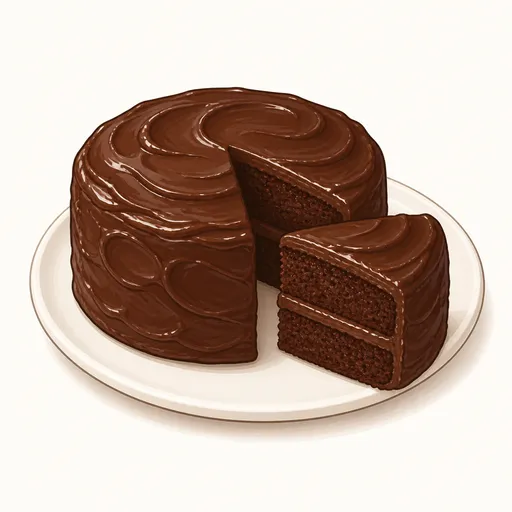
British-style chocolate fudge cake is an intensely chocolatey two-layer cake, with a moist, slightly dense crumb thanks to dark chocolate melted with butter and brown sugar. A thick coat of glossy fudge frosting makes every bite deeply sweet with a hint of bitterness, perfect with a cup of coffee.
- Difficulty
- Medium
- Prep
- 40 min
- Cook
- 32 min
- Rising or chilling
- 1 hr 30 min
- Total time
- 2 hr 42 min
- Method
- Oven-baked
Ingredients
For the chocolate cake
For the chocolate fudge frosting
For preparing the pans
Instructions
Step 1
Preheat the oven to 170°C, brush to taste unsalted butter inside two 20 cm round pans, line the bottoms with parchment paper and dust the sides with a little cocoa. Using cocoa instead of flour to dust the pans keeps white streaks off the sides of the cake. The pans are ready when the sides have a thin brown coating and the bottoms are lined flat.
Step 2
Put 200 g unsalted butter and 150 g chopped dark chocolate in a saucepan over low heat and stir until melted, then take it off the heat and let it cool to warm. Low heat keeps the chocolate from scorching and seizing. The mixture is ready when it's glossy and smooth, with no bits of chocolate left and the side of the pan feels just warm.
Step 3
Whisk 200 g eggs with 250 g brown sugar for about two minutes. The brown sugar dissolves into the eggs, adding a caramel note and keeping the fudge cake moist. The mixture is ready when it has thickened, turned a light brown and has almost no sugar grains left.
Step 4
Pour the chocolate mixture into the eggs, stir well, then add 160 g buttermilk and 5 g vanilla extract. The chocolate has cooled enough not to cook the eggs, and the buttermilk keeps the crumb tender. The mixture is ready when it's uniform, glossy and a deep brown.
Step 5
Sift 220 g all-purpose flour, 30 g cocoa powder, 6 g baking powder, 2 g baking soda and a pinch salt into the bowl and fold just until the flour disappears. Minimal mixing keeps the cake soft and moist rather than tough. The batter is ready when it's loose, smooth and free of dry flour.
Step 6
Divide the batter evenly between the two pans and bake at 170°C for about 28 to 32 minutes. Fudge cake should come out while the center is still slightly moist to keep its signature dense texture. It's done when the top is slightly cracked, the edges pull away from the pan and a skewer comes out with a few moist crumbs but no wet batter.
Step 7
Let the cakes rest in the pans for about fifteen minutes, then turn them out onto a rack, peel off the paper and let them cool completely, about an hour. The crumb is very soft while hot, and resting in the pan keeps the layers from cracking when turned out. They're ready when the tops feel completely cool under your hand.
Step 8
Melt 200 g dark chocolate and let it cool until just warm; meanwhile, beat 150 g softened unsalted butter with 250 g powdered sugar and 30 g cocoa powder, then add the chocolate, 60 g whole milk and 20 g golden syrup. Warm chocolate beaten into soft butter gives a frosting that's silky and glossy like fudge. The frosting is ready when it's thick and shiny and holds its swirls when spread.
Step 9
Place one layer on a plate, spread on a thick layer of frosting, set the other layer on top, then cover the top and sides with frosting, using the back of a spoon to make swirls. Swirls are the classic way to decorate a fudge cake, and they hide any unevenness in the surface. The cake is ready when it's completely covered in glossy, silky frosting and the layers stand straight.
Equipment
- Oven
- Round cake pan
- Small saucepan
- Whisk
- Hand mixer
- Spatula
- Sieve
- Mixing bowl
- Kitchen scale
- Parchment paper
- Wire cooling rack
Tips
- Use chocolate with about fifty-five to seventy percent cacao for a rich flavor that isn't too bitter.
- If the fudge frosting is too thick to spread, just add warm milk a teaspoon at a time and beat again.
- Slicing with a knife dipped in hot water gives clean slices without smearing the frosting.
Storage
Covered with a cake dome, the cake keeps for two days at a cool room temperature. In hot weather, refrigerate it for up to five days and take it out about thirty minutes before serving so the frosting softens again.
Common problems and how to fix them
- The chocolate frosting is grainy and greasy.
- The chocolate was too hot when added to the butter, or the butter was too cold. Let the frosting rest in the fridge for ten minutes, then beat it again on high speed until smooth.
- The cake is dry instead of moist and fudgy.
- It was overbaked. Check it a few minutes earlier and take it out while the skewer still has a few moist crumbs on it.
This recipe is based on the common ratios for this bake and is written entirely in our own words.