Bavarian cream
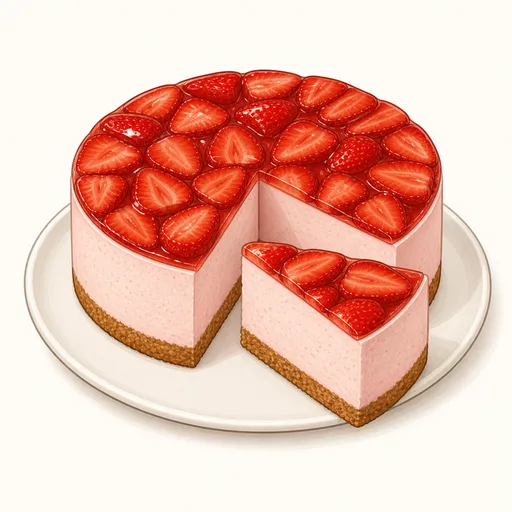
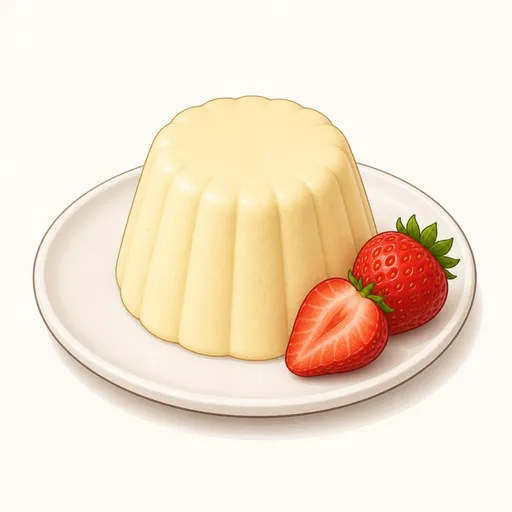
Bavarian cream (bavarois) is a classic French dessert that combines a custard cooked like crème anglaise with gelatin and whipped cream. The result is small, velvety-smooth desserts that wobble when unmolded and smell gently of vanilla, lovely with fresh strawberries.
- Difficulty
- Medium
- Prep
- 35 min
- Cook
- 10 min
- Rising or chilling
- 5 hr
- Total time
- 5 hr 45 min
- Method
- Chilled
Ingredients
Bavarian cream
Garnish
Instructions
Step 1
Sprinkle 8 g powdered gelatin evenly over 40 g cold water in a small bowl and leave it for about five minutes. Letting the gelatin absorb water first helps it dissolve smoothly in the hot custard without forming grains. The gelatin is ready when it has swelled into a spongy, translucent mass with no dry powder left.
Step 2
Heat 250 g whole milk over medium heat until it starts to steam and small bubbles form around the edge of the pan, then turn off the heat. Hot milk helps the sugar and yolks come together quickly as you cook the custard. The milk is ready when it is clearly hot but not boiling over.
Step 3
Whisk 72 g egg yolks with 75 g granulated sugar until pale, slowly pour in the hot milk while stirring, then return everything to the pan and cook over low heat, stirring constantly with a flat spatula. Gentle cooking lets the yolks thicken the custard without curdling. The custard is ready when it reaches about 82°C and a finger drawn across the spatula leaves a clear line.
Step 4
Turn off the heat, add the bloomed gelatin and 5 g vanilla extract to the hot custard, stir until dissolved, then strain it through a sieve into a clean bowl. Straining removes any bits of cooked egg so the dessert is perfectly smooth. The mixture is ready when it is silky and free of gelatin grains.
Step 5
Set the bowl of custard in a basin of ice water and stir steadily for about fifteen minutes. The gelatin needs to cool to the point where it starts to set before it can hold the whipped cream evenly suspended. The mixture is ready when it has thickened like drinkable yogurt and a line drawn with a spoon closes slowly.
Step 6
Whip 250 g cold whipping cream for about three minutes until it just reaches soft peaks. Cream whipped too stiff will leave streaks and make the surface pitted once set. The cream is ready when the peaks droop softly as you lift the beaters.
Step 7
Fold the whipped cream into the thickened custard in two additions, then pour it evenly into six small molds rinsed with cold water. Rinsing with water helps the desserts slip out of the molds more easily once set. The molds are ready when they are nearly full and the surface is smooth and flat.
Step 8
Set the molds on a tray and refrigerate for about five hours or overnight. The gelatin needs enough time to form its network so the desserts stand firm when unmolded. They are ready when the surface does not shift as you tilt a mold.
Step 9
Dip the bottom of each mold in warm water for about five seconds, place a plate on top, flip it over and shake gently, then arrange 120 g fresh strawberries alongside. Warm water melts a very thin layer against the mold so the dessert releases in one piece. They are ready when they stand upright on the plate with smooth sides and wobble slightly when touched.
Equipment
- Small saucepan
- Whisk
- Hand mixer
- Spatula
- Sieve
- Thermometer
- Kitchen scale
- Shaping molds
- Refrigerator
Tips
- You can replace the vanilla with coffee, melted chocolate or fruit purée for many different flavors of Bavarian cream.
- If you do not have small molds, pour the mixture into glasses and eat it straight from them without unmolding.
- A split vanilla bean with its seeds scraped out gives a deeper aroma and prettier black specks than vanilla extract.
Storage
Covered, Bavarian cream keeps for three days in the fridge. Do not freeze it, because the gelatin will weep and the texture will turn spongy when thawed.
Common problems and how to fix them
- The dessert separates into a clear, jelly-like bottom and an airy top.
- The custard had not cooled enough when you added the whipped cream, so the cream floated to the top. Stir it over ice until the mixture is truly thick before folding.
- The dessert is floppy and collapses when unmolded.
- The gelatin did not fully dissolve or the chilling time was too short. Make sure the gelatin dissolves completely and leave the desserts in the fridge longer.
This recipe is based on the common ratios for this bake and is written entirely in our own words.